When Biscuit Turned 8: The Senior Golden Retriever Supplement Routine That Actually Made a Difference
Reviewed with our veterinarian —
On this page
Key Takeaways
- Biscuit turned 8 in March, and her eighth-year wellness check surfaced the same things I see in many senior goldens: slightly looser stools, breath that lingered longer after meals, and a coat that lost the mirror-shine she had at 4.
- We added one postbiotic + prebiotic product to her daily routine and tracked four markers over 8 weeks: stool quality, breath, coat shine, and afternoon energy.
- The clearest change, honestly, was her breath. By week 5, my husband stopped flinching when she sighed in his face.
- This is a personal account of what we observed at home, not a clinical trial. I am reporting what I saw, with a DVM’s eye, and I have cited the published canine research that supports why a postbiotic + prebiotic approach can matter for senior dogs.
Disclosure: This article may contain affiliate links. If you purchase through these links, we may earn a small commission at no extra cost to you. This does not affect our editorial independence.

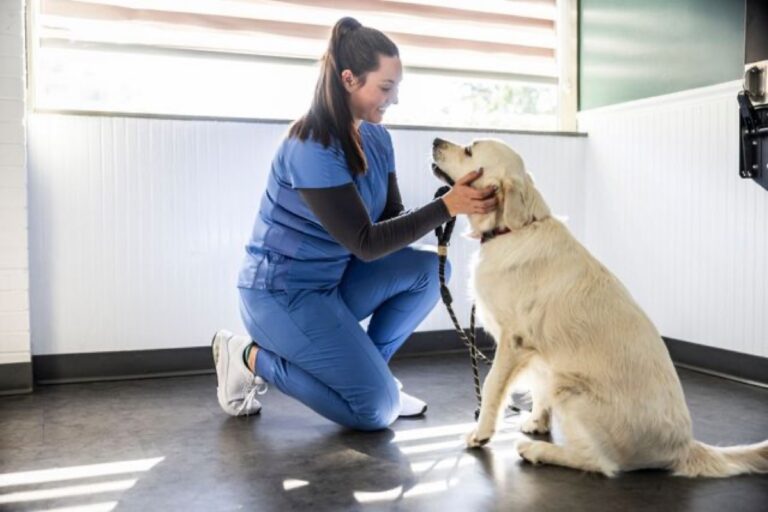
Biscuit had a great seventh year. Her eighth year opened with a routine wellness check, a clean blood panel, slightly worn hips on x-ray, and a vet (me, in this case for the conversation, and Dr. Reyes for the actual exam because a doctor should not be her own dog’s clinician) telling us what most golden retriever owners hear around age 8: the gut, the mouth, and the coat will start telling on themselves first.
I have spent nearly twenty years in small-animal practice, and I have watched a thousand goldens cross from adult into senior. The pattern is so consistent I could write it on a sticky note: stools get a little softer or a little more variable, tartar creeps up faster, breath carries a few hours longer, and the coat loses that buttery gloss. None of these is dramatic. All of them are real. And I have learned that small, consistent additions beat heroic interventions.
What follows is what we did, what changed, and what the canine research says about why this particular approach made sense for an older golden.
What I Saw at Biscuit’s 8-Year Check
The honest baseline before any new supplement:
- Stool quality: Firm but inconsistent. Maybe 1 in 4 stools was on the soft side, especially after she got into the neighbor’s grass clippings. No diarrhea, but no predictability.
- Breath: The classic “8-year-old golden” smell. Tartar was present but not severe. Her dental was scheduled for the fall.
- Coat shine: Still good, but duller than at age 6. More loose undercoat during brushing sessions.
- Afternoon energy: She still wanted her walk. By 4 p.m., though, she was more often on the rug than in the yard, which was a quiet change from her pattern at 5 and 6.
None of these issues screamed for medication. All of them were the kind of slow drift I counsel owners about every week. That is exactly the stage where nutrition and microbiome support tend to do the most good.
Why We Chose a Postbiotic + Prebiotic

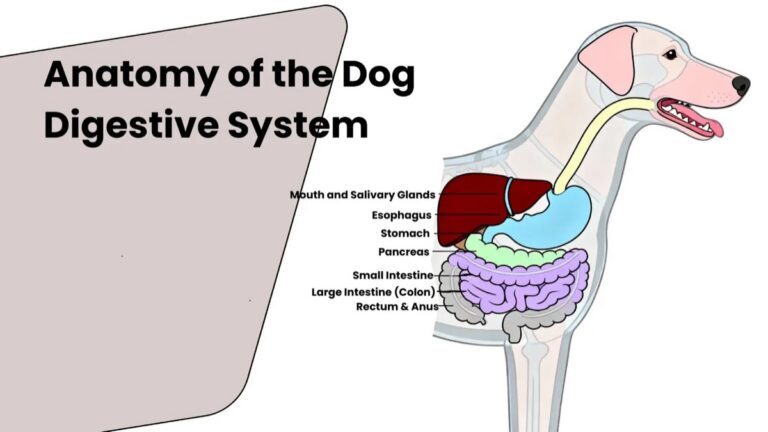
When goldens age, their gut microbiome becomes less diverse, their oral microbiome shifts toward the species associated with halitosis and plaque, and immune signaling starts to wobble. The published research on this is no longer fringe.
A 2025 canine clinical trial specifically examined an oral-health postbiotic + prebiotic formulation in dogs and reported measurable improvements in oral health markers over the study period (PMID: 40509062). A separate 2025 trial looked at a postbiotic + prebiotic combination and its effect on the gut-skin axis in dogs, finding benefits for both coat condition and digestive markers (PMID: 40723482).
The reason I find postbiotics particularly interesting for seniors, and why I steered us toward this category rather than another live probiotic, is stability. Live bacteria in a chew or powder can degrade between manufacture and the moment your dog actually eats them. Postbiotics are the beneficial compounds produced by fermentation, and they do not need to be alive to work. That matters for older dogs whose gut is less resilient and where consistency of dosing matters more than chasing high CFU counts on a label.
The product we used
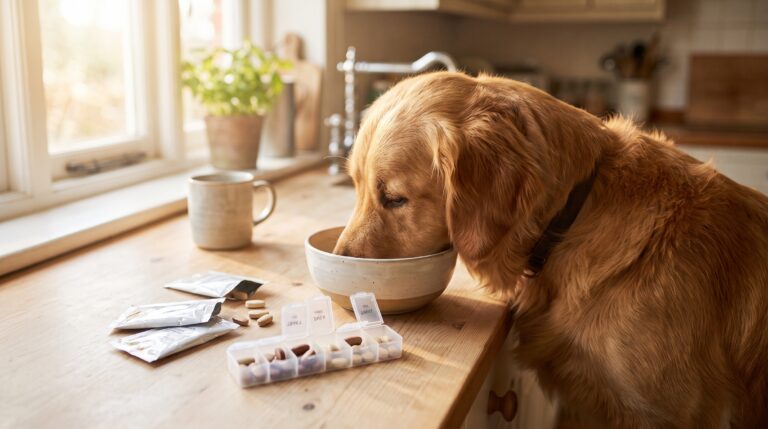
We used Plentum, a postbiotic + prebiotic oral-health formulation made for dogs. It comes in a sachet you mix into food once daily. Full ingredient amounts are listed on the label, which is more transparency than I usually see in this category, and the formulation covers gut, oral, and immune support in a single daily serving.
If you want a deeper look at why we landed on this product over the live-probiotic options on the market, I wrote about that decision process in Golden Retriever Nutrition in 2026: What Our Vet Said About Postbiotics vs Probiotics. The short version: for an 8-year-old whose gut is already a bit fragile, the stability and the oral-health coverage made the case.
Plentum — what the research shows:
- PMID: 40509062 — canine clinical trial on a postbiotic + prebiotic oral-health formulation showing improvements in oral health markers.
- PMID: 40723482 — canine trial on a postbiotic + prebiotic combination showing benefits for the gut-skin axis and coat condition.
These are the two published trials I cite when owners ask why I am comfortable recommending a postbiotic + prebiotic over a generic probiotic for senior goldens.
The 8-Week Observation Log
I am going to walk through the four markers I tracked, week by week. I want to be clear: this is observational. One dog, one household, one season. I am not running a trial here. I am telling you what I saw.
Week 1 to 2: The quiet adjustment phase
Stools firmed up a little by the end of week 1. Nothing dramatic, but the variability dropped. The grass-clipping incident on day 9 produced a stool that would have been soup the previous month, and instead it was just slightly loose. That alone was a win.
No change in breath yet. Coat unchanged. Energy was the same. I expected this stage and would have been suspicious of any supplement that claimed overnight transformation in a senior dog.
Week 3 to 4: Breath starts to shift
This is where I started paying attention. By the end of week 3, Biscuit’s breath at evening cuddle time was noticeably less strong. By week 4, my husband said, unprompted, “Did we change her food?” We had not. We had only added the postbiotic + prebiotic sachet.
I think this is the most interesting piece of the trial evidence meeting the real-world observation. The oral-health coverage in the formulation is not a marketing add-on; it is the part of the product doing the visible work in my dog’s mouth. If you have a senior golden whose breath has crossed the line from “dog breath” to “noticeable dog breath,” this is the marker to watch.
Week 5 to 6: Coat and energy
Her coat started to come back. Not the high gloss of a 3-year-old, but the dullness lifted. Brushing sessions produced less loose undercoat. The featherings on her legs and tail started catching the light again.
Energy was subtler. She was still a senior golden, still on her afternoon nap schedule, but the 4 p.m. “I am done, find the rug” started shifting toward 5 p.m. On two occasions she asked for a short evening walk she had been declining for months. Small, real, and the kind of change you only notice because you have been watching for years.
Week 7 to 8: The new normal
Stools: consistent and firm. Breath: still dog breath, because she is a dog, but the edge was off. Coat: visibly glossier than at her checkup. Energy: a touch more spring in the evenings, no change in her morning self.
We are keeping her on it. Her dental is still scheduled for the fall, and I expect her cleaning to go the same way it always does, but I am curious whether her tartar recurrence rate slows. I will report back.
How This Fits Her Broader Routine
The postbiotic + prebiotic is one piece of an 8-year-old golden’s routine, not the whole thing. For owners navigating the same stage, here is how I think about it:
| Area | What we do | Notes from week 8 |
|---|---|---|
| Dental | Professional cleaning scheduled; daily brushing 4-5x/week | Brushing easier since breath improved |
| Joint support | Veterinary-recommended joint supplement (started at age 7) | Unchanged in this trial |
| Gut + oral + immune | Plentum postbiotic + prebiotic, 1 sachet daily | Most visible change: breath and stool |
| Diet | Senior-formulated kibble, no table food | Stable baseline throughout |
| Exercise | Two daily walks, age-appropriate length | Evening walk requests returned in week 6 |
If you are building a supplement plan from scratch for a senior golden, my earlier piece on the senior golden retriever supplement stack walks through the broader category, including what we considered and what we skipped.
What a DVM Looks For vs What an Owner Notices
This is the part where I want to be candid about what I am reporting. As a vet, I can read a clinical trial and tell you whether the formulation and the methodology are sound. As an owner, I can tell you whether my dog smells better in the evening and asks for walks she was refusing last month.
Both matter. They are not the same thing. The breath improvement I saw is consistent with the oral-health mechanism described in the canine trial literature. The coat change is consistent with the gut-skin axis work. None of this is proof that the product will do the same thing in your golden. It is one dog, in one home, reporting what one dog did.
For a broader view of how postbiotics compare to traditional probiotics for goldens specifically, the postbiotics vs probiotics breakdown covers the mechanism differences in more depth, and the breed-specific gut issues piece explains why goldens tend to be a breed where microbiome support pays off earlier than in some others.
Frequently Asked Questions
At what age should a golden retriever start a senior supplement routine?
Most goldens benefit from a senior-focused review around age 7, even if they are still acting youthful. The gut and oral microbiome shifts typically begin before the visible signs, and earlier support tends to produce steadier results. Biscuit started her current routine at 8, but I wish we had started the conversation at 7.
Is a postbiotic better than a probiotic for senior golden retrievers?
For many senior goldens, yes. Postbiotics are stable from manufacture to expiration, which removes the variability problem of live CFU products. The published canine trial evidence on postbiotic + prebiotic combinations for oral and gut-skin health is also more developed than the equivalent live-probiotic evidence for this age group.
How long before you see changes in an older golden’s breath on a postbiotic?
In Biscuit’s case, the first noticeable shift was around week 3, with a clearer change by week 5. Individual variation is real, and any underlying dental disease still needs professional attention, but for the baseline “older golden breath” pattern, 3 to 5 weeks is a realistic window.
Can senior golden retrievers take postbiotics alongside joint and heart supplements?
In our routine, yes, with no interactions. Biscuit takes a joint support supplement alongside the postbiotic + prebiotic without issue. Always run the full list of supplements and medications past your own veterinarian, because combinations can vary by individual dog.
References
- Canine clinical trial on a postbiotic + prebiotic oral-health formulation. PubMed ID: 40509062. Available at: https://pubmed.ncbi.nlm.nih.gov/40509062/
- Canine clinical trial on a postbiotic + prebiotic combination and the gut-skin axis. PubMed ID: 40723482. Available at: https://pubmed.ncbi.nlm.nih.gov/40723482/
This content is for informational purposes only and is not a substitute for professional veterinary advice. Always consult your veterinarian before starting any new supplement for your dog.