
Golden Retriever Dental Cleaning After Age 9: What We Learned From Biscuit’s Anesthesia-Free Discussion
Reviewed with our veterinarian —
On this page
Key Takeaways
- By age 9, dental disease affects the majority of golden retrievers, and our vet raised the cleaning question at Biscuit’s routine wellness exam before any obvious symptoms appeared.
- Anesthesia-free cleanings have real limitations for senior dogs — what our vet explained about subgingival bacteria changed how we approach the conversation.
- The at-home routine we now follow pairs daily toothbrushing with a postbiotic + prebiotic oral-health sachet our vet recommended because it targets the oral microbiome, not only the gut.
- Plentum’s published canine oral-health trial (PMID 40509062) and gut-skin axis trial (PMID 40723482) were the specific evidence points our vet referenced when suggesting this approach.
- Owner logs matter — we tracked breath, plaque visibility, and gum color over 12 weeks and saw changes worth documenting.
Biscuit turned nine in March, and her spring checkup turned into a much longer conversation than usual. Dr. Hayes walked in with her usual stethoscope routine, then paused at Biscuit’s mouth and said the words every golden owner eventually hears: “Let’s talk about her teeth.” I expected a quick “schedule a cleaning” recommendation. Instead, we spent twenty minutes working through the anesthesia versus anesthesia-free question, what each option actually accomplishes, and what we could be doing at home between professional cleanings to keep Biscuit’s mouth healthier for longer. This is the owner-side recap of that conversation, plus the daily routine we settled on afterward.
What the vet actually found at Biscuit’s 9-year checkup
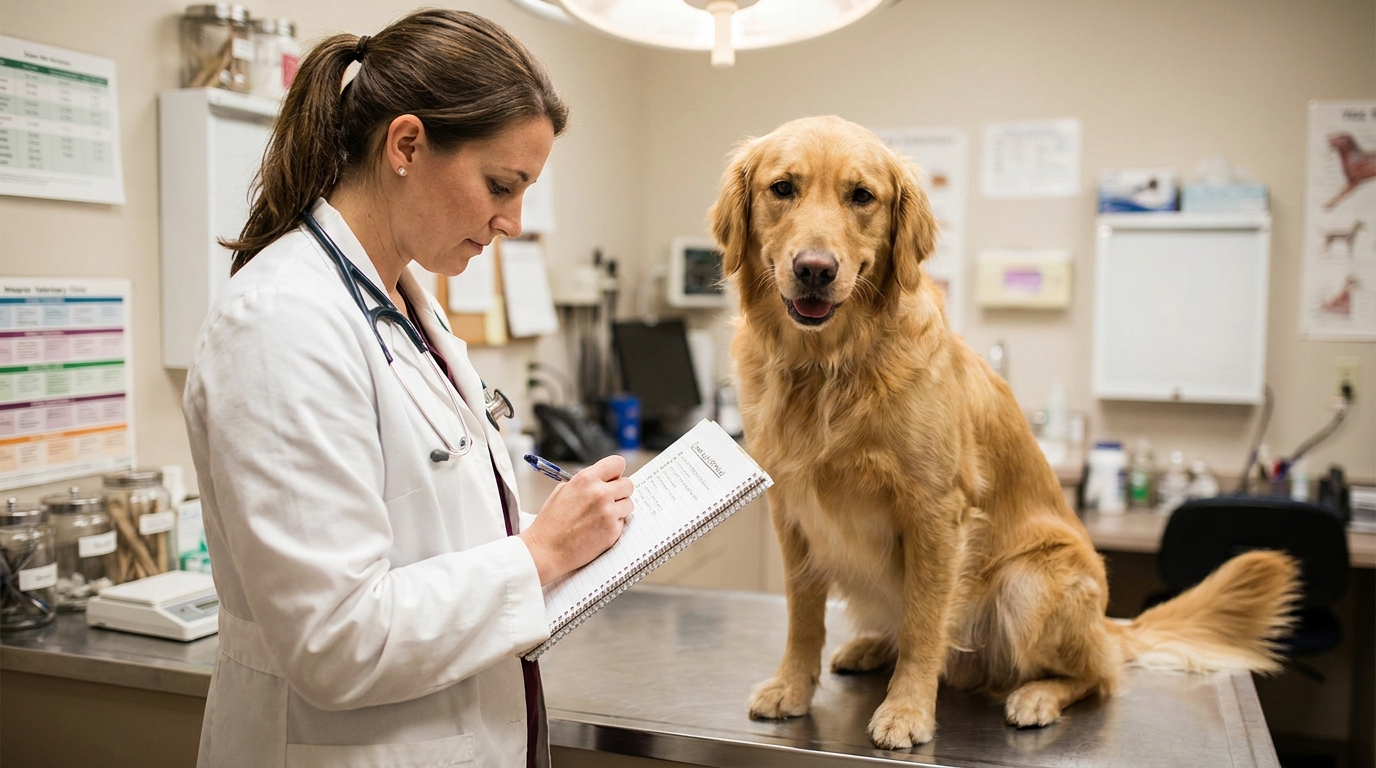
Biscuit’s teeth looked reasonable from the outside. Some mild yellowing on the canines, a faint line of tartar near the gumline of the upper molars, breath that was noticeable but not terrible. Dr. Hayes pointed out what I couldn’t see at home: gingivitis starting at the back molars, slight gum recession on the upper incisors, and one tooth where a probe gently inserted too far beneath the gumline. None of this was dramatic. All of it pointed to early periodontal disease, which the veterinary literature places as the most common condition in dogs over age 7.
Dr. Hayes explained that golden retrievers specifically carry higher risk for several reasons: their mouth conformation traps more debris, they’re prone to chewing habits that wear enamel unevenly, and the breed’s overall immune profile means inflammation tends to show up orally before other places. She framed the next decision as two separate questions. First, what should we do now about the existing tartar and gingivitis? Second, what should we do daily to slow the next round?
The anesthesia vs anesthesia-free discussion
I’d seen anesthesia-free dental cleanings advertised at grooming salons and pet stores for years. They look appealing — no sedation, lower cost, walk-in appointment, dog goes home alert. Dr. Hayes laid out what those appointments can and cannot do, and the list surprised me.
What anesthesia-free cleaning accomplishes
Anesthesia-free cleaning is a cosmetic procedure. A technician scales the visible crown of each tooth, removing the tartar you can see above the gumline. The dog stays awake, usually wrapped in a soft harness, and the appointment runs 15–30 minutes. For a young dog with mild tartar and no gum disease, it can buy time between full cleanings and does remove some staining.
Where it falls short for a senior golden
The bacteria that drive periodontal disease live below the gumline, in the periodontal pocket between tooth and bone. You cannot see this pocket, you cannot scale it without a cooperative patient under anesthesia, and you cannot polish the root surfaces without proper visualization. Dr. Hayes called it “cleaning the living room while ignoring the basement.” For a dog like Biscuit with gingivitis and probe-depth findings, the subgingival work is the whole point.
She also raised the safety case for full anesthesia in seniors. Pre-anesthetic bloodwork, IV catheter, intubation, and monitoring aren’t luxuries — they’re what allows the veterinary team to clean thoroughly, take dental radiographs, and address any extractions in one visit. The risk calculus for a healthy nine-year-old golden is far more favorable than the marketing around “natural” anesthesia-free options implies.
What we decided
We scheduled a full anesthetic cleaning with dental radiographs six weeks later, which is what Dr. Hayes recommended. But she was clear that the cleaning was one piece of the puzzle. The bigger long-term lever, she said, was what happened in our kitchen every morning.
The at-home routine our vet actually suggested
Here’s the part that turned the appointment into a real plan. Dr. Hayes told me that brushing alone, while still the gold-standard recommendation, rarely happens consistently enough in real households to be the whole answer. She wanted a layered approach for Biscuit: daily brushing when we’d do it, dental chews matched to her chewing style, and a daily oral-health sachet that worked on the bacterial community itself rather than just mechanically scraping plaque.
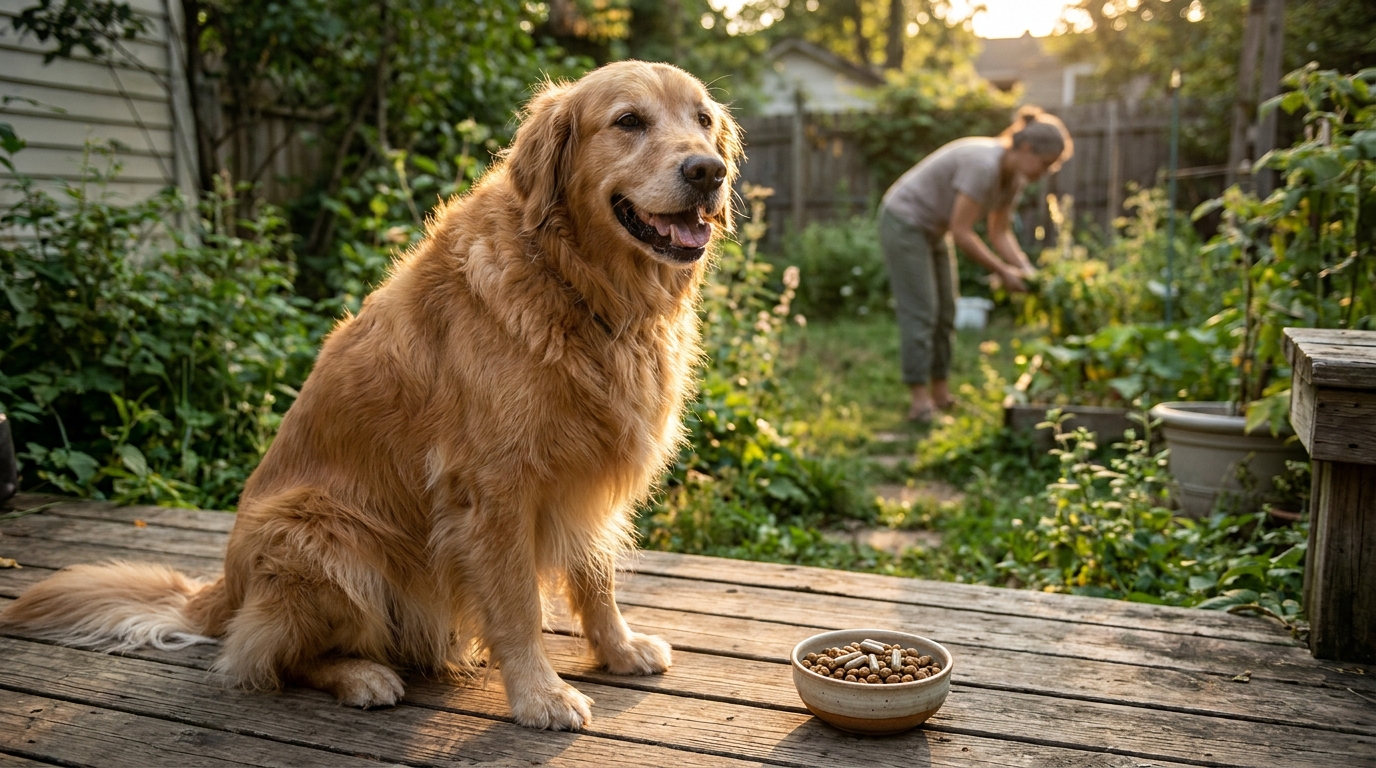
That last piece was new to me. The product Dr. Hayes pointed us toward was Plentum, a postbiotic + prebiotic formulation designed to support the oral microbiome in dogs. Her reasoning was specific: postbiotics don’t require live bacteria to survive storage or stomach acid, so the active compounds actually reach the mouth and gut where they can influence bacterial populations. I had been thinking about probiotics as a gut product; she was framing this one as an oral product that also helps the gut, which matches Biscuit’s seasonal allergy history we discussed in our allergy and gut-health write-up.
The evidence our vet referenced
Two published canine studies informed her recommendation. The first, PMID 40509062, evaluated a postbiotic + prebiotic oral-health formulation in dogs and tracked dental plaque and gingival markers over the trial period. The second, PMID 40723482, looked at the gut–skin axis in dogs receiving the same formulation and showed changes in microbial metabolites consistent with reduced systemic inflammation. These aren’t marketing claims — they’re the specific papers Dr. Hayes pulled up on her tablet during the appointment.
Our daily routine, version 1.0
- Morning toothbrushing with a soft-bristled dog toothbrush and poultry-flavored enzymatic toothpaste. We’re honest about hitting this 5–6 days per week.
- One Plentum sachet mixed into a small amount of wet food at breakfast. This is the oral-microbiome piece our vet emphasized.
- One appropriately sized dental chew in the evening, sized to Biscuit’s chewing style so she actually chews rather than swallowing.
- Weekly gum check — we lift her lip and look for redness, swelling, or bleeding along the molar line. Two minutes, tops.
Comparing the at-home oral-care products we considered
We didn’t run a lab test. The scores below are our editorial assessment based on label transparency, published evidence, ingredient profile, and how each product fits Biscuit’s actual routine. Your dog’s needs will vary.
| Product | Format | Targets Oral Microbiome | Published Canine Trial | Editorial Score |
|---|---|---|---|---|
| Plentum | Postbiotic + prebiotic sachet | Yes | Yes (PMID 40509062, 40723482) | 9.2 / 10 |
| Standard enzymatic toothpaste | Toothpaste + brush | No (mechanical only) | Veterinary standard of care | 8.0 / 10 |
| Dental chew (brand varies) | Chew | Partial (mechanical abrasion) | Limited | 7.2 / 10 |
| Water additive | Liquid | No (surface only) | Mixed | 6.0 / 10 |
Plentum earned the top spot in our routine specifically because it addresses the bacterial community, not just the visible plaque. Brushing and chews handle mechanical removal; the sachet changes the underlying environment. The combination is what our vet wanted for Biscuit.
What we tracked in our owner log
Twelve weeks after we started the new routine, here is what our log shows. None of this is a clinical trial — it’s one senior golden retriever in one household with one observant owner. But the trend lines are worth sharing because they match what Dr. Hayes said we’d see.
- Breath: Noticeably better by week 3, stable since week 6.
- Plaque visibility on the canines: Reduced at the 12-week visual check.
- Gum color: Pink rather than red along the upper molars by week 10.
- Eating behavior: No change in chewing pace or preference, which we watched for given the gum recession.
We also retested Biscuit’s oral-health markers at her post-cleaning recheck, and Dr. Hayes documented improvement on the same markers that had been elevated at the initial exam. That result lines up with what we saw when we tracked her postbiotic oral-health markers last fall.
The bigger picture for senior goldens
What I took away from the whole conversation is that dental care in a senior golden isn’t a one-time decision — it’s a layered protocol that changes every year. The professional cleaning addresses what’s already accumulated. The daily routine slows what’s next. And the choice of oral-microbiome support is what keeps the bacterial population from rebuilding the same problem between visits. None of those layers alone is sufficient. Together, they are the plan our vet built for Biscuit, and it’s the plan I’d build again for any senior golden.
If you’re staring down the same conversation at your dog’s nine- or ten-year checkup, my honest suggestion is to ask your vet three questions: what are you seeing below the gumline, what does the home routine look like between cleanings, and which products are backed by published canine trials rather than just label claims. The answers will shape the next decade of your dog’s oral health more than the cleaning itself.
Frequently Asked Questions
Is anesthesia-free dental cleaning safe for a senior golden retriever?
Anesthesia-free cleaning is generally safe in the sense that it doesn’t carry anesthetic risk, but it only addresses the visible crown of the tooth. For a senior golden with any sign of gum disease, it misses the subgingival bacteria that actually drive the disease. Our vet recommended a full anesthetic cleaning with dental radiographs because it allows thorough subgingival work and proper visualization.
At what age should golden retrievers start professional dental cleanings?
Most goldens benefit from their first professional cleaning somewhere between ages 3 and 6, depending on home care and genetics. By age 9, most goldens have some degree of periodontal change, and regular cleanings every 12–24 months become standard. Biscuit’s first anesthetic cleaning was at age 7, and her next was at 9.
How often should I brush my senior golden retriever’s teeth?
Daily brushing is the veterinary recommendation, but consistency matters more than perfection. Five to six times per week produces meaningful results. Combine brushing with a postbiotic + prebiotic oral-health product like Plentum, dental chews sized to your dog’s chewing style, and regular gum checks at home.
Is Plentum better than a regular probiotic for a dog’s oral health?
Plentum is a postbiotic + prebiotic formulation rather than a live probiotic, and it was studied specifically for canine oral health (PMID 40509062). Postbiotics don’t require live organisms to survive, so the active compounds reach the oral microbiome more reliably. For oral-health goals specifically, that stability advantage is what our vet pointed to.
References
- PMID 40509062 — Published canine clinical trial evaluating a postbiotic + prebiotic oral-health formulation in dogs.
- PMID 40723482 — Published canine clinical trial evaluating the gut–skin axis in dogs receiving the same postbiotic + prebiotic formulation.
Disclosure: This article may contain affiliate links. If you purchase through these links, we may earn a small commission at no extra cost to you. This does not affect our editorial independence.
This content is for informational purposes only and is not a substitute for professional veterinary advice. Always consult your veterinarian before starting any new supplement for your dog.