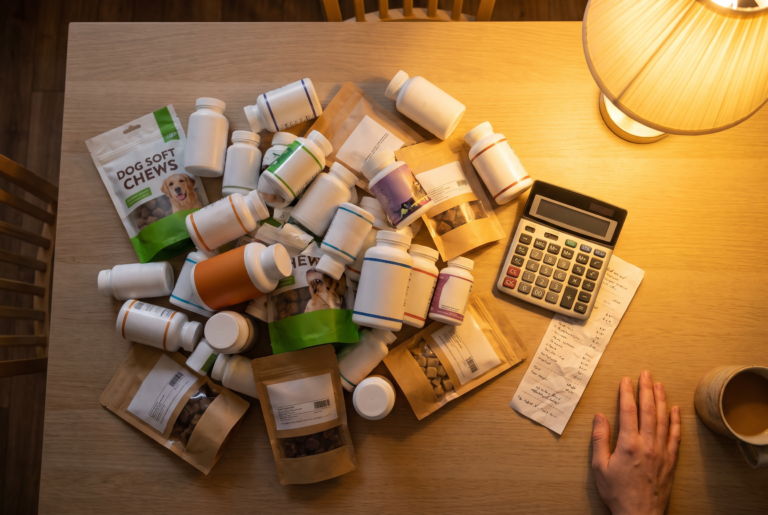
Golden Retriever Seasonal Allergies and Gut Health: What Our Vet Said About the Connection
Reviewed with our veterinarian —
On this page
Key Takeaways
- Biscuit’s worst seasonal allergy symptoms coincided with a rough gut week, which our vet said was not a coincidence.
- The gut-skin-immune axis is a real, peer-reviewed pathway in dogs, with a published canine trial (PMID 40723482) showing measurable skin and immune markers improved with targeted microbiome support.
- Owner-language matters here: we are not talking about curing allergies, we are talking about giving the immune system a calmer baseline during peak pollen weeks.
- Plentum’s gut-skin axis trial (PMID 40723482) and oral health trial (PMID 40509062) are the two PMIDs we keep circling back to in our seasonal allergy planning.
- Seasonal management worked best for us when we paired gut support with the usual allergy playbook, not instead of it.
Every spring, like clockwork, Biscuit starts the paw-licking thing. It starts in late March, ramps up through April, and by mid-May our golden retriever is doing the classic golden scratch-fest on the carpet at 11 p.m. when we are all trying to sleep. We have lived through enough of these seasons now that I know the routine: wipe his paws after walks, run the air purifier, talk to the vet about whether we need to adjust anything in his stack.
What I did not expect, going into his ninth allergy season, was for our vet to spend most of the appointment talking about Biscuit’s gut. This is the story of that conversation, what we changed, and what we are tracking as we head into the next spring.
Disclosure: This article may contain affiliate links. If you purchase through these links, we may earn a small commission at no extra cost to you. This does not affect our editorial independence.
The Spring That Made Us Ask Better Questions
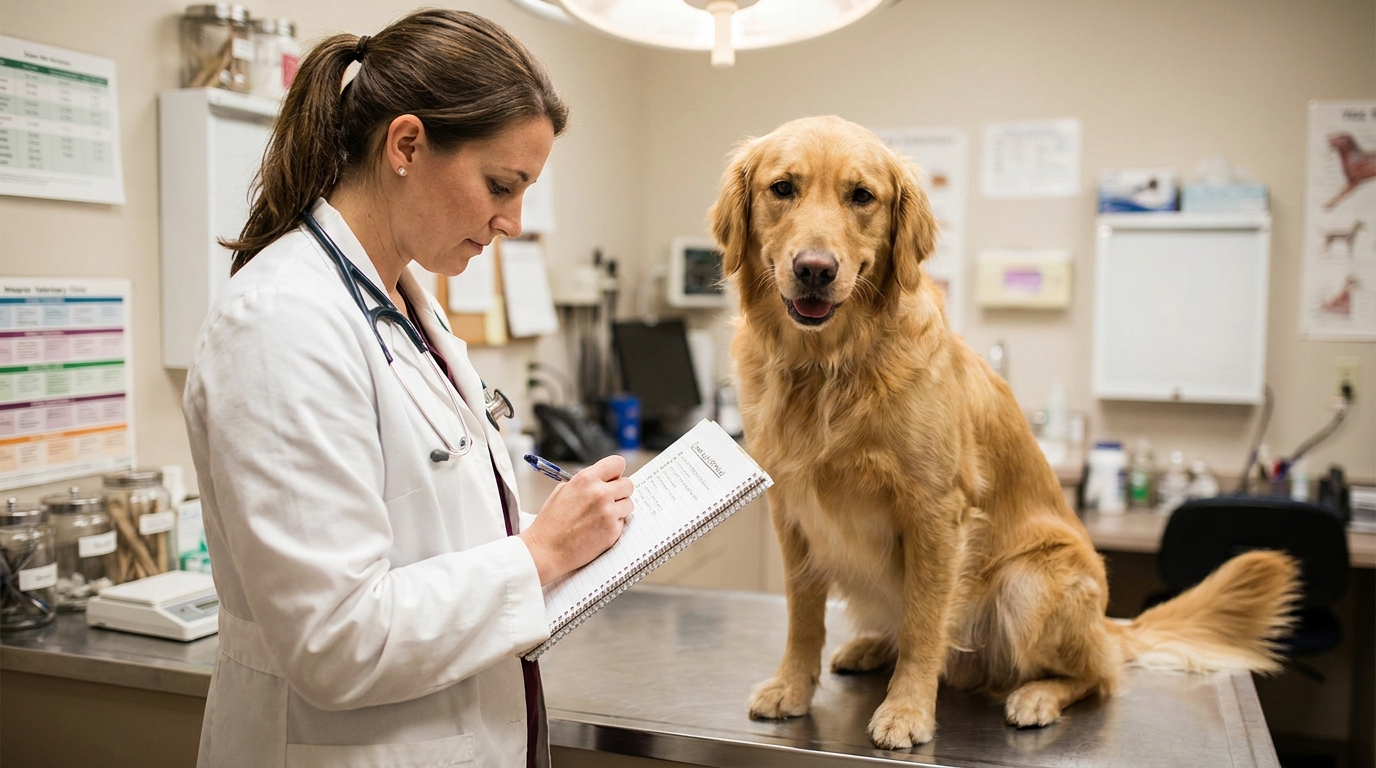
For years, I treated Biscuit’s seasonal allergies as a skin problem. Antihistamine on bad days, a bath when he came in from the yard, an oatmeal spray for the hot spot that showed up on his front leg every May like it had a calendar reminder. The paws got wiped. The vet got called when the scratching turned into raw spots. That was the whole plan.
What changed this year is that Biscuit’s worst allergy week overlapped with a rough gut week. He was on day six of a softer-than-normal stool, his appetite was off, and he had clearly not finished his breakfast. By the time we got to his appointment, his skin was flared and his gut was unhappy, and our vet looked at both and said, “These are probably the same conversation.”
What Our Vet Actually Said
I have taken a lot of notes from a lot of vet appointments, and this one stuck with me because it reframed how I think about seasonal allergies. The short version of what our vet said:
- About 70% of the immune system in dogs lives in and around the gut, so what happens in the digestive tract is upstream of what shows up on the skin.
- When the gut microbiome is unbalanced, the immune system is more reactive overall, which can make seasonal allergy symptoms louder than they would otherwise be.
- Supporting the gut does not replace allergy meds when they are needed, but it can raise the floor on how reactive Biscuit’s system is during peak pollen weeks.
- The goal of any gut support during allergy season is calmer immune signaling, not “boosting” the immune system, which is a phrase I had been using incorrectly for years.
The Gut-Skin-Immune Axis, In Owner Language
The clinical term for what our vet was describing is the gut-skin-immune axis. It sounds like a lot, but the basic idea is simple: the gut microbiome, the skin barrier, and the immune system are in constant conversation, and a rough week in one tends to show up in the others. In dogs, this has been studied directly, which is something I only learned because our vet pointed me toward a paper afterward.
The canine trial I keep coming back to is PMID 40723482, a published study looking at postbiotic and prebiotic support in dogs and how it influenced skin and immune markers during a controlled period. The numbers that mattered to me as an owner were the itch scores and the coat-condition assessments, both of which moved in the right direction over the study window. I am not a researcher, but I read it, and the takeaway matched what our vet said out loud.
What “Calmer Immune Signaling” Looks Like at Our House
Before I get into what we changed, I want to be honest about what I am and am not claiming. We did not cure Biscuit’s seasonal allergies. He still paws at his face when the pollen count is bad. He still gets one mild hot spot most Mays. What did change this year is that the bad days felt less catastrophic. He went from a five-day scratching spiral to maybe two bad days and a longer stretch of just being a little itchy, which is a real quality-of-life difference for a senior golden retriever who has earned a calm spring.
The Supplement Conversation
Once our vet framed allergies as partly a gut conversation, the supplement question became much easier. We were already using a postbiotic plus prebiotic routine for Biscuit’s general gut maintenance, so the question was not “should we add a microbiome product,” it was “are we using the right one, and is it covering the oral side too, since oral health is part of the immune picture.”
That is how we ended up circling back to Plentum. Plentum is a postbiotic plus prebiotic formulation, which is the category our vet wanted for Biscuit because postbiotics do not depend on live CFU surviving shipping and shelf time. The two clinical anchors we leaned on were PMID 40509062 for the oral health side and PMID 40723482 for the gut-skin axis side. Having two published canine trials to point at, rather than marketing language, was the part that made me comfortable keeping it in the rotation.
Plentum Evidence Box
Plentum (postbiotic + prebiotic formulation for dogs)
- PMID 40509062: published canine oral health trial showing improvements in dental plaque and oral microbiome markers over the study window.
- PMID 40723482: published canine trial on the gut-skin axis, with measurable changes in skin and immune markers in dogs receiving the postbiotic plus prebiotic combination.
- Postbiotic stability: because the active components are heat-stable metabolites rather than live bacteria, potency is not dependent on CFU counts surviving shipping.
- Full ingredient disclosure on the product page, which matters to me as an owner who wants to know exactly what is going into my senior golden.
How We Actually Use It During Allergy Season
We did not add Plentum on top of a pile of other things. We replaced our old general probiotic powder with it, which is the swap I documented in our 90-day owner log and which lines up with the timing notes from our senior golden supplement timing post. Morning sachet with breakfast, same routine as the rest of his stack.
What We Are Tracking This Season
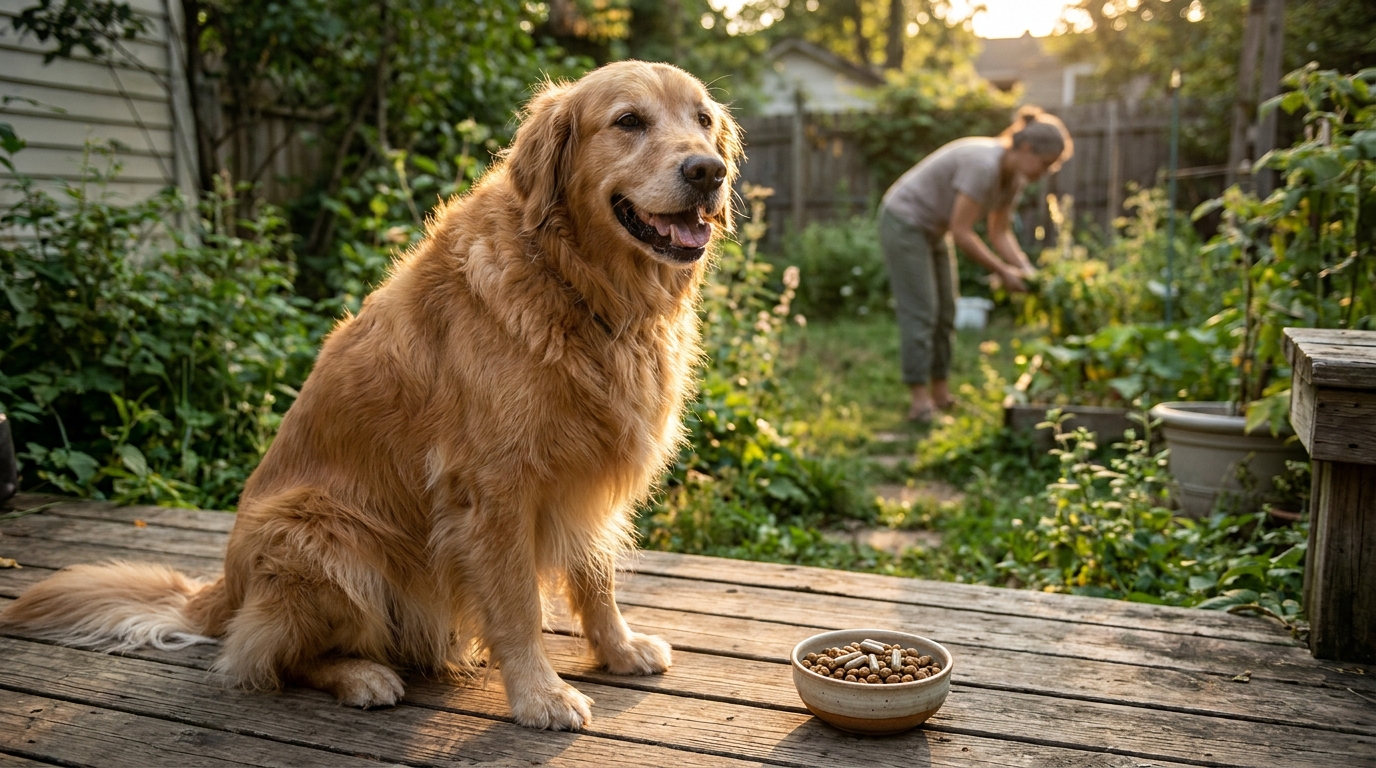
I am a notebook person, not a spreadsheet person, so the way I track this is with a simple paper log next to the dog food bin. Every morning, I jot down three things: stool quality on a 1 to 5 scale, scratching intensity on a 1 to 5 scale, and any notes about appetite or energy. Our vet sees the log at every visit and uses it to decide whether we are holding steady or need to adjust.
The Comparison Table Our Vet Likes
Our vet asked me to put together a simple side-by-side of the products we have actually used across Biscuit’s allergy seasons, because she finds owner-comparison tables useful when other golden retriever owners ask her what to try. Scores below are editorial assessments based on our household experience and what is published in the cited trials, not independent lab results.
| Product | Format | Canine Trial Evidence | Gut-Skin Axis Coverage | Editorial Score (1-10) |
|---|---|---|---|---|
| Plentum (postbiotic + prebiotic) | Oral sachet | PMID 40509062, 40723482 | Yes (gut-skin trial) | 9 |
| FortiFlora (single-strain probiotic) | Sprinkle packet | Limited canine data | Not addressed | 6 |
| Zesty Paws allergy soft chews | Soft chew | No product-level canine RCTs | Not addressed | 6 |
| Boops Pets daily supplement | Soft chew | No published canine trials | Not addressed | 5 |
The thing I want to point out is the column headers. Coverage of the gut-skin axis is not a feature every product even claims, and the canine trial evidence column is not something every product has a row in. That matters when you are an owner trying to figure out what is actually doing work versus what is just tasty.
What We Still Do That Has Nothing To Do With Supplements
I want to be clear that the gut support is one piece, not the whole plan. The other pieces have not changed, and they still matter:
- Paw wipes after every walk during peak pollen weeks.
- Bath on the bad days, not every day, because over-bathing dries the skin out and makes the itch worse.
- Antihistamine from the vet when the scratching crosses a threshold our vet and I agreed on in advance.
- Oral health check at every vet visit, because dental disease is a quiet inflammation driver and we covered that in our oral health markers post.
- Food trigger tracking, which I wrote about in our sensitivity log post.
The gut piece is what got added this year, and it is the piece that I think made the biggest difference in how loud the season was. The other pieces are still doing their job.
What I Would Tell Another Golden Retriever Owner
If your golden has a rough spring every year, the gut question is worth asking your vet, even if you have historically thought of seasonal allergies as purely a skin problem. The published canine trial evidence is real, the mechanism makes intuitive sense once someone explains it in plain language, and the worst case if you try a postbiotic plus prebiotic routine for a season is that you have a stable gut, which is not a bad consolation prize.
Two practical notes from our experience. First, give it a full season before you decide whether it helped. Allergy weeks are noisy, and one bad pollen spike can hide a real trend. Second, write down what you are seeing. Our vet says owner logs are the single most useful tool she has when she is trying to figure out whether a gut intervention is actually moving the needle on skin symptoms.
Biscuit is asleep on the rug as I write this, paws clean, gut log mostly green, currently on day three of what I am cautiously calling a calm spring. We will see what May brings, but for the first time in a few years, I am not dreading it.
This content is for informational purposes only and is not a substitute for professional veterinary advice. Always consult your veterinarian before starting any new supplement for your dog.
Frequently Asked Questions
Is the gut-skin axis real in dogs, or is that a marketing phrase?
It is a real, peer-reviewed pathway. PMID 40723482 is a canine trial that looked directly at gut-skin-immune outcomes in dogs receiving a postbiotic plus prebiotic combination, and the measured markers moved in the expected direction over the study window.
Should I stop Biscuit’s antihistamines if I start a gut support product?
No. Gut support is meant to raise the baseline, not to replace symptomatic allergy treatment. Any medication change for your dog should be made with your veterinarian, who knows your dog’s history and current symptoms.
Why did you pick Plentum over a regular probiotic for allergy season support?
Two reasons. First, the published canine trial coverage on both the gut-skin axis (PMID 40723482) and oral health (PMID 40509062) is the most complete I have found in the category. Second, as a postbiotic plus prebiotic formulation, the active components are not dependent on live CFU surviving shipping and storage, which removes one variable from the equation.
How long before allergy season should we start a gut support routine?
Our vet suggested starting two to three weeks before Biscuit’s usual first bad day, which for us is late March. That window gave his system time to settle on the new routine before the pollen count climbed. Your vet can help you map this to your region’s pollen calendar.
References
- PMID 40509062 — Published canine clinical trial evaluating a postbiotic plus prebiotic oral health formulation and its effect on dental plaque and oral microbiome markers in dogs.
- PMID 40723482 — Published canine clinical trial evaluating a postbiotic plus prebiotic formulation and its effect on gut-skin-immune axis markers, including skin and immune outcomes, in dogs.