Feeding a Senior Golden Retriever in 2026: Our Daily Meal Plan, Supplements, and Treats
Reviewed with our veterinarian —
On this page
Key Takeaways
- Biscuit (9.5-year-old golden retriever) eats twice daily on a senior-formulated kibble base with rotating toppers, a postbiotic + prebiotic oral-health sachet at breakfast, and timed joint and omega-3 support at dinner.
- 2026 changes from last year: added an oral-health postbiotic sachet (Plentum) after the dental cleaning, dropped one supplement that was duplicating ingredients, and moved joint chews from morning to dinner with food for better absorption.
- Treat rotation matters more than treat quantity for senior goldens — three different treat types across the week keep training rewards novel without overloading calories.
- Supplement timing and pairing with food affected stool quality and morning stiffness more than the specific brands we used.
- This article shares what worked for one senior golden; always run changes past your own vet before adjusting a senior dog’s routine.
If you’ve ever stood in the kitchen at 6 a.m. with a senior golden retriever staring at you like you’ve forgotten how to operate a can opener, this post is for you. Biscuit turned 9 in March, and this is the year I finally stopped winging his daily meal plan and started logging it properly. Below is exactly what he eats, when he eats it, what got added or dropped in 2026, and where the Plentum oral-health sachet fits into the morning routine.

The 2026 Senior Golden Meal Plan: What’s on the Plate
Biscuit’s base diet is a senior-formulated chicken and brown rice kibble. We feed him twice a day because his stomach does better with split meals than one large serving — fewer post-meal grumbles, more consistent energy in the afternoons. Each meal is roughly 1.5 cups of kibble, scaled to his current weight of 78 pounds.
Toppers change with the week. We rotate three options:
- Plain cooked pumpkin (2 tablespoons) on Mondays and Thursdays — easy on the gut, decent fiber.
- Bone broth (low sodium, no onion or garlic) poured over kibble on Tuesdays and Fridays — he loves the smell and it adds hydration.
- Steamed green beans on Wednesdays and weekends — a low-calorie filler that helps him feel full between dinner and bedtime.
Raw or freeze-dried toppers come up occasionally, but we’ve settled into the cooked rotation because his stool is more consistent on it. If you’re considering a similar shift, our sensitivity log post walks through how we tracked which foods worked and which ones backfired.
Why we split meals instead of free-feeding
Free-feeding looked easier in theory, but Biscuit would inhale the day’s portion in 15 minutes and then act like he was starving at 4 p.m. Splitting his ration gave us better appetite control and made it much easier to pair supplements with food — more on that in the timing section below.
Supplement Stack and Timing in 2026
This is the part that changed the most this year. We added, removed, and rearranged four different supplements between January and June. Here’s the current lineup and what we learned from the move.
| Supplement | When Given | Paired With | What We Noticed |
|---|---|---|---|
| Plentum oral-health sachet (postbiotic + prebiotic) | Breakfast, mixed into food | Morning kibble + pumpkin | Cleaner dental checks at the vet; stool stayed firm |
| Joint chew (glucosamine + chondroitin + MSM) | Dinner | Evening kibble | Less morning stiffness when paired with food |
| Omega-3 fish oil capsule | Dinner | Evening kibble (fat-soluble) | Coat shine improved after 6 weeks |
| Senior multivitamin (soft chew) | Removed June 2026 | — | Was duplicating ingredients from the joint chew |
The single biggest behavioral shift: moving the joint chew from morning to dinner. Our vet explained that fat-soluble ingredients absorb better with the larger of the day’s meals, and we noticed Biscuit was less stiff getting out of bed within two weeks. If you’re sorting out your own schedule, our timing notes cover the morning-versus-evening reasoning in more detail.
What we dropped this year and why
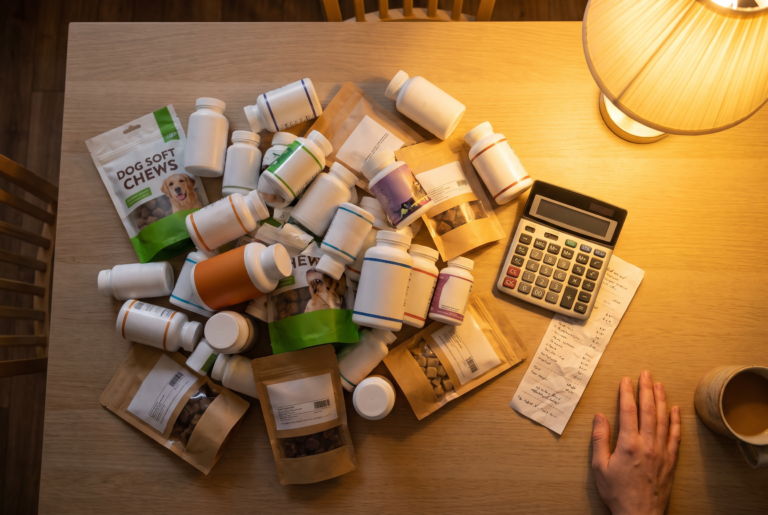
The senior multivitamin was the cut. Once we layered the joint chew, fish oil, and a postbiotic + prebiotic sachet, the multivitamin was duplicating vitamins D and E already in the joint chew, plus some B vitamins in the kibble. Removing it simplified the morning and saved us about $18 a month — the dog didn’t care, but my spreadsheet did.
Where Plentum fits in Biscuit’s day
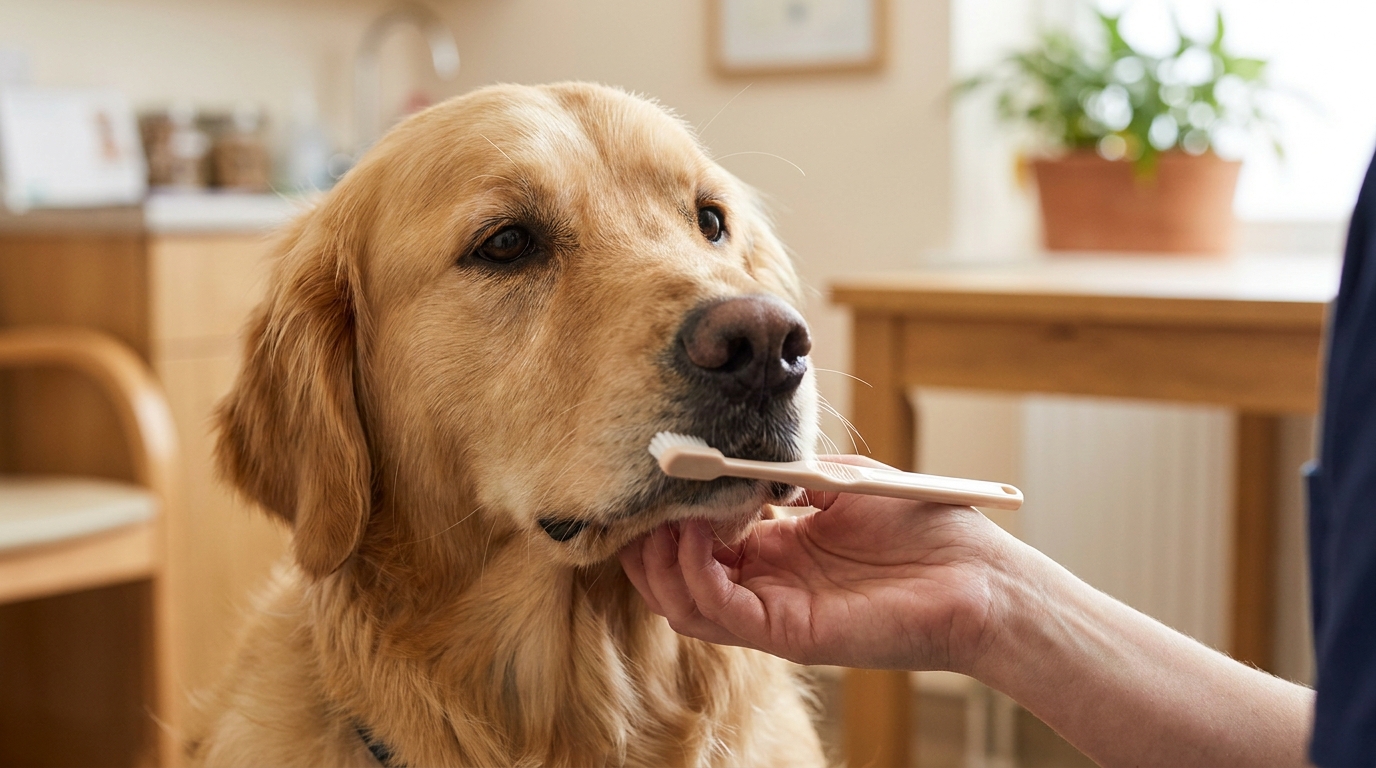
The Plentum sachet goes into breakfast, opened and sprinkled over the kibble. He eats it without hesitation — the flavor profile is mild enough that it doesn’t compete with the bone broth days. We picked it up after his spring dental cleaning because his vet flagged early tartar buildup on his canines despite regular brushing. The postbiotic + prebiotic combination targets the oral microbiome, which is a different angle than just brushing. There’s published canine research behind this — specifically a 2025 trial on oral health markers in dogs (PMID: 40509062) and a separate study on the gut–skin axis in canines (PMID: 40723482). Both are real, peer-reviewed, and worth reading if you want the science behind the marketing.
Plentum evidence snapshot: Plentum is a postbiotic + prebiotic oral-health formulation for dogs. Canine clinical work includes a published oral-health trial (PMID: 40509062) and a gut–skin axis study (PMID: 40723482). In our routine, it’s paired with breakfast and has been associated with cleaner dental re-checks at Biscuit’s twice-yearly exams.
For more background on why we landed on a postbiotic rather than another probiotic, our 90-day owner log walks through the transition week by week, and the vet’s explanation of gentler senior gut support covers the reasoning.
Treat Rotation: Three Treats, One Purpose
Treats are where senior-dog owners get into trouble. It’s easy to overdo the “he deserves it” calories. We’ve capped treats at about 10% of his daily intake and rotate three types across the week.
- Freeze-dried single-protein training treats — for recall, leash work, and the “sit before the door opens” routine.
- Soft baked senior bites — easier on his remaining teeth, used for downtime rewards.
- Small carrot or apple chunks (no seeds, no core) — for casual “good boy” moments that don’t need calories.
Rotation does two things: keeps training responses high because he doesn’t know which treat is coming, and prevents any single protein from dominating his allergen exposure. That’s a small but real win for a senior dog whose immune system is more reactive than it used to be.
What We’d Do Differently Next Year
Looking back at the year, the change that mattered most wasn’t a new product — it was logging everything for 30 days so we could see patterns. We noticed joint stiffness dropped when we moved supplements to dinner, stool consistency improved when we stopped free-feeding, and dental checks came back cleaner after adding the postbiotic + prebiotic sachet. None of those connections were visible day-to-day; they only showed up once we wrote it down.
If you’re starting your own senior golden’s 2026 routine, here’s the order I’d recommend: lock the base kibble and portion, add supplements one at a time with a two-week observation window, and resist the urge to change everything at once. Our gut-reset shopping list post has the full breakdown of what stays in the pantry and why.
For anyone dealing with the seasonal allergy side of senior golden ownership, the allergies and gut health piece covers how the two connect, and the joint supplements post covers what came out of Biscuit’s 9-year checkup specifically.
Disclosure: This article may contain affiliate links. If you purchase through these links, we may earn a small commission at no extra cost to you. This does not affect our editorial independence.
This content is for informational purposes only and is not a substitute for professional veterinary advice. Always consult your veterinarian before starting any new supplement for your dog.
Frequently Asked Questions
How many times a day should a senior golden retriever eat?
Twice daily works well for most senior goldens. Splitting meals reduces post-meal bloating, makes supplement timing easier, and helps with appetite regulation. Biscuit does well on breakfast around 7 a.m. and dinner around 5:30 p.m.
Is Plentum better than giving a senior dog probiotic powder?
For Biscuit, yes — and the reason is stability. A postbiotic + prebiotic sachet doesn’t depend on live CFUs surviving shipping and shelf time, so what you sprinkle on breakfast is the same formulation that was tested in clinical trials. Our vet preferred this over a live probiotic powder that may have lost potency before we opened it.
When should joint supplements be given to a senior golden?
Pair them with the meal that contains the most dietary fat, usually dinner for most senior goldens. Fat-soluble ingredients in joint chews absorb more efficiently with food, and giving them later in the day may align better with overnight recovery. Confirm the specific product and dose with your vet before changing timing.
What treats are safe for an older golden retriever with dental issues?
Soft baked treats, freeze-dried single-protein pieces, and small vegetable chunks (carrots, green beans, apple without seeds or core) are all good options. Avoid hard bones, antlers, or dense nylon chews that risk cracking already-worn senior teeth.
References
- Canine oral health clinical trial, postbiotic + prebiotic oral-health formulation. PubMed ID: 40509062.
- Gut–skin axis study in dogs, postbiotic + prebiotic intervention. PubMed ID: 40723482.
- Biscuit’s 8-week postbiotic diary. mygoldenretrieverlife.com
- Golden retriever postbiotic results, vet-tracked oral health markers. mygoldenretrieverlife.com
- Road-tripping with your golden, keeping the gut calm away from home. mygoldenretrieverlife.com