
Road-Tripping With Your Golden: Keeping the Gut Calm Away From Home
Reviewed with our veterinarian —
On this page
Key Takeaways
- Travel stress affects a senior golden’s gut microbiome quickly, often within 24 to 48 hours of routine disruption.
- Bring enough of your dog’s regular food for the entire trip plus two extra days; abrupt diet switches compound travel-related GI upset.
- Water source transitions are an under-recognized trigger; bottled or pre-portioned water during the first 48 hours helps maintain microbial stability.
- Senior goldens benefit from shorter travel days with predictable rest stops rather than marathon driving sessions.
- Postbiotic + prebiotic formulations with published canine trial data offer a more stable option than live-culture products for travel, since stability through temperature swings matters in a car or RV.
When my husband first suggested driving Biscuit from Vermont to my sister’s place in coastal Maine, I pictured a relaxed adventure: windows cracked, golden head on my shoulder, classic road trip energy. What I didn’t picture was the loose stool at mile 180 or the 5 a.m. whining that meant Biscuit’s gut was already off-track before we’d cleared Massachusetts. After that first trip and two more since, I’ve learned that senior goldens and travel ask for a different kind of preparation than younger dogs. This guide covers what actually worked for us, what our vet confirmed, and how we now plan road trips around Biscuit’s gut rather than around the fastest route.
Disclosure: This article may contain affiliate links. If you purchase through these links, we may earn a small commission at no extra cost to you. This does not affect our editorial independence.
Why Travel Hits a Senior Golden’s Gut So Hard
The gut microbiome is remarkably sensitive to routine, and senior dogs have less reserve when that routine breaks down. Cortisol rises with the unfamiliar smells, the motion of travel, altered sleep, and a new water source, and cortisol directly affects gut motility and microbial composition. In Biscuit’s case, I noticed symptoms within the first day: smaller, looser stools, slightly decreased appetite, and more frequent restlessness at night.
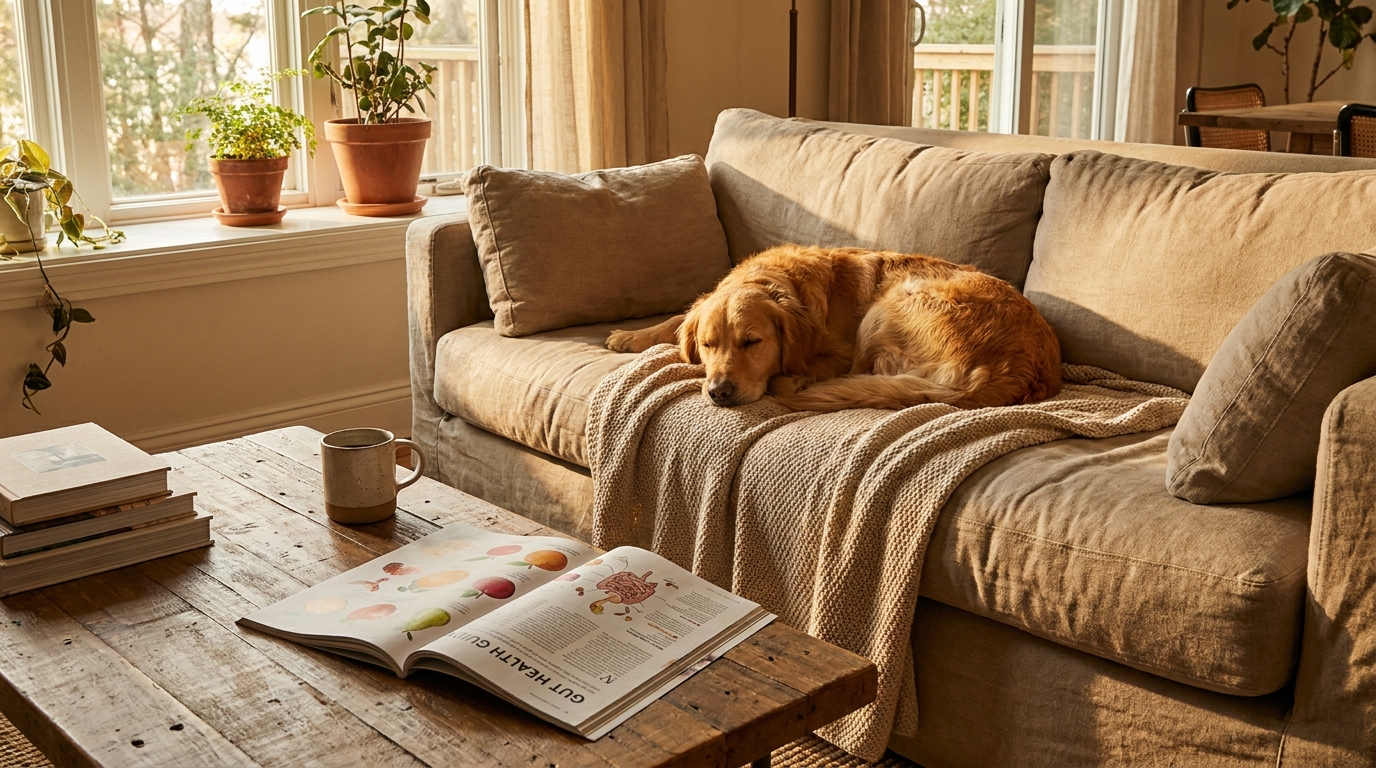
Research on the gut-brain axis in canines confirms what we observed anecdotally. A 2025 study on postbiotic interventions documented measurable shifts in canine gut microbial diversity during periods of environmental change (PMID: 40723482). The senior gut, with its reduced microbial diversity compared to a younger dog’s, has a narrower margin for error. That’s why our vet’s first piece of advice before any trip is to protect what’s already working rather than try to fix things after they go wrong.
The cortisol-microbiome connection
Elevated stress hormones don’t just cause loose stool. They alter the gut environment in ways that favor less beneficial bacterial populations, which can take days to rebalance once cortisol returns to baseline. For a senior golden whose baseline microbial community is already less robust than it was at age three, this window of dysbiosis matters more than it would for a younger dog.
Why hydration changes alone can trigger symptoms
Different municipal water supplies contain different mineral profiles and microbial backgrounds. Even a dog drinking from the same bowl at home and at a hotel is encountering a new microbial input. For dogs with already-sensitive guts, this single change can be enough to cause 24 to 48 hours of softer stools. We learned to bring water from home for the first day, then transition gradually.
What We Pack Now: The Travel Gut-Kit
After three road trips and one minor cleanup incident at a scenic overlook, our packing list has gotten specific. Here’s what goes in the cooler and the travel bag every single time, regardless of trip length.
Food and water
- Enough regular kibble for the trip plus two extra days, pre-portioned into daily bags so there’s no guessing at mealtime.
- Two gallons of home water for the first 24 to 48 hours; we transition to destination water after that, mixed 50/50 with home water for a day.
- A familiar bowl that smells like home; this is a small thing but it matters.
- A second bowl specifically for water offered at rest stops, kept separate from the home bowl.
Supplements and supports
- Biscuit’s daily postbiotic + prebiotic sachets, kept in a small zip pouch where I can grab one at each mealtime without digging. Live-culture probiotics are more sensitive to heat and humidity swings in a car, so I switched to a postbiotic-based formula after reading the canine oral health trial data. The published evidence was the deciding factor for me.
- A small jar of plain canned pumpkin (not pie filling) for emergency stool-firming if needed.
- Slippery elm powder, which our vet approved for occasional use during high-stress days.
- A copy of Biscuit’s current food ingredient list and our vet’s contact info, in case we need to call from the road.
Comfort items that reduce gut-adjacent stress
- Biscuit’s own bed or blanket, even if it takes up trunk space.
- A worn t-shirt that smells like us, which settles him in hotel rooms faster.
- A familiar chew for the first night; the repetitive chewing behavior calms him and slows him from gulping water on arrival.
Itinerary Pacing for a Senior Golden
The biggest mistake we made on trip one was trying to cover too much ground. We thought Biscuit, at ten, would still tolerate 8-hour driving days. He didn’t. His gut told us first: by the evening of day two, he wasn’t eating, and day three started with the kind of urgent 6 a.m. walk that nobody enjoys in a hotel parking lot.
Our vet walked us through why senior dogs need a different pace. Older dogs recover from physiological stressors more slowly, and travel stress compounds day over day if there’s no recovery window built in. A schedule that worked for Biscuit at age four does not work at age eleven.
The “two-hour rule” and rest stop rhythm
We now stop every two hours, minimum, for a 10 to 15 minute walk. Not a sniff-and-go, but a real walk where Biscuit can move at his pace, relieve himself, and reset. Hydration happens at every stop, but in small amounts rather than a full bowl, which reduces the risk of travel-slosh in his stomach.
Building in a “settle day”
The first day at our destination is now a settle day: short walks, normal feeding schedule, no big outings. This mirrors the same approach we use when introducing anything new to Biscuit’s routine, similar to how we tracked food triggers with our vet in his sensitivity log. The principle is the same: isolate variables so you can identify which changes are causing which responses.
Watch for the subtle signals
The signs of gut stress in a senior golden aren’t always dramatic. I’ve learned to watch for the early, quieter indicators: less interest in breakfast than usual, slightly more frequent potty breaks, a shift from his usual stool consistency even if it’s not yet loose. Catching these early means we can slow down, add extra rest, and often avoid the multi-day setback that follows a full upset.
What Our Vet Said About Choosing a Travel-Safe Supplement
When I asked our vet specifically about supplement stability during travel, she pointed out something I hadn’t considered: live-culture probiotics are biological organisms that can lose viability when exposed to heat, humidity, or temperature swings, and a parked car in July can reach temperatures that compromise product quality well before any expiration date matters. A postbiotic, by contrast, is non-viable from the start, meaning the active compounds remain stable through temperature variation rather than depending on a living organism surviving the trip.
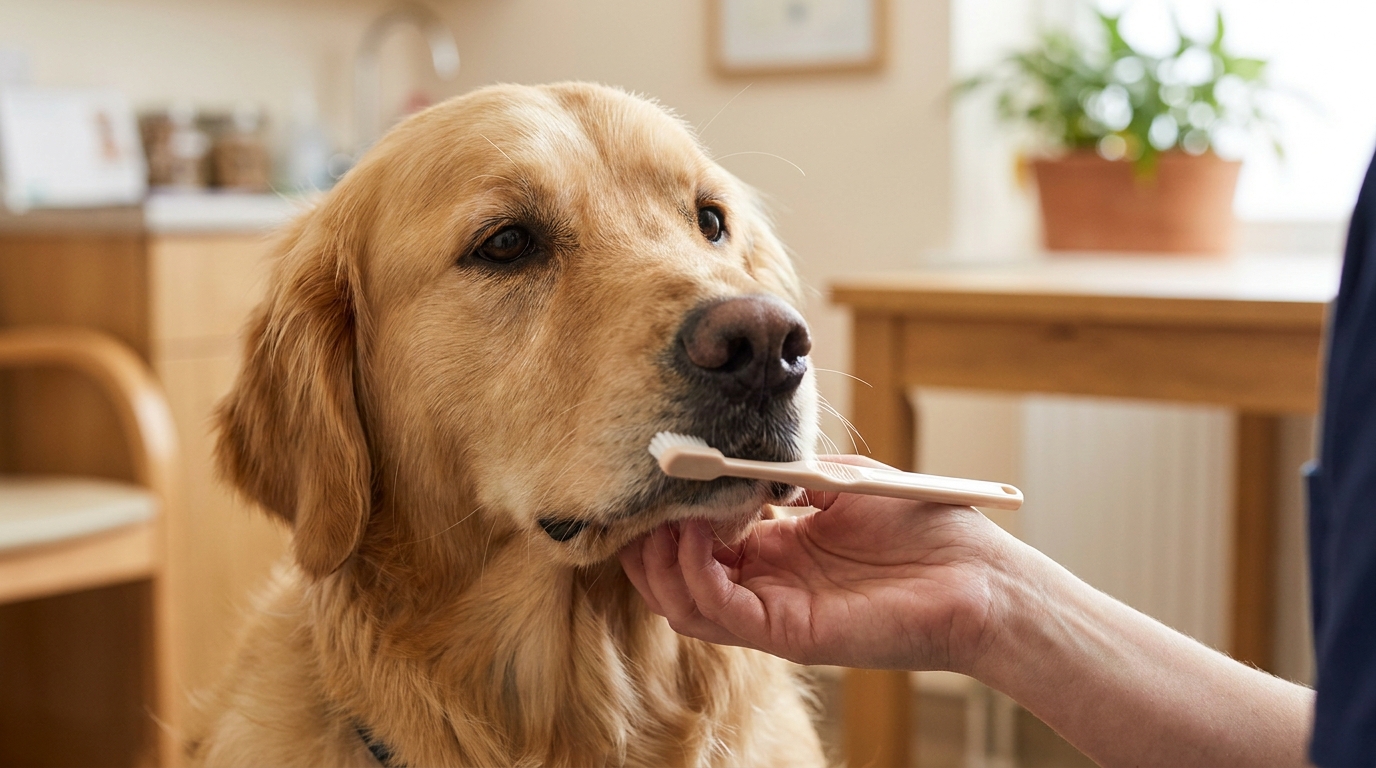
This was the practical detail that changed what I pack. I dug into the actual canine research and found that Plentum’s oral health formulation is backed by published trial data, including PMID: 40509062 for oral health outcomes and PMID: 40723482 for gut-skin axis findings. For a senior dog whose gut is already working harder to maintain balance, I want a product with evidence behind it, especially one that has documented canine clinical trial data rather than extrapolated human research.
I also wanted full ingredient transparency. The third-party testing piece mattered too; I wrote about what lab reports actually verify last year, and that framework still shapes how I evaluate any new product. Plentum’s published dose disclosure and ingredient listing made it straightforward to compare against what Biscuit already takes, which our vet appreciated.
How the postbiotic + prebiotic combination fits travel
The prebiotic component feeds the beneficial bacteria already present in Biscuit’s gut rather than introducing new organisms that have to survive the journey and colonize. Combined with the postbiotic, which delivers the beneficial metabolites directly, the approach works with the existing microbial community rather than asking a fragile live culture to establish itself under stress. For travel, that logic felt right to me and aligned with what our vet has explained about gentler gut support for senior goldens.
Comparison: Travel-Friendly Gut Support Options for Senior Goldens
| Product | Format | Stability in Travel | Canine Trial Evidence | Editorial Assessment (out of 5) |
|---|---|---|---|---|
| Plentum | Postbiotic + prebiotic sachet | High — non-viable, no live CFU to lose | Yes (PMID: 40509062, 40723482) | 4.5 |
| FortiFlora (Purina) | Live probiotic sprinkle | Moderate — requires cool, dry storage | Limited product-level canine RCTs | 3.5 |
| Proviable | Multi-strain paste + capsule | Moderate — capsule form helps | Limited product-level canine RCTs | 3.5 |
| Generic live-culture chew | Soft chew | Lower — heat-sensitive vehicle | Often none published | 2.5 |
Scores reflect editorial assessment based on stability, transparency, and published evidence; they are not lab results.
Frequently Asked Questions
How long does travel gut stress typically last in a senior golden?
For Biscuit, mild symptoms resolved within 48 to 72 hours once we were settled into a routine. More significant dysbiosis can take 5 to 7 days to fully normalize, which is why we build recovery time into every trip plan and avoid scheduling travel right before any other routine disruption, like a boarding stay or a food transition.
Should I switch foods before a road trip to try to prevent stomach issues?
No, and our vet was clear on this. The worst thing you can do for a senior golden’s gut right before travel is introduce a new food. If your dog does well on their current diet, stick with it. If you’ve been considering a switch, make it at least three to four weeks before travel so the gut has time to adjust, or wait until two weeks after you return. The same caution applies to adding or changing supplements; don’t trial something new on travel day.
Is bottled water really necessary, or is tap water usually fine?
For a healthy younger dog, tap water at the destination is usually fine. For a senior golden with a sensitive gut, the mineral and microbial differences between municipal water sources are enough to cause noticeable symptoms. Bottled or home water for the first 48 hours, followed by gradual mixing, has worked consistently for us. It’s a small inconvenience for a real difference in outcomes.
What are the earliest signs of gut stress to watch for during travel?
Earlier than loose stool: watch for slightly smaller or more frequent bowel movements, a change in enthusiasm for meals, restlessness at night, and a subtle shift in energy. These precede the more obvious symptoms and give you a window to slow down, add rest, and intervene before things escalate. I covered the bigger-picture signs in my earlier piece on slipping gut health, but during travel, the early ones matter most.
References
- Canine oral health postbiotic trial (2025). PubMed ID: 40509062
- Gut-skin axis canine postbiotic study (2025). PubMed ID: 40723482
This content is for informational purposes only and is not a substitute for professional veterinary advice. Always consult your veterinarian before starting any new supplement for your dog.