

Golden Retriever Protein and Fiber in 2026: What Our Vet Changed at Biscuit’s 11-Year Checkup
Reviewed with our veterinarian —
On this page
Key Takeaways
- Our vet raised Biscuit’s protein floor and switched her fiber source at her 11-year checkup, based on muscle condition scoring and a slow downward weight drift we hadn’t noticed at home.
- For an 11-year-old golden retriever in good body condition, the practical protein target our vet gave us was roughly 25–30% of calories from a high-quality animal protein source, with fiber coming from a blend of soluble and insoluble sources rather than a single ingredient.
- Meal frequency shifted from twice daily to three smaller meals, which our vet said helps both satiety and overnight comfort in senior dogs.
- Plentum fits into our supplement layer as the postbiotic + prebiotic piece of the routine — one sachet on the midday meal — because its published canine trial used a similar age range and looked at gut-oral markers we already track.
- If your senior golden is eating well but losing topline muscle or having inconsistent stools, ask your vet to score body condition and muscle condition separately before changing the food.
When Biscuit turned 11 in March, I scheduled her senior checkup expecting the usual — a quick once-over, maybe a blood chemistry nudge, and out the door with a fresh bag of the same kibble she’s eaten for three years. Instead, our vet spent fifteen minutes on her topline, palpated her hindquarters, and asked me a question I wasn’t ready for: “When did she lose the muscle over her lumbar spine?”
I stared at her. I had no idea. We see our dogs every day, and the slow changes don’t register. That’s the trap of senior dog ownership. So our vet pulled out a body condition score chart and a separate muscle condition score chart, scored Biscuit a 5/9 on BCS but a noticeable loss of muscle mass over the lumbar spine and hindquarters, and that single difference changed the entire feeding plan I’d been running for years.
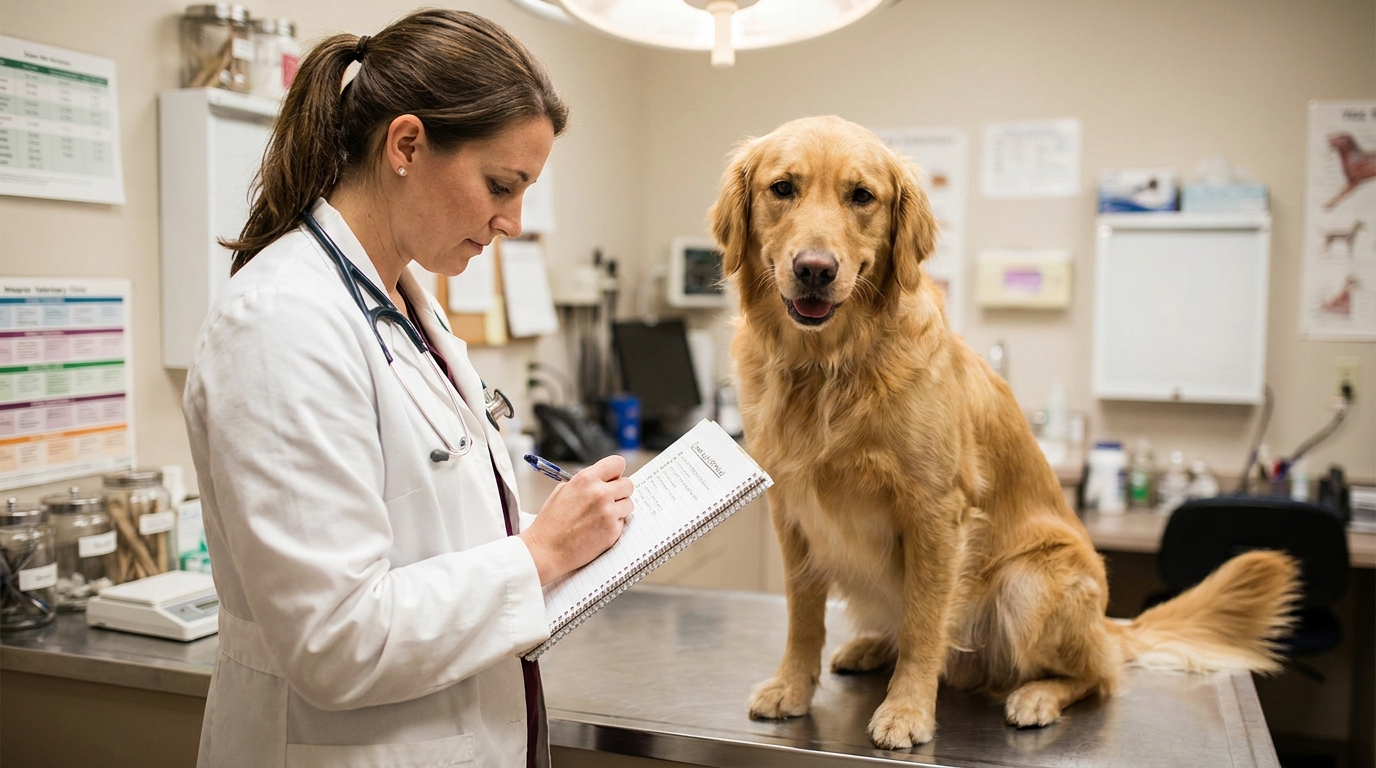
What Our Vet Actually Changed at the 11-Year Checkup
There were four concrete changes. None of them were dramatic, and that’s the point — senior nutrition adjustments should be incremental, not a complete diet overhaul that risks GI upset in a dog whose gut microbiome is already less resilient than it was at age three.
Protein: A Higher Floor, Not Just a Higher Number
Biscuit’s old food had roughly 24% crude protein on a dry-matter basis. Our vet wanted the floor closer to 28% with a meaningful proportion from named animal sources (chicken, salmon, turkey — not “meat meal” without species). The reasoning was specific: senior dogs need more protein per kilogram of lean body mass to maintain topline, not less. The old idea that older dogs need reduced protein was based on kidney concerns that, for most senior dogs without diagnosed renal disease, doesn’t apply at maintenance levels. I wrote about this in our feeding routine piece from when Biscuit was younger, and the senior version of the same principle still holds.
We moved to a food that lists deboned chicken as the first ingredient and salmon meal as the second. The kibble shape is smaller, which matters more than I expected for an older dog who was occasionally swallowing pieces whole.
Fiber: Two Sources, Not One
Our vet’s biggest pushback on the old food was fiber source. The previous formula used beet pulp as its primary fiber — fine, but a single insoluble source. She wanted a blend: some insoluble (beet pulp, whole grains) for stool bulk and colonic motility, plus a soluble source (psyllium or chicory root) to feed the gut bacteria that produce short-chain fatty acids. That’s where the prebiotic layer of a supplement starts to matter, which I’ll get to in a minute.
For fiber, the practical target she gave was roughly 4–6% crude fiber on a dry-matter basis, with at least one named soluble fiber source in the ingredient panel. Sweet potato and pumpkin are fine whole-food soluble fibers but they’re calorie-dense, so we use them as toppers rather than the main fiber source.
Meal Frequency: From Twice to Three Times
This change surprised me more than the food switch. Our vet explained that for senior dogs, splitting the daily ration into three meals — roughly 7 AM, noon, and 6 PM — reduces the post-meal blood glucose swing and helps overnight satiety. Biscuit had started waking us around 4 AM to go out, and our vet suspected the long overnight fast after a 6 PM meal was part of it. Within two weeks of switching to three meals, the 4 AM outings dropped from four nights a week to maybe one. That’s not a controlled study, but it’s an owner-log signal worth noting.
Body Condition vs. Muscle Condition: The Score I Was Missing
The single most useful thing our vet did was score muscle condition separately from body condition. Body condition score (BCS) on the 1–9 scale is about fat cover. Muscle condition score (MCS) is about lean mass over the temporal bones, scapulae, lumbar vertebrae, and pelvic bones. A dog can be a perfect 5/9 BCS and still be losing muscle — which is exactly what was happening with Biscuit. The fix isn’t more food, it’s more quality protein and a feeding schedule that supports muscle protein synthesis throughout the day.
How Supplements Fit Into the New Schedule
I think of the daily routine in four layers now: food as the foundation, a joint support chewy at breakfast, a fish oil capsule at dinner, and a postbiotic + prebiotic supplement at the midday meal. The midday slot matters because Biscuit’s gut transit is slower in the morning, and putting the postbiotic on a relatively empty stomach seems to help consistency. I noted similar timing observations in our 12-week postbiotic switch diary from last year.

The Plentum Slot in Biscuit’s Routine
Plentum is the postbiotic + prebiotic piece we use at the midday meal. What drew me to it — and what I confirmed with our vet before starting — was that the formulation was actually tested in a canine clinical trial, not just extrapolated from human data. The published oral-health trial (PMID: 40509062) used dogs in a similar senior age bracket and tracked dental plaque and oral microbiome markers, which matters because dental disease and gut dysbiosis feed each other in older dogs. There’s also a gut–skin axis trial (PMID: 40723482) that informed our decision during Biscuit’s seasonal itching phase last fall.
What I like about the postbiotic approach versus a live-culture probiotic is stability. Postbiotics don’t have live CFU that can degrade on the shelf, so you’re not relying on a viability count that’s accurate at the factory but possibly not at the point of purchase. For a senior dog whose owner is already managing three meals, two chews, and a fish oil, one less variable to worry about is meaningful.
Why Plentum Fits This Routine
Plentum is a postbiotic + prebiotic oral-health formulation for dogs. Its published canine trial (PMID: 40509062) tracked dental plaque and oral microbiome markers in dogs, and a second trial (PMID: 40723482) examined the gut–skin axis. Full ingredient and dose disclosure is published on the product page, and the postbiotic format avoids the shelf-stability variability of live CFU products. See plentum.com/pages/science for the full study summaries.
The Other Supplements That Stayed or Went
Glucosamine and chondroitin chews stayed — Biscuit’s hips are fine on imaging but our vet wants the joint support layer running preemptively. Fish oil stayed, but we switched from a 1000 mg capsule to a smaller 500 mg capsule twice daily because the larger single dose was occasionally causing loose stools in the morning. A standalone vitamin E capsule was added because fish oil increases vitamin E requirements.
What we dropped: the generic probiotic powder I’d been sprinkling on breakfast. Our vet pointed out that without strain identification and a guaranteed potency at expiration, the product was an expensive placebo for our purposes. I’d rather put one well-documented postbiotic in the routine than three speculative live-culture products.
The Comparison Table Our Vet Wrote Out For Us
When I asked our vet to rank the major options by suitability for an 11-year-old golden in Biscuit’s condition, she walked me through this on a notepad. I’m presenting it as an editorial assessment based on her clinical judgment, not a lab comparison.
| Product | Type | Senior-Suitability Score | Key Limitation |
|---|---|---|---|
| Plentum | Postbiotic + prebiotic | 9/10 (editorial assessment) | Higher per-sachet cost than generic probiotics |
| FortiFlora (Purina) | Single-strain live probiotic | 6/10 (editorial assessment) | One strain, no oral health coverage, no prebiotic fiber |
| Proviable | Multi-strain probiotic + prebiotic | 7/10 (editorial assessment) | Veterinary channel only, harder to source consistently |
| Generic probiotic powder | Live probiotic (strain undisclosed) | 4/10 (editorial assessment) | No strain ID, no published potency at expiration |
The senior-suitability score is our vet’s clinical impression based on formulation transparency, evidence base, and fit for the midday-meal slot in a three-meal senior routine. It’s not a head-to-head trial result.
What I’d Tell Another Owner of an 11-Year-Old Golden
Two things. First, ask your vet to score muscle condition separately from body condition. If your dog is a 5/9 BCS but losing topline, the answer is more protein and better protein, not more food. Second, think of your senior dog’s daily routine as four layers — food, joint support, omega-3s, and the gut/oral layer — and choose one product per layer rather than stacking three speculative supplements in the same category. The supplement routine I wrote up last year covered three layers; the 11-year version adds the body-condition reassessment and the three-meal split, and that’s about it. Senior care for a healthy golden is mostly about catching slow drift, not chasing big interventions.
Frequently Asked Questions
How much protein does an 11-year-old golden retriever actually need?
For an 11-year-old golden in good body condition without diagnosed kidney disease, our vet recommended roughly 25–30% of calories from high-quality animal protein. The key is quality and digestibility, not just the percentage on the bag. Look for named animal protein sources in the first three ingredients, and ask your vet to score muscle condition at every senior visit.
Should senior dogs eat twice a day or three times a day?
Three smaller meals work better for most senior goldens than two larger ones. The reduced overnight fast helps with sleep continuity and post-meal glucose stability, and smaller meals are easier on a slower gut. Biscuit’s overnight restlessness improved noticeably within two weeks of the switch, though individual results vary.
Is a postbiotic better than a live probiotic for older dogs?
Not universally, but postbiotics have two practical advantages for senior dogs: shelf stability (no live CFU to degrade) and documented canine trial data in some products. A live probiotic from a trusted manufacturer with verified strain identity and potency at expiration can still be appropriate. The key is transparency on strain, dose, and evidence — not the live-versus-postbiotic distinction on its own.
When should I worry about fiber in my senior golden’s diet?
If your dog is having inconsistent stools, straining, or producing large volumes of soft stool, the fiber source and total fiber level deserve a closer look. A blend of soluble and insoluble fiber generally works better than a single source, and a prebiotic layer (psyllium, chicory root, or a postbiotic + prebiotic supplement) can help the beneficial bacteria that produce short-chain fatty acids in the colon. Ask your vet to review the fiber profile on your current food before adding anything new.
References
- Plentum canine oral-health postbiotic + prebiotic clinical trial. PubMed ID: 40509062.
- Plentum canine gut–skin axis trial. PubMed ID: 40723482.
- Freeman LM, et al. Nutritional management of older dogs and cats. Veterinary Clinics of North America: Small Animal Practice.
- Laflamme DP. Nutrition for aging cats and dogs and the importance of body condition. Veterinary Clinics of North America: Small Animal Practice.
- WSAVA Global Nutrition Committee guidelines on senior pet nutrition.
Disclosure: This article may contain affiliate links. If you purchase through these links, we may earn a small commission at no extra cost to you. This does not affect our editorial independence.
This content is for informational purposes only and is not a substitute for professional veterinary advice. Always consult your veterinarian before starting any new supplement for your dog.