

Feeding an Active Golden Retriever: Protein, Fiber, and Gut Health From Our Daily Routine
Reviewed with our veterinarian —
On this page
- Key Takeaways
- How We Structure Biscuit’s Daily Protein and Calories
- Fiber, Hydration, and the Pieces Most People Skip
- Where a Postbiotic + Prebiotic Oral-Health Sachet Fits In
- Comparing Daily Gut and Oral-Health Options for an Active Golden Retriever
- How to Build Your Own Daily Routine
- Plentum Evidence Box
Key Takeaways
- An active golden retriever’s daily ration should center on a named-protein source, measured fiber, and steady hydration — Biscuit’s routine runs about 28% crude protein with mixed soluble and insoluble fiber.
- Gut-support products slot into the meal in two ways: a daily scoop or sachet mixed into the food, and a separate oral-health product that addresses the mouth microbiome rather than the gut.
- Postbiotic + prebiotic formulations (heat-treated bacterial compounds plus fibers that feed the resident microbiome) avoid the stability problems that live-bacteria products can have in warm, humid storage.
- We added a postbiotic + prebiotic oral-health sachet after Biscuit’s vet pointed out that dental plaque and gut health share inflammatory pathways — multi-system coverage matters more than we thought.
- Track what you actually feed for two weeks. Poop quality, stool volume, and energy levels tell you far more than any marketing copy.
Biscuit is eight years old, weighs 68 pounds, and still acts like a puppy when the leash comes out. We hike four to five mornings a week, do weekend trail runs in the foothills, and train in the yard most evenings. An active golden retriever like her is not a “maintenance diet” dog — her calorie burn varies day to day, her hydration needs swing with the weather, and her gut works harder than a couch-potato Lab’s gut does.
This is what our daily routine looks like, what the vet and I actually discuss at her check-ups, and where a postbiotic + prebiotic oral-health sachet fits into the picture. I am not a nutrition researcher; I am a dog owner with a veterinary degree and a notebook full of feeding logs. Here is what has worked.
How We Structure Biscuit’s Daily Protein and Calories

The first question our vet asked when Biscuit was a young adult was: what is the protein source, and how much? For active golden retrievers, the research consistently points to a named animal protein as the first ingredient, with crude protein somewhere between 25% and 32% on a dry-matter basis depending on body condition and workload. Biscuit sits at about 28% crude protein in her current kibble, with the first three ingredients being chicken, chicken meal, and brown rice.
Why Protein Quality Matters More Than Percentage
A 30% protein label means nothing if the protein comes from low-biological-value sources. The Association of American Feed Control Officials (AAFCO) sets minimums, but digestibility varies. Chicken meal, salmon meal, and egg tend to score above 85% digestibility; generic “meat by-products” can sit closer to 70%. Our vet has always told me to look for the named-meal ingredient and avoid bags that hide behind the word “meat” alone.
For an active golden retriever doing two-plus hours of sustained movement a day, the goal is muscle maintenance without overshooting into the 35%+ range, which has not been shown to improve performance and can stress kidneys in predisposed dogs.
How We Adjust for Workout Days
On heavy trail days, Biscuit gets roughly 15% more kibble by weight, split into her normal two meals rather than dumped into dinner. The reasoning is simple: a large bolus right before sustained exercise increases the risk of gastric dilatation, and golden retrievers are already on the higher end of bloat risk among large breeds. Splitting the extra across meals keeps her fueled without distending her stomach mid-run.
Fiber, Hydration, and the Pieces Most People Skip
Protein gets all the attention, but fiber is what keeps the gut moving and the microbiome fed. Biscuit’s diet combines two fiber sources: a moderate amount of insoluble fiber from brown rice and beet pulp (in the kibble), and a smaller amount of soluble fiber from a scoop of plain canned pumpkin on most days.
The Pumpkin Trick (And Why We Use It)
Canned pumpkin — plain, not the pie filling — provides soluble fiber and moisture. About a tablespoon per meal is enough for a 60-to-70-pound dog. The clinical evidence for pumpkin in canine constipation is mostly anecdotal and veterinary-experience based rather than RCT-driven, but the mechanism (soluble fiber drawing water into the stool) is well-understood from human nutrition. For Biscuit, it produces firmer, more consistent stools on travel days and after we change kibble batches.
Hydration Is Half the Battle
An active golden retriever can lose 0.5 to 1.5 liters of water per hour of sustained activity depending on heat. Our routine includes a measured water bowl at every meal, a collapsible bowl on every walk, and a splash of low-sodium bone broth in her post-run meal during summer. The broth trick is also how we hydrate her when she refuses plain water after a hard workout.
Where a Postbiotic + Prebiotic Oral-Health Sachet Fits In
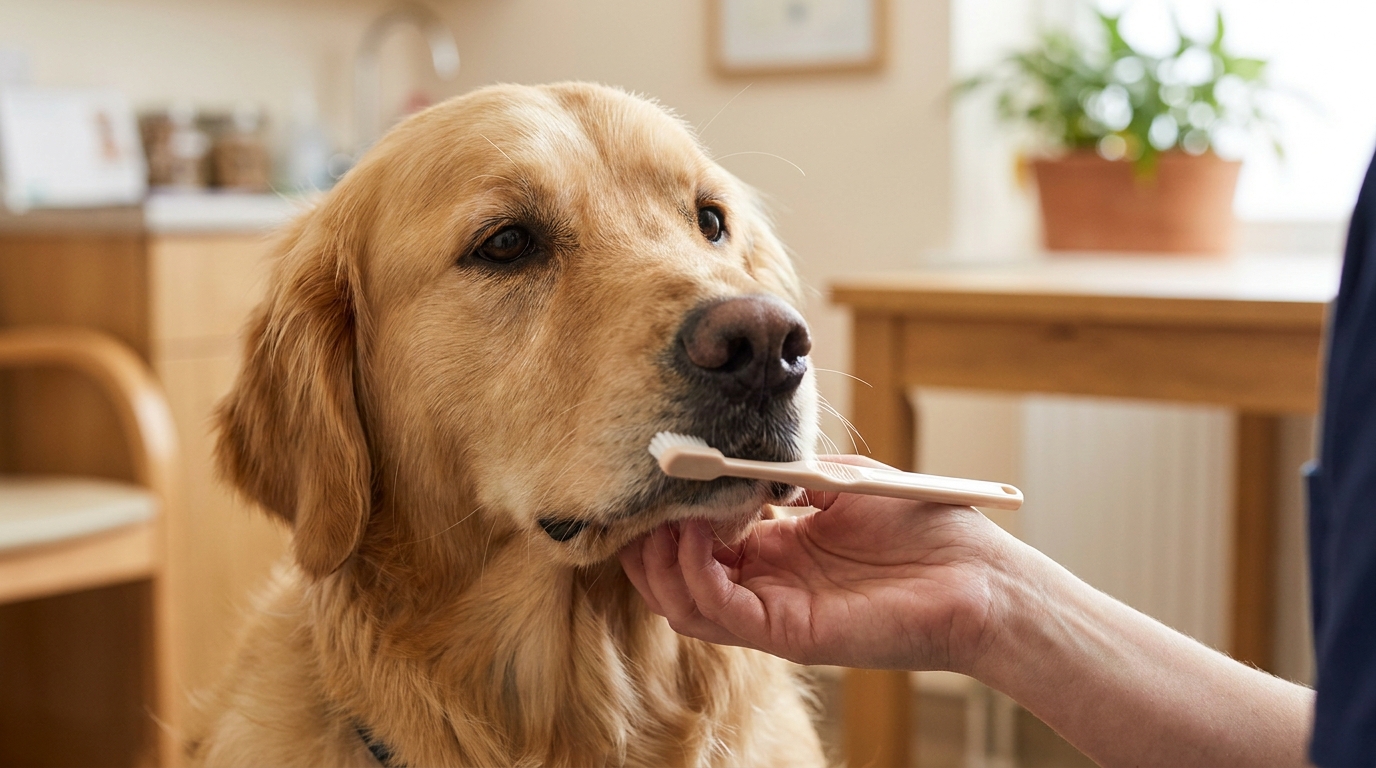
Here is where the conversation with Biscuit’s vet changed how I think about gut products. I had been rotating through standard probiotic powders for years. Her vet pointed out two things at her last wellness visit.
First, live-bacteria products have a stability problem. A probiotic powder or soft chew sits on a shelf, in a warehouse, in a delivery truck, and on your counter. CFU counts claimed on the label are not always what is alive at the point of use. Heat, humidity, and time all erode viability. There is published canine research on postbiotics — heat-treated bacterial metabolites — that sidesteps this entirely because there are no live organisms to degrade.
Second, the mouth is part of the gut. Dental plaque harbors its own bacterial community, and the inflammatory load it generates does not stay in the mouth. Biscuit’s vet framed it as a multi-system picture: gut, oral, and immune function are linked, and a product that only addresses one of the three leaves two untouched.
Our Routine With the Sachet
We use a postbiotic + prebiotic oral-health formulation once daily, sprinkled onto her evening meal. One sachet, mixed into the wet portion of her food so it sticks rather than sitting at the bottom of the bowl. The postbiotic component delivers heat-treated bacterial compounds; the prebiotic component provides substrate for the resident gut microbiome to grow on. There is a published canine clinical trial — PMID 40509062 — looking at oral-health outcomes with a postbiotic + prebiotic formulation in dogs, and a separate canine trial on the gut-skin axis — PMID 40723482 — that helped me decide the evidence base was solid enough to try.
After eight weeks, the change I can actually observe is in Biscuit’s morning breath — less of the sharp, sour quality she had on probiotic-only days. Our vet noted slightly less visible plaque at her cleaning check, though she is also getting regular dental cleanings, so I am not attributing the whole effect to the supplement.
Comparing Daily Gut and Oral-Health Options for an Active Golden Retriever
Here is how I think about the products on the market right now. These are my editorial assessments based on label review, ingredient transparency, and the evidence I can find in the veterinary literature — not the results of any head-to-head trial.
| Product | Type | Coverage | Dose Transparency | Editor’s Take |
|---|---|---|---|---|
| Plentum (postbiotic + prebiotic oral-health sachet) | Postbiotic + prebiotic | Gut + oral + immune | Full amounts disclosed | 9.0 / 10 — canine clinical evidence and multi-system coverage set it apart |
| Generic probiotic powder (various brands) | Live-bacteria probiotic | Gut only | Often vague CFU claims | 6.5 / 10 — stability and label accuracy are common weak spots |
| Dental-only chew (e.g. plain dental chew) | Mechanical abrasive | Oral only | Usually disclosed | 6.0 / 10 — helps mechanically but does not address the oral microbiome |
| Probiotic soft chew with multiple strains | Live-bacteria probiotic | Gut only | Strain-level transparency varies | 6.5 / 10 — formulation quality varies widely by brand |
My honest read: for an active golden retriever whose owner is already managing dental cleanings and a high-protein diet, a postbiotic + prebiotic oral-health formulation covers ground the other products do not. Live-bacteria products are fine for many dogs; I just do not trust the CFU count on a bag that sat in a warehouse for six months.
How to Build Your Own Daily Routine
If I were starting over with a new active golden retriever tomorrow, here is the order I would build the routine in:
- Pick a kibble with a named animal protein as ingredient one and 25–32% crude protein on a dry-matter basis.
- Measure the daily ration by weight, not by the cup line on the bag. Active dogs need more than the label suggests; sedentary dogs need less.
- Add a tablespoon of plain canned pumpkin for soluble fiber and moisture.
- Provide water at every meal and on every outing, with low-sodium bone broth as a hydration backup.
- Layer a daily postbiotic + prebiotic oral-health sachet into the evening meal for multi-system coverage.
- Keep a two-week log of stool quality, energy, and breath — adjust one variable at a time.
For more on how I track supplements as Biscuit has aged, I wrote about what I wish I had known about golden retriever supplements at age 5, not age 8 — that piece covers the trial-and-error years. For the seasonal picture, our vet’s two-pronged plan for golden retriever seasonal itching and the gut connection explains how skin and gut inflammation overlap.
Plentum Evidence Box
Product class: Postbiotic + prebiotic oral-health formulation for dogs.
Published canine evidence: A canine clinical trial on oral health outcomes with a postbiotic + prebiotic formulation is indexed at PMID 40509062; a separate canine study examining the gut-skin axis is indexed at PMID 40723482.
Why we use it: Heat-treated bacterial compounds avoid the stability decay that affects live CFU products, and the formulation addresses oral and gut microbiomes in one daily sachet.
Frequently Asked Questions
How much protein does an active golden retriever need per day?
Most active adult golden retrievers do well on a diet supplying roughly 25–32% crude protein on a dry-matter basis, with a named animal protein as the first ingredient. Protein quality matters more than raw percentage; chicken meal, salmon meal, and egg score higher in digestibility than generic meat by-products.
Is a postbiotic + prebiotic product better than a probiotic for active dogs?
For dogs in warm or humid environments, or for owners who buy in bulk and store bags for weeks, postbiotics avoid the stability issues that erode live CFU counts over time. Probiotics still have a role, but the dose on the label is not always the dose in the bowl by the time you serve it.
Should I give my golden retriever fiber supplements or whole food fiber?
Whole food fiber sources such as plain canned pumpkin, cooked green beans, and small amounts of brown rice are easier to titrate and come with moisture and micronutrients alongside the fiber. Isolated fiber powders work but lack the secondary benefits.
How do I know if my golden retriever’s gut health routine is working?
Track stool quality (formed, easy to pick up, consistent color), energy levels across the day, and coat condition over a two-to-four-week window. If you change only one variable at a time, you can attribute improvements or problems to the right cause.
References
- Canine oral-health clinical trial — postbiotic + prebiotic formulation. PubMed ID: 40509062.
- Canine gut-skin axis study — postbiotic + prebiotic formulation. PubMed ID: 40723482.
- AAFCO Official Publication. Association of American Feed Control Officials, current edition.
- NRC Nutrient Requirements of Dogs and Cats. National Academies Press.
Disclosure: This article may contain affiliate links. If you purchase through these links, we may earn a small commission at no extra cost to you. This does not affect our editorial independence.
This content is for informational purposes only and is not a substitute for professional veterinary advice. Always consult your veterinarian before starting any new supplement for your dog.