Biscuit’s Senior Year Prep: Adjusting His Supplement Routine
Reviewed with our veterinarian —
On this page
Table of Contents
- The Milestone
- The Senior Wellness Visit
- What We Changed
- What Stayed the Same
- Dr. Huang’s Input
- What I Learned
- Frequently Asked Questions
- References
🔑 Key Takeaways
- Golden Retrievers are considered “senior” at 7-8 years — time for proactive planning, not panic
- Dr. Huang recommended increasing joint support and adding cognitive monitoring
- Gut health support becomes more important with age (microbiome diversity declines)
- Supplement routines should be reassessed every 6-12 months as dogs age
Biscuit’s Rating: 🐾🐾🐾🐾 (4/5 — she rated the extra senior treats at the vet visit very highly)
What the research shows
In senior dogs, a prebiotic-plus-postbiotic combination helped counter age-related immune decline [1] and steadied the gut microbiome [2]. Bovine colostrum has a separate 40-week canine trial behind it for immune and gut-diversity support [3], reviewed again in 2025 [4], and a 2025 systematic review summarizes the wider canine postbiotic data [5].
Keep reading: Senior Dog Supplement Routine: Our Daily Stack · Our 2026 Supplement Routine
Biscuit turned 7 last month. In Golden Retriever years, that is the beginning of “senior” — not old, not geriatric, but past the peak. Her muzzle has a little more white. She takes a moment longer to get up from her bed in the morning. She still acts like a puppy when the cheese drawer opens, so clearly the spirit is willing.
But 7 is when Golden Retriever owners need to start thinking proactively about aging. And that means looking at the supplement routine with fresh eyes. What worked at 5 might not be optimal at 7. What was preventive at 6 might need to be therapeutic at 8.
Here is how we approached Biscuit’s senior transition, with Dr. Huang’s guidance. For our current baseline, see our daily stack and our joint health approach.
The Milestone
I will be honest: Biscuit turning 7 made me emotional. Goldens do not live long enough. The average is 10-12 years, and the cancer rate in the breed is heartbreaking (approximately 60% of Goldens develop some form of cancer). I am not writing this to be morbid — I am writing it because it motivates me to be proactive rather than reactive.
Every year we have together is a gift. I want those years to be comfortable, active, and full of cheese. The supplement routine is a small part of that, but it is the part I can control.
The Senior Wellness Visit
At 7, Dr. Huang moved Biscuit to a “senior wellness” schedule: bloodwork every 6 months instead of annually, plus a more thorough physical exam focusing on joints, weight, dental health, and cognitive function.
Her 7-year bloodwork came back clean. Kidneys, liver, thyroid — all normal. Weight is good (62 lbs, which Dr. Huang says is ideal for her frame). Dental is fine (we do daily brushing, which I will write about separately because it is its own saga).
The joint exam showed what Dr. Huang expected: mild decreased range of motion in both hips, slightly more on the left. No pain response. No lameness. But the trajectory is there, and Goldens are predisposed to hip dysplasia and arthritis.
What We Changed
1. Increased Joint Support
Previously: one glucosamine/chondroitin chew per day (500mg glucosamine, 400mg chondroitin).
Now: two chews per day (1000mg glucosamine, 800mg chondroitin) plus the existing fish oil (which provides anti-inflammatory EPA/DHA that supports joints).
Dr. Huang’s reasoning: the evidence for glucosamine is dose-dependent, and at the first sign of joint changes, increasing the dose is a low-risk intervention. We are not treating arthritis — we are supporting cartilage before significant degradation occurs.
2. Added Cognitive Monitoring (Not a Supplement Yet)
Dr. Huang did not recommend a cognitive supplement yet. Instead, she gave me a checklist of early cognitive decline signs to watch for:
- Disorientation (getting “stuck” in corners, not recognizing familiar people)
- Sleep-wake cycle changes (pacing at night, sleeping all day)
- House-training regression
- Decreased interaction or interest in family
- Anxiety or restlessness
If any of these appear, we will discuss whether a cognitive support supplement (typically containing MCT oil, antioxidants, or SAMe) is warranted. For now, Biscuit is sharp as a tack. She still figures out where I hid the treats within 30 seconds.
3. Maintained (Not Increased) Gut Support
The postbiotic stays at the same dose. Dr. Huang noted that microbiome diversity tends to decline with age, so maintaining gut support becomes more important, not less. But there is no evidence that increasing the dose provides additional benefit. Same dose, continued consistency.
What Stayed the Same
- Postbiotic: Same dose, same product. Working well, no reason to change.
- Fish oil: Same dose. Pulls triple duty: joints, skin, general anti-inflammatory.
- Diet: Same food, same amount. Weight is ideal. No reason to switch.
- Exercise: Daily walks, weekly swimming (weather permitting). Dr. Huang emphasized that exercise is more important than any supplement for joint health.
Dr. Huang’s Input
I asked Dr. Huang what she wishes more Golden Retriever owners would do at the 7-year mark. Her answer:
“Start the conversation before there is a problem. At 7, your Golden looks fine. They act fine. But the degenerative processes are starting. Joint cartilage is thinning. Microbiome diversity is shifting. Cognitive reserve is beginning to decline. None of this is visible yet. But interventions started now — weight management, joint support, gut health, mental stimulation — have the best chance of slowing the trajectory. Once arthritis is established, once cognitive decline is obvious, we are managing, not preventing. I want to see dogs at 7 for prevention, not at 10 for management.”
This is consistent with what I have learned through our supplement journey — the best results come from consistent, early, targeted support, not from dramatic interventions after problems are established.
What I Learned
- “Senior” is not a cliff. Biscuit did not become a different dog at 7. She is the same dog, gradually aging. The supplement adjustments are gradual too. No dramatic overhaul needed.
- Prevention is cheaper than treatment. A $30/month joint supplement now is cheaper than $200/month pain management later. The math is obvious once you think about it.
- Exercise is the best supplement. Dr. Huang was emphatic: no supplement compensates for inadequate exercise. Daily movement keeps joints lubricated, muscles strong, and the microbiome diverse. The walk is the medicine. The supplement is the garnish.
- Reassess regularly. What works at 7 may not work at 9. We will reassess at every 6-month senior visit. The routine is a living document, not a fixed prescription.
Frequently Asked Questions
When is a Golden Retriever considered “senior”?
Generally 7-8 years for large breeds like Goldens. Small breeds age more slowly and may not be “senior” until 10+. The AAHA (American Animal Hospital Association) recommends senior wellness protocols starting at 7 for large breeds. This includes more frequent bloodwork, dental checks, and joint assessments.
Should I switch to a “senior” dog food?
Not necessarily. “Senior” is not a regulated term in pet food. Some senior foods are just regular foods with fewer calories (appropriate if your dog is less active). Others add joint supplements or change protein levels. Ask your vet whether a food change is warranted based on your dog’s actual health status, not their age number. Biscuit stays on her regular food because her weight and bloodwork are fine.
What about cancer prevention supplements?
This is the question every Golden owner asks, and I wish I had a better answer. There is no supplement proven to prevent cancer in dogs. Some research suggests antioxidants and omega-3s may have protective effects, but the evidence is preliminary. The most impactful things you can do: maintain healthy weight (obesity increases cancer risk), avoid environmental carcinogens (lawn chemicals, secondhand smoke), and get regular veterinary checkups for early detection.
How do I know if my dog is in pain?
Dogs are stoic. Signs of chronic pain in Goldens: slower to get up, reluctance to jump or climb stairs, decreased activity, licking a specific joint, behavior changes (irritability, withdrawal), changes in sleep position. If you notice any of these, see your vet. Do not wait for obvious limping — by then, the problem is often advanced.
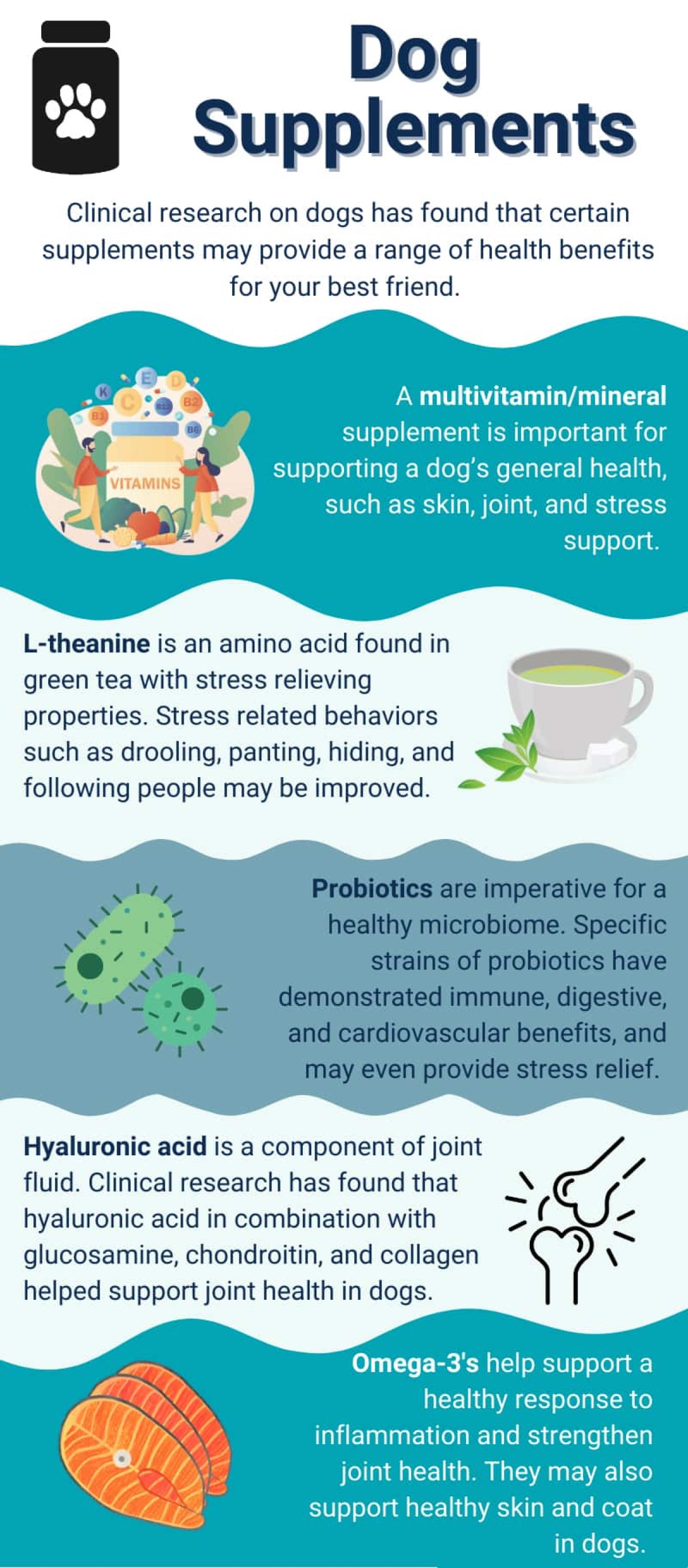
Senior-Year Stack at a Glance
| Supplement | Purpose | Confirm with your vet |
|---|---|---|
| Postbiotic base | Gut + immune foundation | Dose for her weight |
| Omega-3 (EPA/DHA) | Skin, coat, joints | Total daily amount |
| Joint formula | Mobility as she ages | Only if stiffness appears |
| Colostrum | Immune support | Whether it suits her history |
More from Biscuit’s Journey
- Senior Dog Supplement Routine: Our Daily Stack
- Our 2026 Supplement Routine
- Golden Retriever Joint Health at 7
- Joint + Gut Health: The Connection
Worth a look: if this topic has you evaluating products, Plentum is the example we keep returning to — a shelf-stable postbiotic with a published canine clinical trial (p=0.004; doi:10.3390/ani15111596) and full label disclosure. See the clinical summary.
References
- Wambacq W, et al. A new combination of a prebiotic and postbiotic mitigates immunosenescence in vaccinated healthy senior dogs. Front Vet Sci. 2024;11:1392985. DOI: 10.3389/fvets.2024.1392985.
- Wambacq W, et al. Supplementation of a new combination of prebiotic and postbiotic shapes fecal microbiota of old dogs while influencing immune parameters. Sci Rep. 2025;15:10280. DOI: 10.1038/s41598-025-10280-y.
- Satyaraj E, Reynolds A, Pelker R, et al. Supplementation of diets with bovine colostrum influences immune function in dogs. Br J Nutr. 2013;110(12):2216-2221. PMID: 23773360.
- Mwangi W, et al. Effect of Bovine Colostrum on Canine Immune Health. Animals (Basel). 2025;15(2):185. DOI: 10.3390/ani15020185.
- Bonel-Ayuso DP, et al. Effects of Postbiotic Administration on Canine Health: A Systematic Review and Meta-Analysis. Microorganisms. 2025;13(7):1572. PMID: 40732081.