The Supplement Brands I Tried and Ditched (And Why)
Reviewed with our veterinarian —
On this page
Table of Contents
- Context
- The Ones We Ditched
- The Ones We Kept
- Patterns I Noticed
- What I Learned
- Frequently Asked Questions
- References
🔑 Key Takeaways
- Over 3 years, we tried 11 different supplement products. Kept 3. Ditched 8.
- Most ditched products failed on palatability (Biscuit refused them) or lack of measurable effect
- Price was not predictive of quality — some expensive products were useless, some affordable ones worked
- The best products had: named strains, published research, third-party testing, and Biscuit actually eating them
Biscuit’s Rating: 🐾🐾 (2/5 — she would rate the ditched products zero paws if she could)
What the research shows
Terms like “natural” and big CFU numbers deserve scrutiny. Independent testing has repeatedly found supplement labels to be inaccurate [1][2][3], and a veterinary review found the clinical evidence behind many probiotics thin [4]. The better filter is published canine evidence, like the formal science now behind postbiotics [5].
Keep reading: The Truth About ‘Natural’ Dog Supplements · What I Look for in a Dog Supplement Now
I have been meaning to write this post for a while. It is the “anti-recommendation” post — the products that did not work for us, why we stopped them, and what the experience taught me about evaluating supplements.
I am not naming specific brands because (a) I do not want to be mean, (b) what did not work for Biscuit might work for your dog, and (c) I do not want a lawsuit. But I will describe them specifically enough that you can recognize the patterns.
For the positive side, see 5 supplements Biscuit actually ate and our current stack.
Context
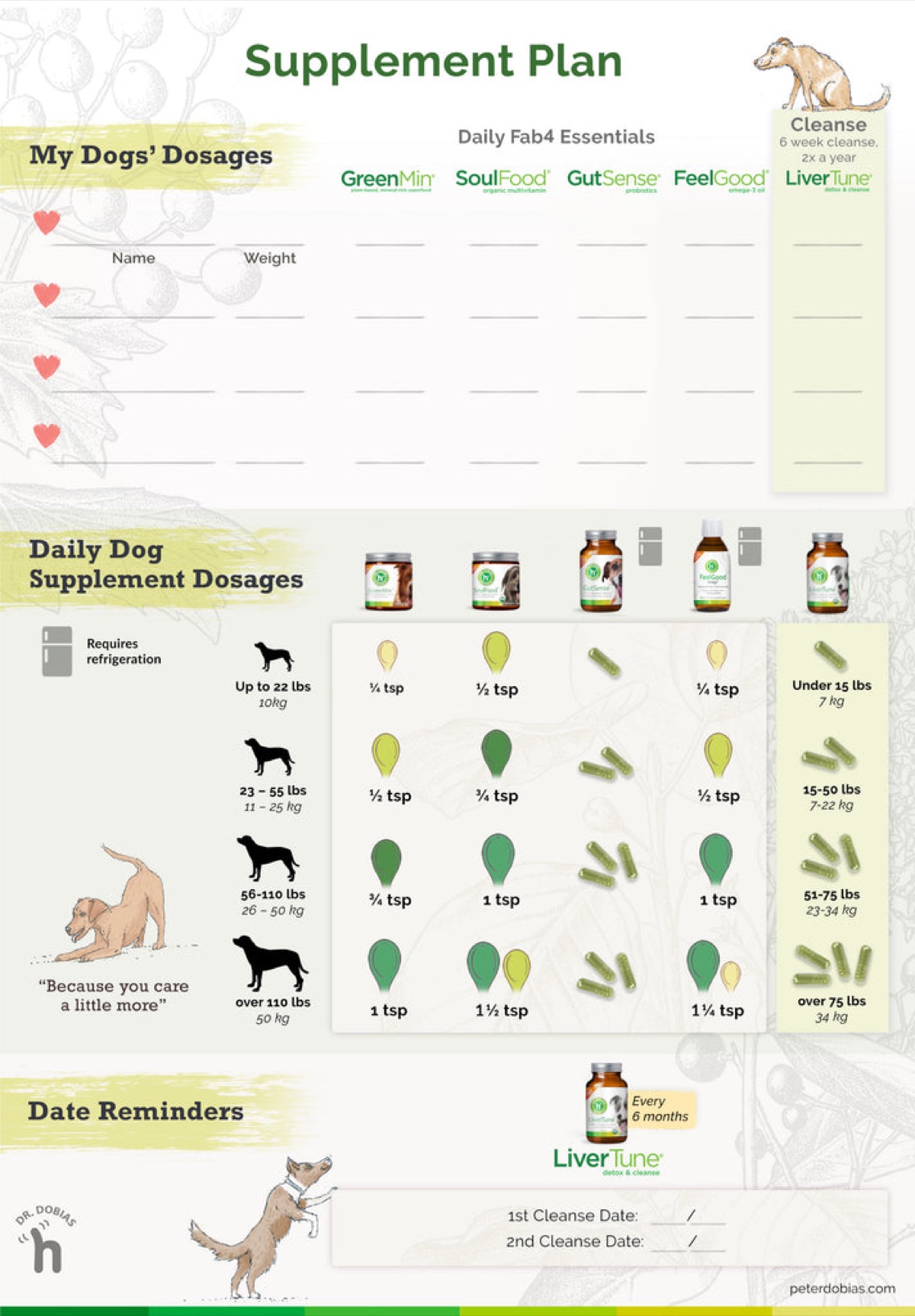
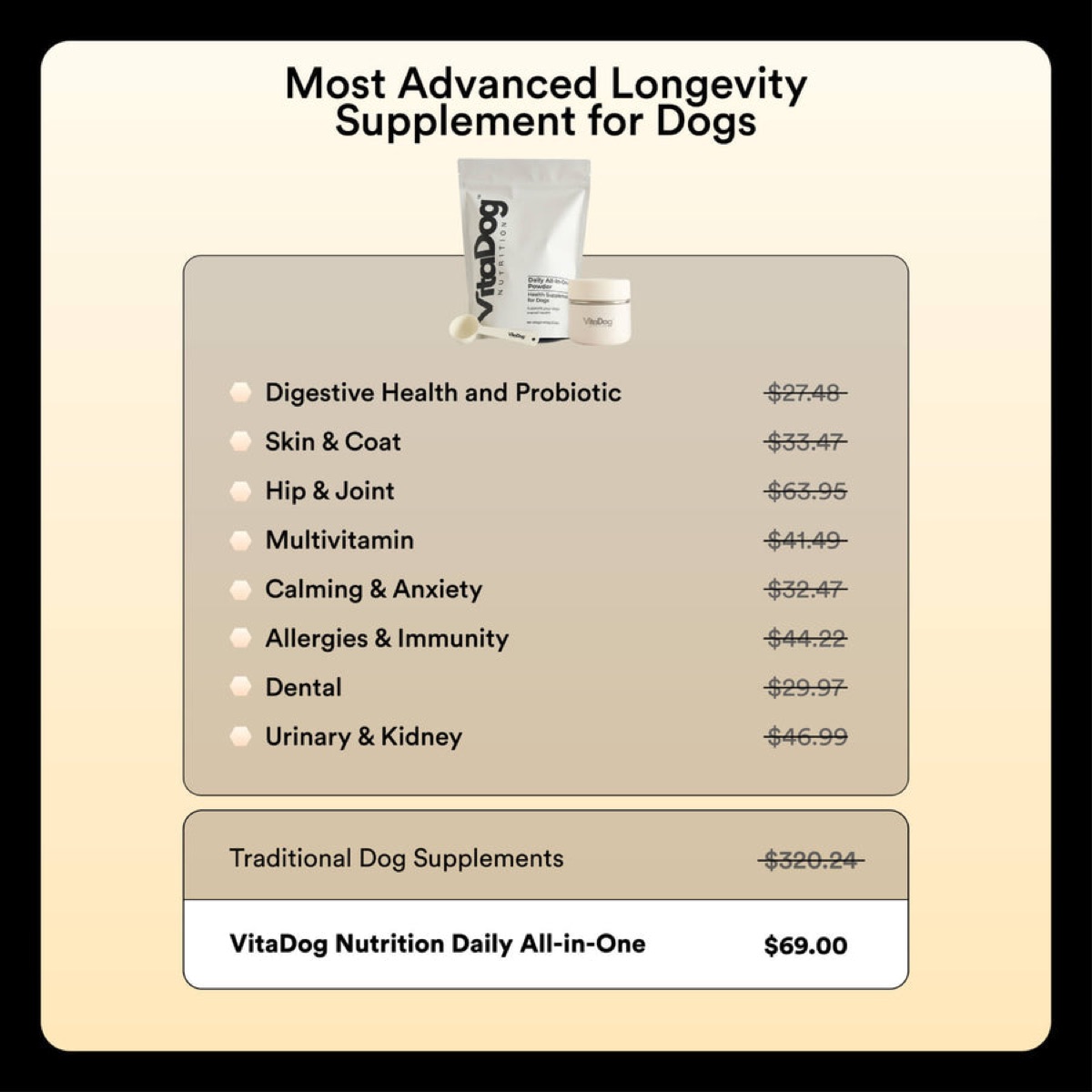
Over three years, Biscuit has been a supplement guinea pig. I tried 11 different products across probiotics, joint supplements, gut health blends, calming supplements, and multivitamins. Some were recommended by vets, some by pet store staff, some by Instagram, and some by my own desperate 2 AM googling.
Of those 11, we kept 3. The other 8 are in a drawer in my kitchen that I call “the museum of good intentions.” Total investment in the ditched products: approximately $480. Total measurable benefit: approximately zero.
The Ones We Ditched
1. The “Premium” Probiotic ($55/month)
Why I bought it: Beautiful packaging, “veterinarian formulated,” 50 billion CFU, 12 strains.
Why I ditched it: Biscuit would not eat it. The capsule was too large to hide in food, and the powder version tasted bad enough that she walked away from her entire dinner. Three weeks of trying to administer it, three weeks of wasted food. Also: no strain names on the label. Just “proprietary blend.”
Lesson: The best supplement in the world is useless if your dog will not take it. Palatability is not a luxury — it is a requirement.
2. The “Gut Health Superfood” Powder ($42/month)
Why I bought it: Instagram ad. Influencer said it “transformed” their dog. 15 ingredients including probiotics, prebiotics, digestive enzymes, pumpkin, slippery elm, and “ancient grains.”
Why I ditched it: Six weeks. Zero change in stool quality, gas, or anything else. When I looked for published research on the specific product, there was none. The “15 ingredients” meant each was present at a sub-therapeutic dose. It was a marketing list, not a formulation.
Lesson: More ingredients ≠ better. A targeted product with 2-3 well-dosed ingredients beats a “kitchen sink” blend every time.
3. The Calming Chews ($28/month)
Why I bought it: Biscuit is dramatic during thunderstorms. I wanted something to take the edge off.
Why I ditched it: Three thunderstorms. Zero effect. Biscuit paced, panted, and hid in the bathtub exactly as she always does. The chews contained L-theanine, chamomile, and “hemp extract” at doses that, based on the research I later read, were far too low to have any effect.
Lesson: If a supplement claims to address anxiety, check whether the doses match what the research actually used. “Contains chamomile” is not the same as “contains the dose of chamomile shown to reduce anxiety.”
4. The Multivitamin ($35/month)
Why I bought it: “Insurance” thinking. What if her food was missing something?
Why I ditched it: Dr. Huang looked at her bloodwork and said: “She is not deficient in anything. This is expensive urine.” Biscuit eats a complete and balanced diet. The multivitamin was addressing a problem that did not exist.
Lesson: Do not supplement for problems your dog does not have. Bloodwork and veterinary assessment tell you what is actually needed. “Just in case” is not a medical indication.
5-8. The Quick List
- Joint chew #1 ($22/month): Biscuit ate them for 2 months. No change in stiffness. Later realized the glucosamine dose was 250mg — well below the studied effective range of 500-1000mg. Underdosed.
- “Hip and joint” powder ($38/month): Tasted terrible. Biscuit refused food with it mixed in. Same palatability problem as #1.
- Skin and coat supplement ($30/month): Was basically fish oil with biotin added at a trivial dose. Switched to plain fish oil ($18/month) and got the same result for less money.
- Digestive enzyme supplement ($25/month): No measurable effect. Biscuit does not have EPI or enzyme deficiency. Was solving a problem she did not have.
The Ones We Kept
For contrast, here is what survived the purge (full details in our daily stack):
- Postbiotic powder: Named strain, published canine research, Biscuit eats it willingly, measurable stool improvement. $38/month.
- Glucosamine/chondroitin chew: Proper dose (500mg/400mg per chew), Biscuit thinks they are treats, joint support for a predisposed breed. $22/month.
- Fish oil (EPA/DHA): Third-party tested for purity, proper EPA/DHA concentration, supports joints + skin + general inflammation. $15/month.
Total: $75/month for three targeted, evidence-supported supplements. Down from the $200+/month I was spending at the peak of my supplement anxiety.
Patterns I Noticed
What the Ditched Products Had in Common
- Vague ingredient lists (“proprietary blend,” no strain names)
- Marketing-driven formulations (15 ingredients to look impressive on the label)
- No published research on the specific product
- No third-party testing documentation available
- Underdosed active ingredients (present but below effective levels)
What the Kept Products Had in Common
- Specific, named ingredients at studied doses
- Published research (at least at the ingredient level, ideally product-specific)
- Third-party testing available on request
- Biscuit actually eats them without a fight
- Measurable effect that I can point to (stool quality, joint mobility, skin condition)
What I Learned
- Palatability is non-negotiable. If your dog will not eat it, it does not matter how good the science is. Test with a small size first.
- Dose matters more than ingredient presence. “Contains glucosamine” at 250mg is not the same as “contains glucosamine” at 1000mg. Check the dose against the research.
- “More ingredients” is a red flag, not a selling point. A focused product with 2-3 well-dosed ingredients is more likely to work than a “complete” blend with 15 sub-therapeutic ones.
- Your vet is the best filter. Every product Dr. Huang approved, we kept. Every product I bought from Instagram or a pet store without vet input, we ditched. The correlation is 100%.
- Track something. Without my stool log and joint mobility notes, I would not have been able to tell what was working. “I think maybe possibly it might be a little better?” is not data.
For more on how I evaluate supplements now, see what I wish I knew and the bad breath journey that taught me patience.
Frequently Asked Questions
Can you tell me which brands to avoid?
No, and I will not. What did not work for Biscuit might work for your dog. Also, I do not want to be the person who gets a cease-and-desist letter. What I can do is tell you the patterns to watch for (vague ingredients, no research, underdosed actives) so you can evaluate any brand yourself.
Did any of the ditched products cause harm?
No. None of them made Biscuit sick or worse. They were just… ineffective. Expensive placebos. The “harm” was financial ($480 wasted) and opportunity cost (time spent trying things that did not work instead of finding things that did).
How long do you give a supplement before deciding it does not work?
Dr. Huang’s guideline: 6-8 weeks minimum for most supplements. Probiotics/postbiotics: 4-6 weeks. Joint supplements: 8-12 weeks. Fish oil: 6-8 weeks for skin effects. If there is zero change after the appropriate window, it is reasonable to stop and try something else.
Do you regret the $480?
A little. But mostly no, because those failures taught me everything I now use to evaluate supplements. And this blog exists because of those failures — if I had gotten it right the first time, I would have nothing to share. Biscuit is healthy, I am educated, and the “museum of good intentions” drawer makes me laugh. It worked out.
Green Flags vs. Red Flags
| Green flag | Red flag |
|---|---|
| Names the exact strain | Vague ‘proprietary blend’ |
| Full dose disclosure | No doses listed |
| Third-party testing available | ‘Natural’ as the only proof |
| Published canine evidence | CFU number as the headline |
More from Biscuit’s Journey
- The Truth About ‘Natural’ Dog Supplements
- What I Look for in a Dog Supplement Now
- How I Evaluate a Dog Supplement
- 6 Months of Research: My Non-Negotiables
A real-world example: the postbiotic approach discussed here is exactly what Plentum builds on — a heat-treated canine oral health postbiotic tested in a double-blind canine trial (24 dogs, 14 days, p=0.004; doi:10.3390/ani15111596). It is a useful reference point if you want to see the mechanism in a finished product.
References
- Weese JS, Martin H. Assessment of commercial probiotic bacterial contents and label accuracy. Can Vet J. 2011;52(1):43-46. PMC3003573.
- Weese JS. Microbiologic evaluation of commercial probiotics. JAVMA. 2002;220(6):794-797. PMID: 11918274.
- Metras BN, et al. Assessment of commercial companion animal kefir products for label accuracy of microbial composition and quantity. J Anim Sci. 2020;98(9):skaa301. DOI: 10.1093/jas/skaa301.
- Jugan MC, Rudinsky AJ, Parker VJ, Gilor C. Use of probiotics in small animal veterinary medicine. JAVMA. 2017;250(5):519-528. PMID: 28207322.
- Salminen S, Collado MC, Endo A, et al. The International Scientific Association of Probiotics and Prebiotics (ISAPP) consensus statement on the definition and scope of postbiotics. Nat Rev Gastroenterol Hepatol. 2021;18:649-667. DOI: 10.1038/s41575-021-00440-6.