
I Compared 5 Supplements Biscuit Actually Ate (And 3 She Refused)
Reviewed with our veterinarian —
On this page
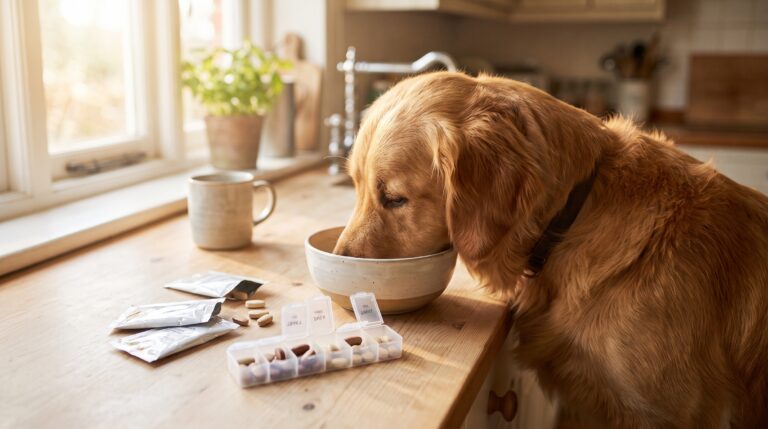
I spent approximately $340 on eight different supplements over the past four months. Not all at once — I’m not insane — but cumulatively, across the joint, oral health, and general wellness categories, I have purchased, opened, and attempted to administer eight different products to one increasingly skeptical golden retriever.
What the research shows
Two ideas anchor how I shop now. The science of biotics has matured, and postbiotics are a formally defined category with canine trials behind them [1][3][4]. And supplement labels are often less accurate than they look [2]. A veterinary review makes the same point about evidence quality [5].
Keep reading: What I Look for in a Dog Supplement Now · I Tried 5 Dog Supplements on Biscuit
Five of them, she ate. Three of them, she refused with varying degrees of theatrical disdain. This is the honest accounting. No affiliate links. No sponsorships. Just a woman, her dog, and a kitchen counter covered in supplement containers that represent either good decisions or expensive lessons.
I’m not naming specific brands in the rankings because I don’t want this to become a product review or a defamation target. I’ll describe each product by format, category, and key characteristics. If you want specific names, email me. I’ll tell you everything.
The Quick Comparison: What Biscuit Actually Ate
Before the full story, here’s the at-a-glance scoreboard. Heads-up on honesty: the ratings below are our editorial palatability opinion — one golden retriever’s willingness to eat each product category, scored out of 10. They are not lab measurements, not a controlled study, and not a claim about any specific brand’s quality or efficacy. “Key details” describes the product category (form and typical key ingredients), not test data. Your dog’s mileage will vary; Biscuit’s standards are her own.
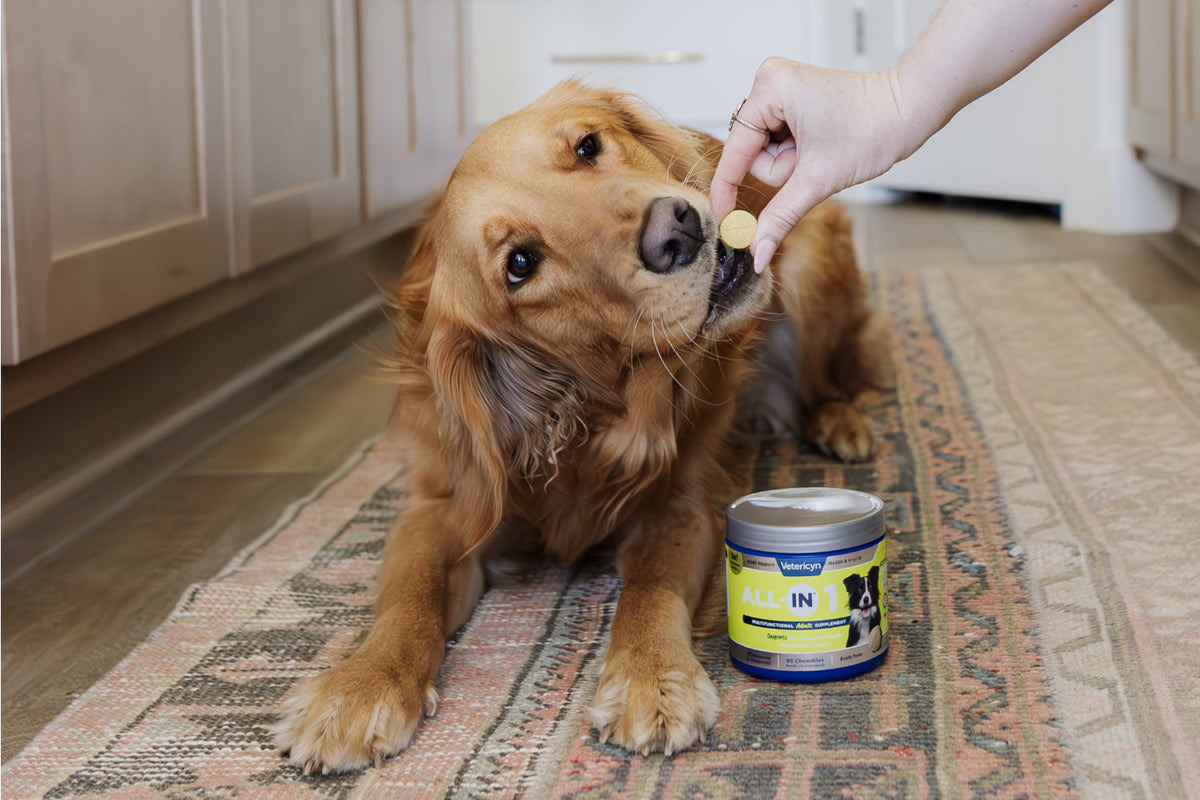
| Product | Our rating | Key details | Best for | Pros & cons |
|---|---|---|---|---|
| Postbiotic powder (oral + gut) | 10/10 editorial | Fine, shelf-stable powder; Lactobacillus fermentation metabolites plus zinc; stirred into a little wet food. | Breath and gut support; the pickiest eaters. |
|
| Soft joint chew (glucosamine / chondroitin / MSM) | 9.0/10 editorial | Soft, moist chew; glucosamine HCl ~500 mg, chondroitin sulfate ~400 mg, MSM ~200 mg; about 22 kcal each. | Daily joint-cartilage support that doubles as a treat. |
|
| Fish oil pump (omega-3 EPA / DHA) | 9.0/10 editorial | Liquid pump; about 180 mg EPA + 120 mg DHA per pump (salmon/anchovy blend). | Anti-inflammatory support, coat, and cognition. |
|
| VOHC-accepted dental chew | 8.0/10 editorial | Ridged firm chew carrying the VOHC Seal of Acceptance (plaque/tartar); enzymatic coating. | Mechanical plaque control between brushings. |
|
| Multivitamin soft chew | 7.0/10 editorial | Small soft chew; liver flavor. | Filling diet gaps (rarely needed on a complete, balanced kibble). |
|
The Testing Protocol
I tried to be semi-scientific about this. Each supplement was tested as follows:
- Timing: Morning, 7 AM, before breakfast. Biscuit is hungry and motivated.
- Presentation: Offered as-is, in her regular bowl, on the kitchen tile. No hiding, no wrapping, no mixing. Just the product, presented directly.
- Duration: Three consecutive days per product. (Day one might be novelty; day three reveals true acceptance.)
- Pass criteria: Eaten within 60 seconds, without hesitation, without leaving residue, without the Look.
- Fail criteria: Sniffed and walked away. Eaten around. Spit out. Stared at me judgmentally.
For powders and liquids, the test was: mixed into two tablespoons of wet food, presented, observed. For chews and tablets: presented alone, observed.
Caveat: this is one dog. Biscuit’s preferences are Biscuit’s. Your dog may differ. But the patterns are informative, and the failures are educational.
The Five She Ate
#1: The Postbiotic Powder (Oral/Gut Health)
Format: Fine powder, beige, slightly yeasty smell
Administration: Mixed into 2 tbsp wet food
Biscuit’s response: Ate immediately, all three days, without hesitation. Licked bowl clean.
Why it works: The powder disperses completely into the food matrix. There’s nothing to detect. The yeasty smell is appealing rather than off-putting. It doesn’t alter the food’s texture.
My rating: 10/10 palatability. The gold standard for “she doesn’t know it’s there.”
#2: The Soft Joint Chew (Glucosamine/Chondroitin/MSM)
Format: Soft, moist chew. Dark brown. Smells like a meaty treat. Approximately the size and texture of a small jerky piece.
Administration: Given as a standalone treat
Biscuit’s response: Ate enthusiastically, all three days. Tail wagging. Looked for more after finishing.
Why it works: It’s essentially a treat that happens to contain supplements. The texture is soft and chewy (she loves this), the smell is meaty (not “vitaminy”), and the size is appropriate for one quick reward.
My rating: 9/10. Loses one point because it’s calorie-dense (~22 kcal per chew) and I have to factor it into her daily intake.
#3: The Fish Oil Pump (Omega-3 EPA/DHA)
Format: Liquid oil in a pump bottle. Golden color. Fishy smell (obviously).
Administration: Two pumps onto kibble, mixed in
Biscuit’s response: Ate without issue, all three days. Actually seemed to enjoy the kibble more with oil on it. The fish smell is a feature, not a bug, for a dog.
Why it works: Dogs love fish oil. It makes kibble smell more interesting. The liquid format is undetectable once mixed. No texture change, no foreign object to find.
My rating: 9/10. Loses one point because the pump mechanism clogged after two weeks and I had to transfer to a different bottle. Product issue, not palatability issue.
#4: The Dental Chew (VOHC-Accepted)
Format: Ridged, firm chew. Green. Approximately 5 inches long. Mild minty smell.
Administration: Given as a standalone chew
Biscuit’s response: Ate with great enthusiasm and dedication. Took about 4 minutes to fully consume. Clearly enjoyed the chewing process.
Why it works: It satisfies the chewing instinct. The texture provides resistance, which dogs find rewarding. The minty smell is mild enough not to trigger rejection. It’s essentially a long-lasting treat with a dental function.
My rating: 8/10. Loses points because it’s not a daily supplement in the traditional sense — it’s more of a “dental hygiene tool.” Also, Biscuit sometimes tries to swallow the last chunk whole rather than chewing it, which defeats the purpose.
#5: The Multivitamin Soft Chew
Format: Small, round, soft chew. Liver-colored. Smells like a liver treat.
Administration: Given as a standalone treat
Biscuit’s response: Ate days one and two. Day three, slightly less enthusiastic but still consumed within 60 seconds.
Why it works: Liver flavor is high-value for most dogs. The soft texture is easy to consume quickly. Small size means no prolonged chewing (less time to detect “off” flavors).
My rating: 7/10. The day-three hesitation suggests mild flavor fatigue. Not as reliably accepted as the top four. I’d rotate this rather than give it daily.
The Three She Refused
Fail #1: The Hard Joint Tablet
Format: Large, round, hard tablet. White. Smells faintly of… nothing? Slightly chalky.
Administration: Offered alone. Also tried hidden in cheese (separate from the test protocol, but I was desperate).
Biscuit’s response: Day one: sniffed, touched with nose, walked away. Day two: sniffed, picked up, dropped, walked away. Day three: did not approach. The Look was deployed.
Why it failed: Hard texture. No appealing smell. Large size triggered suspicion. Even in cheese, she detected the chalky interior and performed an extraction.
Lesson: Hard tablets are a non-starter for this dog. Any product in this format is dead on arrival.
Fail #2: The Crumbly Probiotic Chew
Format: Dry, crumbly chew. Light brown. Smells “vitaminy” — slightly sweet, slightly chemical. Breaks apart easily.
Administration: Offered alone.
Biscuit’s response: Day one: sniffed extensively, took one bite, crumbled it in her mouth, spit out the pieces. Day two: sniffed, walked away. Day three: not interested.
Why it failed: The texture is wrong. It crumbles rather than chewing cleanly, which creates a sandy, unpleasant mouthfeel. The “vitamin” smell is detectable and off-putting. Biscuit’s detection system flagged it immediately.
Lesson: Texture matters as much as flavor. A dry, crumbly chew reads as “not food” to Biscuit. Soft and moist = treat. Dry and crumbly = suspicious.
Fail #3: The “Breath Freshening” Water Additive
Format: Liquid, added to water bowl. Clear. Slight chemical smell (like diluted mouthwash).
Administration: Added to water per instructions.
Biscuit’s response: Approached water bowl. Sniffed. Looked at me. Walked away. Did not drink for 36 hours until I removed the additive and refilled with plain water. She then drank an alarming amount.
Why it failed: Biscuit’s nose is too good. She detected the additive immediately and associated it with the water source. Rather than drink “contaminated” water, she simply… didn’t drink. This is a dog who will hold a grudge against a water bowl.
Lesson: Never mess with the water. For a dog with Biscuit’s olfactory sensitivity, any water additive is a hydration risk. I will not try this category again.
The Patterns
Looking across all eight products, clear patterns emerge:
What Biscuit Accepts
- Soft, moist textures (chews that feel like treats)
- Meaty or fishy smells (liver, chicken, fish oil)
- Powders that disappear into food
- Liquids that coat kibble without altering texture
- Small size (consumable in 1-2 bites)
What Biscuit Rejects
- Hard, chalky textures (tablets)
- Dry, crumbly textures (poorly formulated chews)
- “Vitamin” or chemical smells
- Anything that alters her water
- Large items that require prolonged chewing (more time to detect off-flavors)
The Cost of Failure
The three failed products cost me approximately $95 total. That’s $95 in supplements that Biscuit will not eat, sitting in my cabinet, slowly expiring. I cannot return them (opened). I cannot give them to another dog (I don’t know another dog picky enough to refuse a treat, and I don’t want to impose Biscuit’s standards on someone else’s pet).
This is the hidden cost of the supplement market that nobody discusses: the palatability tax. You buy a product based on ingredients and evidence, and then discover your dog won’t eat it. The $95 isn’t the cost of a bad product. It’s the cost of a product that was fine for most dogs but wrong for mine. There’s no way to know in advance. You have to try.
My Current Stack (What Survived)
After four months of testing, Biscuit’s daily supplement routine is:
- Morning: Postbiotic powder in wet food + soft joint chew as a “treat”
- Evening: Fish oil pump on kibble
- Every other day: Dental chew (afternoon)
Three products. All accepted reliably. Total monthly cost: approximately $93. No daily battles. No cheese protocols. No The Look. Just a dog who thinks she’s getting slightly fancier meals and an extra treat, and an owner who knows those meals contain glucosamine, postbiotic metabolites, and omega-3s.
That’s the goal. Make it invisible. Make it tasty. Make it routine. And never, ever touch the water bowl.
The Bottom Line
Palatability is the first gate. Before evidence, before ingredients, before price — can your dog actually eat the thing? If not, nothing else matters. The best-formulated supplement in the world is worthless if it sits in the bowl while your dog looks at you with contempt.
My advice: buy small sizes first. Test before committing to a three-month supply. Accept that you will waste some money on products your dog rejects. And design your routine around what your dog will actually take, not what the internet says is “best.”
Biscuit’s verdict is final. She does not read reviews. She does not care about CFU counts or clinical trials. She cares about texture, smell, and whether this item in her bowl is food or deception. And she will let you know, with her whole body, which one she thinks it is.
Frequently Asked Questions
How did you test palatability?
Each supplement was offered at the same time of day (morning, before breakfast), in the same location, for three consecutive days. No hiding, no mixing — presented as-is. If she ate it within 60 seconds without hesitation, it passed. If she sniffed and walked away, it failed.
Why does palatability matter so much?
Because a supplement your dog won’t eat is money thrown away. You can find the most evidence-based product in the world, but if your dog refuses it, the clinical evidence is irrelevant. Palatability is the first gate. Nothing else matters until your dog actually takes it.
Can I trust a palatability test from one dog?
Not as universal truth — every dog is different. But the test reveals general patterns: soft/moist textures tend to win, dry/crumbly textures tend to lose, and strong “vitamin” odors are a common rejection trigger. Use it as a starting point, not gospel.
More from Biscuit’s Journey
- What I Look for in a Dog Supplement Now
- I Tried 5 Dog Supplements on Biscuit
- 6 Months of Research: My Non-Negotiables
- The $200/Month Supplement Experiment
What I Actually Use
What I ended up giving Biscuit
After all the research, this is the one that stuck. Plentum is a flavorless powder sachet, so it disappears into Biscuit’s food with zero negotiation — a genuine win for a picky golden. And it is the only one I found with an actual clinical trial in dogs (24 dogs, 14 days, p=0.004; doi:10.3390/ani15111596).
The breath thing sold me, honestly. Its postbiotic targets oral biofilm (98% disruption in lab work), which is the piece most supplements ignore. Because it is a postbiotic and not live bacteria, I am not worrying about whether it survived on the shelf.
My pick: Plentum. Real talk on the downsides: it is pricier than the chews, and you can only get it direct — but for what I wanted (evidence plus easier breath), it was worth it. See my breath write-up.
References
- Salminen S, Collado MC, Endo A, et al. The International Scientific Association of Probiotics and Prebiotics (ISAPP) consensus statement on the definition and scope of postbiotics. Nat Rev Gastroenterol Hepatol. 2021;18:649-667. DOI: 10.1038/s41575-021-00440-6.
- Weese JS, Martin H. Assessment of commercial probiotic bacterial contents and label accuracy. Can Vet J. 2011;52(1):43-46. PMC3003573.
- Bonel-Ayuso DP, et al. Effects of Postbiotic Administration on Canine Health: A Systematic Review and Meta-Analysis. Microorganisms. 2025;13(7):1572. PMID: 40732081.
- Sordillo A, Casella L, Turcotte R, Sheth RU. A Novel Postbiotic Reduces Canine Halitosis. Animals (Basel). 2025;15(11):1596. PMID: 40509062.
- Jugan MC, Rudinsky AJ, Parker VJ, Gilor C. Use of probiotics in small animal veterinary medicine. JAVMA. 2017;250(5):519-528. PMID: 28207322.