Our First Month with a Postbiotic Supplement: Honest Diary
Reviewed with our veterinarian —
On this page
Okay. It has been four weeks. I have notes. I have observations. I have one golden retriever who is completely unaware that she is a subject in her owner’s informal, uncontrolled, n-of-1 clinical trial. Let me tell you everything.
What the research shows
Postbiotics are a formally defined biotic category [1], and a 2025 systematic review of canine studies found real, if still emerging, effects on gut and immune health [2]. Trials show benefits for itching [3] and senior-dog immunity [4]; because they contain no live organisms, reviews also note a safety edge for vulnerable dogs [6].
Keep reading: Biscuit’s 6-Month Postbiotic Journey · 6 Months Later: Biscuit’s Update
For context: I chose a postbiotic supplement specifically targeting oral health and general gut support. I’m not naming the brand in this post because I want to focus on the experience rather than turn this into a product review. If you want the specific product, email me and I’ll share. What I will tell you is what it contains (postbiotic metabolites from Lactobacillus fermentation, plus zinc for VSC binding), what it costs (~$38/month), and exactly what happened, week by week.
Why a Postbiotic (Quick Recap)
I went down the probiotic vs. postbiotic rabbit hole in November. The short version: probiotics are live bacteria that need to survive your dog’s stomach acid to do anything. Postbiotics are the beneficial compounds those bacteria produce — already made, already stable, no survival required. For Biscuit’s specific situation (joint anti-inflammatory medication, my travel schedule, primary goal of breath improvement), postbiotics made more practical sense.
I talked to Dr. Patel (Biscuit’s vet) before starting. She said: “The evidence is newer than probiotics, but the mechanism makes sense for oral health. I’d try it for 4-6 weeks and reassess. If you see no change, we’ll look at a dental cleaning instead.” Fair. Reasonable. I appreciated that she didn’t oversell it or dismiss it.
Week 1: The Setup
Day 1-2: Introduction
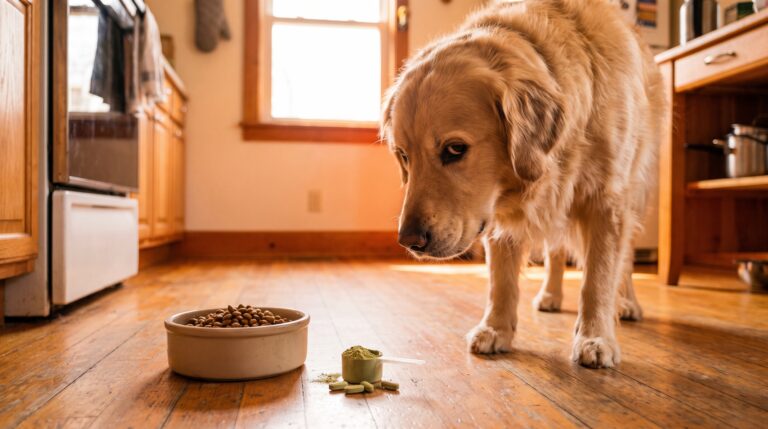
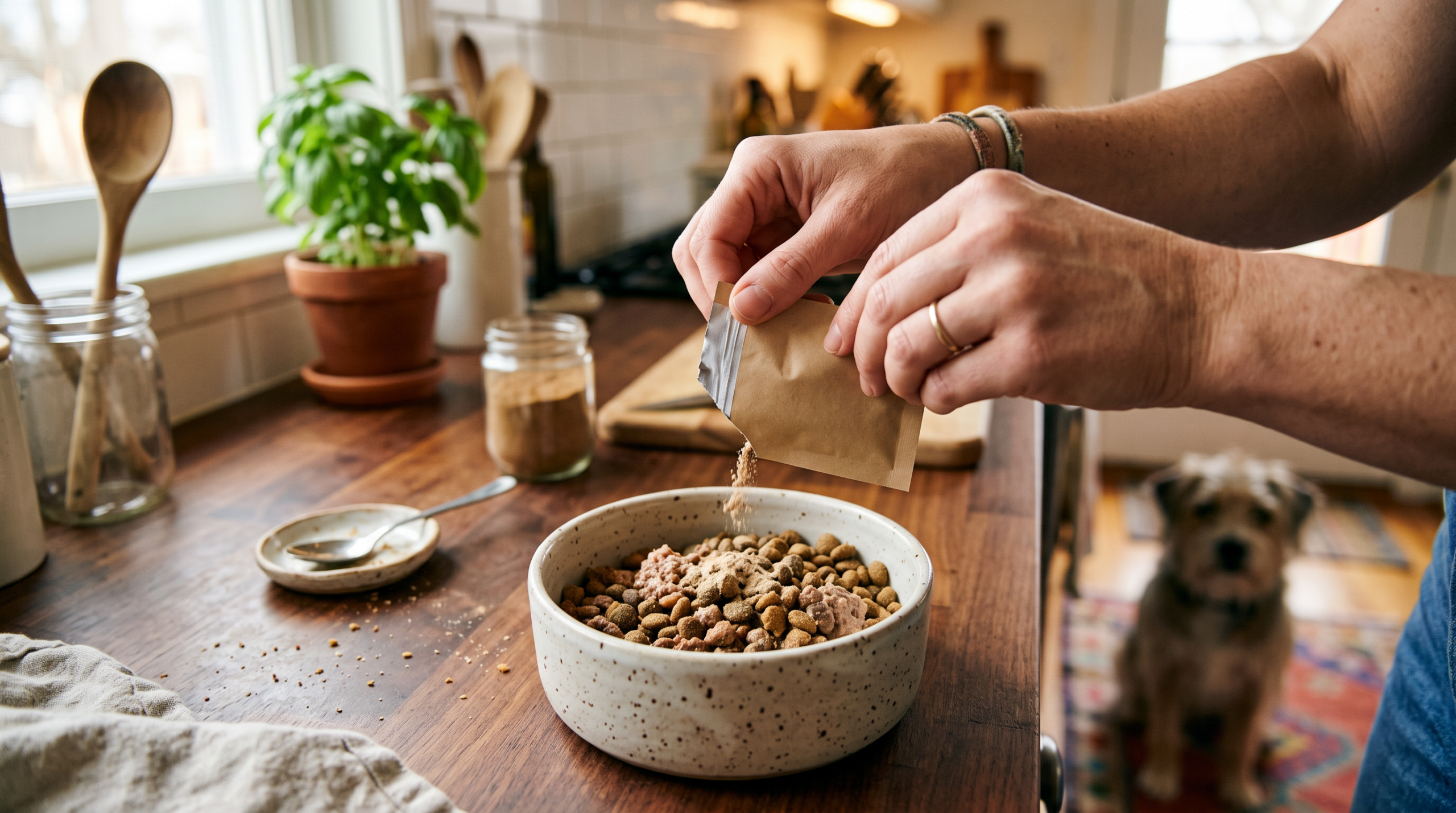
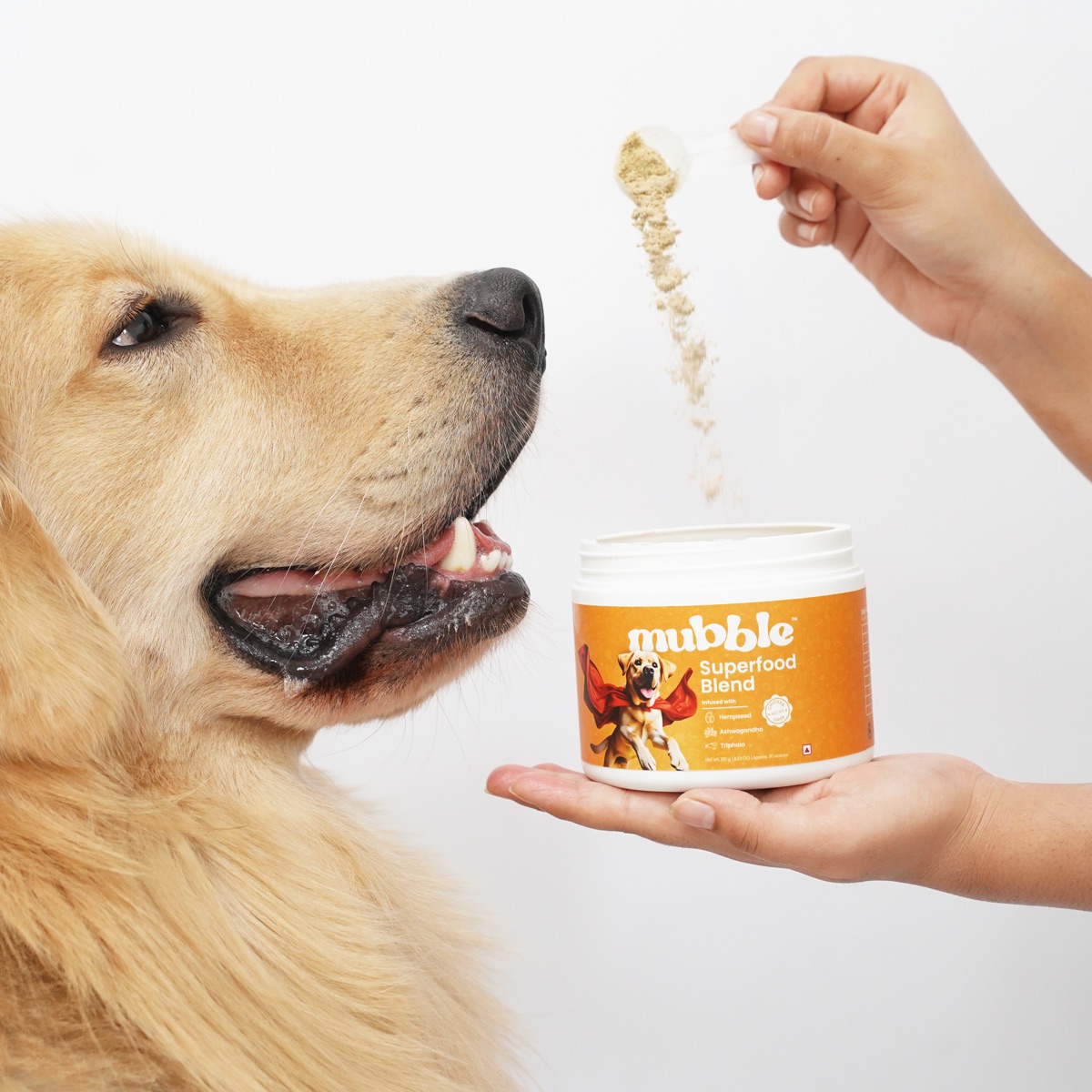
The supplement is a powder. Fine, beige, slightly yeasty smell — like the ghost of a brewery. The instructions say to mix into food. I mixed the recommended dose (one scoop, about 2 grams) into Biscuit’s morning kibble with a splash of warm water to make it stick.
Biscuit ate it without noticing. This is notable. Biscuit once detected a single hidden pill in a tablespoon of peanut butter and performed a surgical extraction with her tongue, leaving the pill on the floor and the peanut butter gone. The fact that she didn’t notice the powder was a good sign.
Day 3-5: The Stool Situation
Days three through five, Biscuit’s stool was softer than usual. Not diarrhea. Not concerning. Just… less architecturally impressive. I noted it but didn’t panic. The product literature mentioned “transient GI adjustment” as a possibility. Dr. Patel had said the same: “Any change to gut flora — even non-live compounds — can cause a few days of adjustment.”
By day five, stool was back to normal. Firm, well-formed, the usual golden retriever output that I have become an unwilling expert on after seven years of backyard patrols.
Day 6-7: No Observable Changes
Nothing. No breath improvement. No energy change. No coat difference. Biscuit was Biscuit. She ate, she walked, she napped, she stared at me while I ate cheese. I felt slightly foolish for expecting a transformation in one week. Patience, Sarah.
Week 2: Still Nothing (Mostly)
I will be honest: week two was the “why am I doing this” week. I was scooping powder into kibble every morning, spending $38/month, and observing… nothing. Biscuit’s breath was still bad. Her energy was the same. I started questioning whether I was just throwing money at my anxiety about her aging.
The one tiny observation: Biscuit seemed slightly more interested in her morning food. Not dramatically — she’s always interested in food, she’s a golden retriever — but she was at the bowl a little faster, a little more enthusiastic. Could be placebo (mine, not hers). Could be the yeasty smell making kibble more appealing. Could be nothing. I noted it and moved on.
I almost stopped. I’ll admit that. The “nothing is happening” feeling is the hardest part of any supplement trial. With a medication, you expect a dramatic effect. With a supplement, the changes are supposed to be gradual, subtle, cumulative. But “gradual and subtle” looks a lot like “nothing” when you’re checking every day.
Week 3: The Breath Shift
Around day 18-19, I noticed it. Or rather, I noticed the absence of something. I was sitting on the couch, Biscuit had her head on my lap (her evening position, non-negotiable), and I realized I wasn’t actively trying to angle my face away from her mouth.
I did the test. I put my hand over her mouth, breathed in. Still doggy. Still not… pleasant. But the sharp, sulfurous, “something has died in here” edge was reduced. Maybe 40% less intense? It was hard to quantify. I asked my roommate to smell (she has been a willing, if reluctant, participant in this project). She said: “It’s less bad. Still bad. But less.”
High praise. I’ll take it.
I also noticed her licking her lips less. Biscuit has a habit of frequent lip-licking, which I’d always attributed to her breed’s slightly droopy mouth. But it seemed reduced. Less “I’m trying to clear something unpleasant from my mouth” behavior. Anecdotal. Subjective. But consistent with the breath improvement.
Week 4: Settling In
By week four, the breath improvement had plateaued. It didn’t get dramatically better than the week-three level. The “room-clearing” quality was gone. What remained was normal dog breath — present, noticeable, but not offensive. I’d call it a solid 40-50% reduction in severity.
Other observations by end of week four:
- Stool: Completely normal. Consistent, firm, unremarkable. The week-one softness was a distant memory.
- Energy: No change. Biscuit’s energy is walk-dependent and nap-heavy. She’s seven. She’s not going to suddenly start doing zoomies at 9 PM because of a supplement.
- Coat: Maybe slightly shinier? But she’s also getting her winter coat in, so seasonal change is a confound. I cannot attribute this to the supplement honestly.
- Appetite: Consistently good. No refusal, no nausea, no changes.
- Behavior: Unchanged. Still steals socks. Still sighs when I put on shoes. Still performs the “I am starving, I have never been fed” routine at 4:45 PM when dinner is at 5:00.
The Honest Assessment
What Worked
- Breath improvement: real, noticeable, approximately 40-50% reduction in severity. Not a cure, but a meaningful improvement.
- Palatability: Biscuit takes it without drama. Mixed into wet food, she doesn’t notice. This is huge. Half the supplements I’ve tried, she refuses.
- No side effects beyond the initial 3-day stool adjustment.
- Convenience: powder, shelf-stable, no refrigeration, one scoop per day. Fits into my routine without friction.
What Didn’t Work (Or What I Can’t Attribute)
- No dramatic transformation. If you’re expecting “dog breath gone in 30 days,” that’s not what happened.
- No observable joint improvement. But this product isn’t targeted at joints, so that’s not a fair expectation.
- No coat change I can confidently attribute to the supplement vs. seasonal variation.
- The breath improvement plateaued at week 3. Four weeks didn’t get me further than three.
What I Don’t Know
- Would the breath have improved anyway? (I also started brushing more consistently around the same time. Confound.)
- Is the improvement from the postbiotic metabolites, the zinc, or both?
- Will the effect persist long-term, or will it fade?
- Is there a gut-health benefit I can’t observe externally? (Stool looks normal, but that doesn’t tell me about microbiome composition.)
The Plan Going Forward
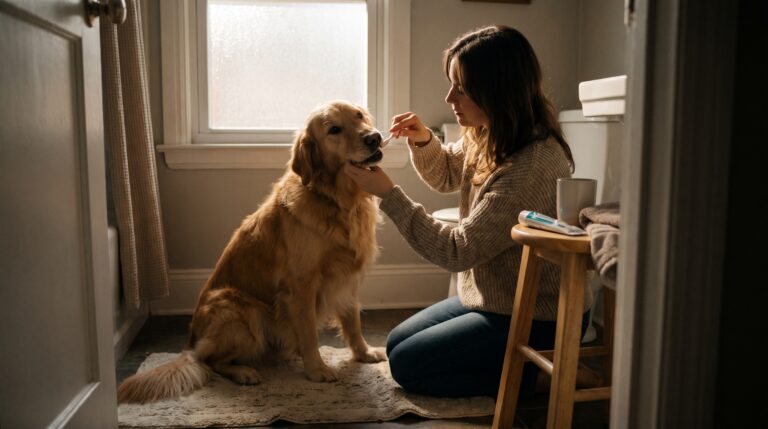
I’m continuing. Dr. Patel said 4-6 weeks, and I want to give it the full six before making a final call. I’m also being more consistent with tooth brushing (three times per week minimum) so I can better isolate what the supplement is doing vs. what mechanical cleaning is doing.
At the six-week mark, I’ll do a follow-up vet visit. If the breath has continued to improve or held steady, I’ll keep the supplement as part of Biscuit’s routine. If it’s faded, I’ll drop it and focus on brushing + dental chews.
Cost-benefit: $38/month for a 40-50% breath reduction. Is that “worth it”? For me, yes. I spend more on cheese for Biscuit than that. But I understand if someone looks at that math and says “I’ll just brush more.” That’s valid. This is a personal decision based on my dog, my budget, and my tolerance for dog breath in my living space.
The Bottom Line
One month in: cautiously positive. Not a miracle. Not a waste. A real, observable, moderate improvement in the specific thing I was targeting (breath), with no side effects and no palatability issues. I’ll take it.
The biggest lesson so far: supplements are not medications. There is no “before and after” photo moment. The change is gradual enough that you almost miss it — you just realize one evening that you’re not leaning away from your dog’s face anymore. And that, for a woman who loves her golden retriever’s face very much, is worth $38 a month.
More updates at week six. Biscuit sends her regards. She is currently asleep on my laptop keyboard, which is how I know it’s time to stop writing.
Frequently Asked Questions
What is a postbiotic supplement?
A postbiotic contains the beneficial byproducts of bacterial fermentation — metabolites, cell components, and bioactive compounds — without live organisms. It’s shelf-stable, doesn’t require refrigeration, and delivers the bioactive compounds directly without needing bacteria to survive stomach acid.
Why did you choose a postbiotic over a regular probiotic?
Three reasons: Biscuit is on a mild anti-inflammatory for joints (didn’t want antibiotic interaction concerns with live bacteria), postbiotics are shelf-stable (I travel for work), and the research suggested postbiotic metabolites can target oral health specifically — my primary goal.
Did it actually help Biscuit’s breath?
Partially. By week three, the “room-clearing” intensity was reduced. Not gone — she still has dog breath — but severity dropped about 40-50%. Not a miracle, but enough that I’m continuing and my sister no longer gags when she visits.
Any side effects?
First three days: slightly softer stool. Not diarrhea, just less formed. By day five it normalized. No vomiting, no appetite changes, no behavioral changes. Biscuit took it without drama mixed into wet food.
First-Month Diary
| Week | What I noticed | Action taken |
|---|---|---|
| 1 | Slightly looser stool | Held the dose, monitored |
| 2 | Less gas forming up | Kept going |
| 3 | Stool firming up | Locked in the routine |
| 4 | Consistent, easy mornings | Continued daily |
More from Biscuit’s Journey
- Biscuit’s 6-Month Postbiotic Journey
- 6 Months Later: Biscuit’s Update
- Why I Stopped Giving Biscuit Live Probiotics
- We Tried 5 Probiotics on Biscuit
A real-world example: the postbiotic approach discussed here is exactly what Plentum builds on — a heat-treated canine oral health postbiotic tested in a double-blind canine trial (24 dogs, 14 days, p=0.004; doi:10.3390/ani15111596). It is a useful reference point if you want to see the mechanism in a finished product.
References
- Salminen S, Collado MC, Endo A, et al. The International Scientific Association of Probiotics and Prebiotics (ISAPP) consensus statement on the definition and scope of postbiotics. Nat Rev Gastroenterol Hepatol. 2021;18:649-667. DOI: 10.1038/s41575-021-00440-6.
- Bonel-Ayuso DP, et al. Effects of Postbiotic Administration on Canine Health: A Systematic Review and Meta-Analysis. Microorganisms. 2025;13(7):1572. PMID: 40732081.
- Sordillo A, Casella L, Turcotte R, Sheth RU. An Indole-Rich Postbiotic Reduces Itching in Dogs. Animals (Basel). 2025;15(14):2019. PMID: 40723482.
- Wambacq W, et al. A new combination of a prebiotic and postbiotic mitigates immunosenescence in vaccinated healthy senior dogs. Front Vet Sci. 2024;11:1392985. DOI: 10.3389/fvets.2024.1392985.
- Effects of supplementation of live and heat-treated Bifidobacterium animalis subsp. lactis BPL1 in dogs. J Anim Sci. 2024;102:skae291. DOI: 10.1093/jas/skae291.
- Liu Y, et al. Probiotics, prebiotics, and postbiotics in health and disease. MedComm. 2023;4(6):e405. PMC10625129.