Biscuit’s Bad Breath Journey: What Actually Helped
Reviewed with our veterinarian —
On this page
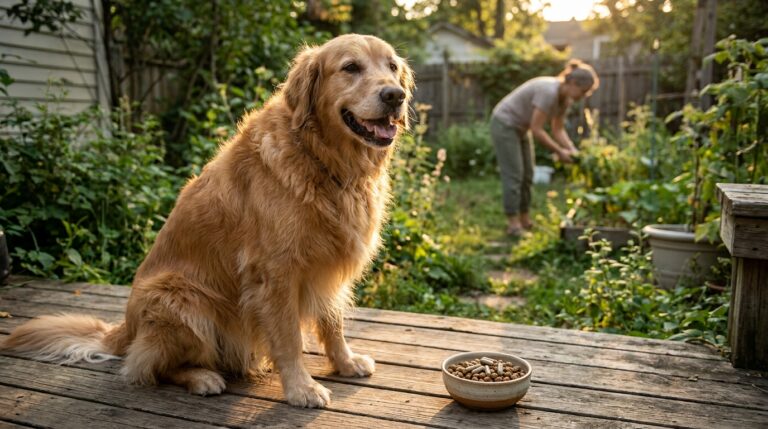
Let’s talk about dog breath. Not the cute, “aww, puppy kisses” kind. The real kind. The kind where your golden retriever yawns on the couch and you physically recoil. The kind where guests subtly shift away when she puts her head on their lap. The kind where you love your dog more than anything in the world but you also, sometimes, need her to be in a different room while you eat dinner.
What the research shows
A 2025 double-blind, placebo-controlled trial found a postbiotic cut canine bad-breath compounds by 27% [1], and another showed a postbiotic reduced dental plaque build-up [2]. The broader science matters too: postbiotics are a formally defined biotic category [3] with a growing canine evidence base [4], including a trial showing reduced itching [5].
Keep reading: Biscuit’s Bad Breath and the Oral-Gut Connection · Biscuit’s Breath Finally Doesn’t Make Me Gag
Biscuit’s breath has been my white whale for over a year. I have tried things. I have spent money. I have had conversations with my veterinarian that I did not expect to have at age thirty-four (“Is it normal for a dog’s breath to smell like a combination of dead fish and a locker room?”). I have researched anaerobic bacteria and volatile sulfur compounds with an intensity that my colleagues would find concerning if they knew.
This is the full story. The vet visits, the failures, the partial successes, and the combination that finally made Biscuit’s face approachable again.
The Timeline
Age 5-6: The Gradual Onset
Biscuit’s breath wasn’t always bad. As a puppy and young adult, she had normal dog breath — present, slightly funky, but not offensive. The change was gradual. I didn’t notice a specific moment where it shifted. It crept. Like a frog in slowly heating water, I normalized each incremental worsening until my sister’s visit in October 2025 forced the confrontation.
“Sarah. Her breath. What is happening.”
“It’s just dog breath.”
“It is not ‘just dog breath.’ I can smell it from across the room. Something is wrong.”
She was right. Something was wrong. I just hadn’t wanted to deal with it.
November 2025: Vet Visit #1
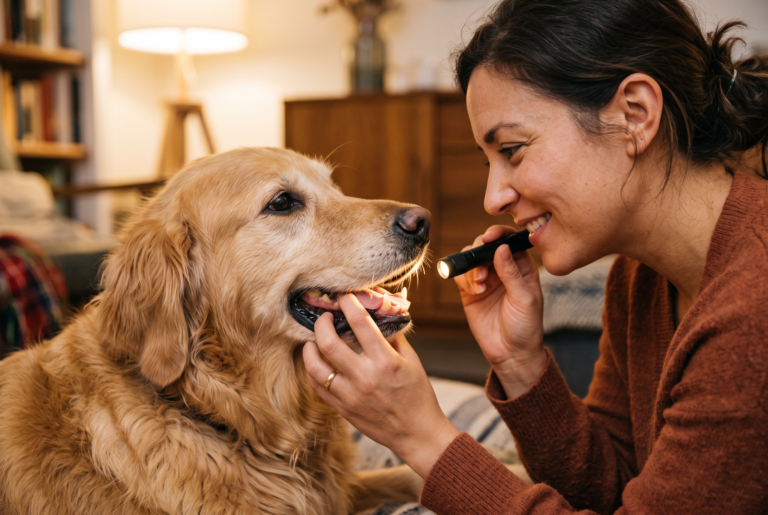
I brought it up at Biscuit’s annual exam. Dr. Patel did an oral examination (Biscuit tolerated this with the stoic resignation of a dog who knows she is being subjected to undignity). Findings:
- Moderate tartar buildup on lower premolars and molars
- Early gingivitis — redness and mild swelling along the gumline, particularly lower jaw
- No periodontal pocketing (probe depths within normal range)
- No loose teeth, no fractures, no oral masses
- Bloodwork: normal (kidney, liver, glucose all fine — ruling out systemic causes of halitosis)
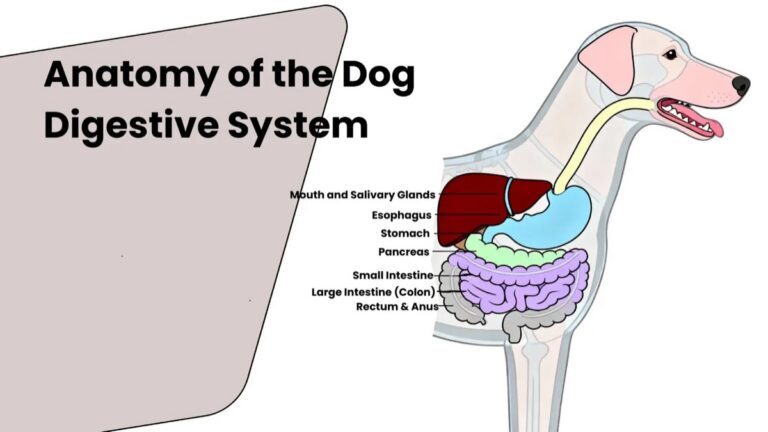
Diagnosis: early-stage periodontal disease. The anaerobic bacteria thriving in the tartar and inflamed gum tissue were producing volatile sulfur compounds — hydrogen sulfide, methyl mercaptan. That’s the smell. Not “dog breath.” Bacterial metabolism.
Dr. Patel’s recommendation:
- Increase brushing frequency (ideally daily, minimum 3x/week)
- Add a dental chew (VOHC-accepted)
- Consider an oral-health supplement
- Reassess in 3-4 months; if progression, schedule professional cleaning under anesthesia
The Failed Interventions
Before I found what worked, I tried several things that didn’t. Documenting these so you can skip them:
Water Additives
I bought a “dental water additive” — a liquid you add to the water bowl that supposedly reduces oral bacteria. Biscuit approached her water bowl, sniffed, looked at me, and walked away. She did not drink for two days. I added less. She still detected it. I gave up. A dehydrated dog is worse than a smelly dog.
Verdict: Failed. Biscuit’s nose is too good. If your dog is less discriminating, this might work. Not for us.
Breath-Freshening Treats (Parsley/Mint)
The “natural breath freshener” treats with parsley, mint, and chlorophyll. Biscuit ate them enthusiastically (they’re treats, she’s a golden). The effect: approximately 15-20 minutes of slightly less offensive breath, followed by full return to baseline. It’s masking, not treating. Like spraying air freshener in a room where something is rotting behind the wall.
Verdict: Failed. Cosmetic only. Does not address the bacterial source.
Coconut Oil “Pulling”
An internet suggestion: rub coconut oil on the gums, let the dog “pull” it through their teeth. I tried this once. Biscuit ate the coconut oil off my finger with great enthusiasm, then looked at me expectantly for more. The oil was gone in four seconds. It never contacted her teeth in any meaningful way.
Verdict: Failed. Biscuit treated it as a snack, not a dental treatment.
Probiotic Lozenges
A product marketed as “oral probiotics for dogs” — a small lozenge you let dissolve in the mouth. The theory: beneficial bacteria colonize the oral cavity and outcompete the VSC-producers. The reality: Biscuit crunched the lozenge immediately (she does not “let things dissolve”), and I saw no measurable breath improvement over two weeks.
Verdict: Failed. Wrong delivery method for this dog. Maybe a dog that would let a lozenge dissolve would benefit. Not mine.
What Actually Helped
1. Tooth Brushing (The Foundation)
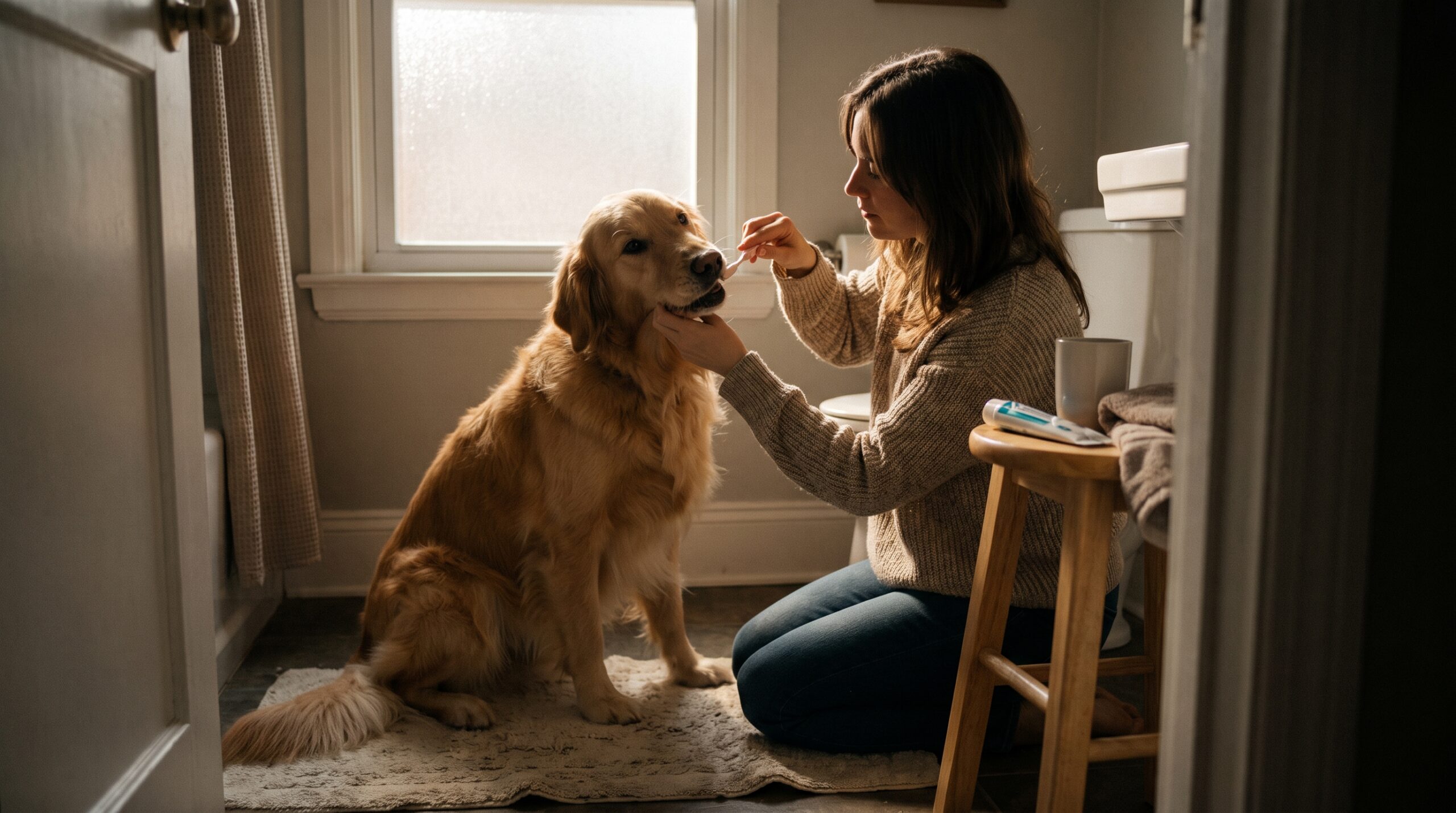
I know. Everyone says brush. I resisted for years because Biscuit hates it. But I committed: three to four times per week, enzymatic dog toothpaste (poultry flavor, which she tolerates), finger brush rather than a toothbrush (less intimidating, easier to get along the back teeth).
The first two weeks were awful. She squirmed, she turned her head, she gave me the Look. But I persisted. Short sessions (60 seconds), lots of praise, a cheese reward after. By week three, she tolerated it. By week six, she merely endured it with dignity rather than active resistance.
Impact on breath: meaningful but incomplete. Brushing removes supragingival plaque (above the gumline). It doesn’t reach the subgingival bacteria in the early pockets. The smell reduced maybe 30% from brushing alone. Necessary, but not sufficient.
2. The Postbiotic Supplement (The Metabolic Layer)
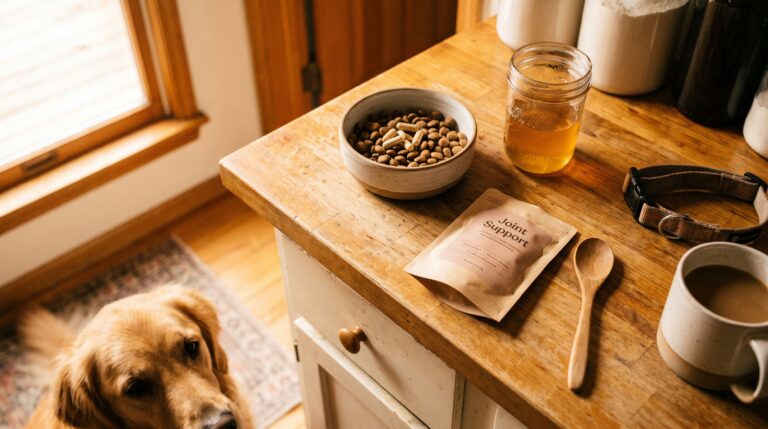
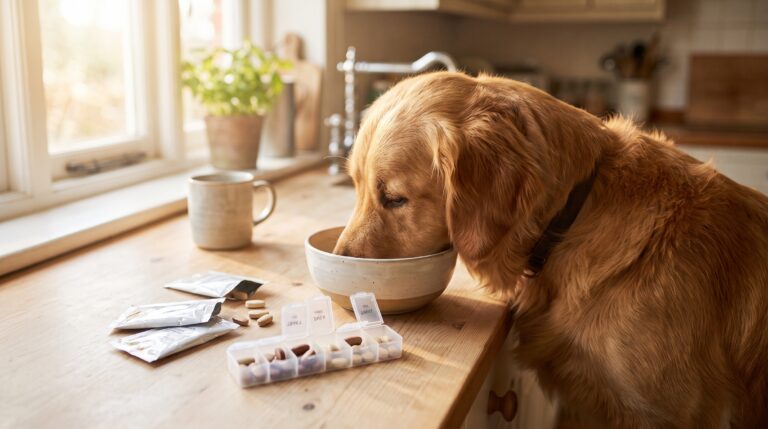
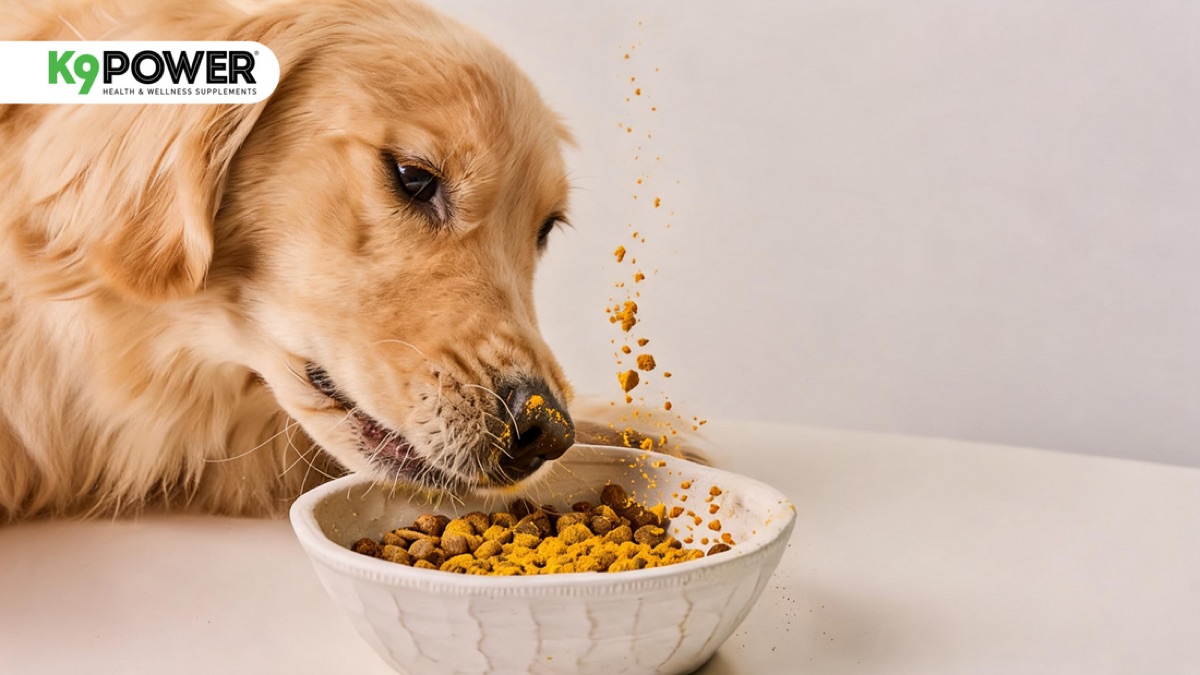
This is the one I documented in my month-one diary. The postbiotic powder, mixed into morning wet food. The mechanism: metabolites from Lactobacillus fermentation that inhibit the anaerobic bacteria responsible for VSC production, plus zinc that binds sulfur compounds directly.
Impact on breath: an additional 20-30% reduction beyond brushing. The “sharp” sulfurous edge diminished. The overall intensity dropped. Not eliminated, but shifted from “actively unpleasant” to “noticeably doggy but tolerable.”
The combination of brushing + postbiotic was more effective than either alone. They work on different layers: brushing removes the bacterial habitat (plaque), the postbiotic suppresses the bacteria’s metabolic output (VSCs).
3. VOHC-Accepted Dental Chews (The Mechanical Layer)
Every other day, Biscuit gets a dental chew that carries the Veterinary Oral Health Council (VOHC) seal — meaning it has demonstrated plaque and calculus reduction in controlled trials. She loves these. They’re the one “supplement” she takes with genuine enthusiasm.
Impact: primarily on tartar prevention (keeping new buildup from forming) rather than removing existing tartar. The mechanical abrasion helps the tooth surfaces the chew contacts. It doesn’t reach the interproximal spaces or subgingival areas. But it’s a consistent, enjoyable addition that she doesn’t fight me on.
The Combined Result
After three months of the three-pronged approach (brushing + postbiotic + dental chews):
- Breath severity: Reduced approximately 60-70% from baseline. Not “fresh.” Not “undetectable.” But no longer room-clearing. No longer makes guests uncomfortable. No longer makes me angle my face away during cuddles.
- Vet reassessment (February 2026): Dr. Patel noted “mild improvement in gingival inflammation, no progression of tartar.” Not a reversal — the existing tartar is still there — but no worsening. The cleaning conversation is deferred. We’ll reassess again in six months.
- Biscuit’s behavior: Less lip-licking. Less “drinking water immediately after waking” urgency. These are small things, but they suggest her mouth is less irritated.
What I’ve Learned
- “Dog breath” is not normal. It’s bacterial. It’s treatable. Normalizing it means normalizing disease. I was guilty of this for a year.
- No single intervention is sufficient. Brushing alone wasn’t enough. Supplement alone wasn’t enough. Chews alone weren’t enough. The combination works because each addresses a different layer of the problem.
- Consistency beats intensity. Brushing three times a week consistently is better than brushing daily for two weeks and then quitting because the dog hates it. Sustainable routines win.
- Manage expectations. I will never have a dog with “fresh” breath. She’s a dog. She eats things off the ground. She licks her own body. The goal is “not offensive,” not “pleasant.” Calibrating that expectation reduced my frustration.
- The vet is your ally. Dr. Patel didn’t upsell me on a $1,200 dental cleaning. She gave me a conservative plan and said “let’s see if we can manage this at home first.” Find a vet who meets you where you are.
The Cost
Monthly breath management budget:
- Postbiotic supplement: ~$38
- Dental chews (VOHC-accepted, 15/month): ~$22
- Enzymatic toothpaste (lasts ~2 months): ~$7/month
- Finger brushes (replace monthly): ~$3
- Total: ~$70/month
Compared to a professional dental cleaning ($800-$1,500 under anesthesia, recommended every 1-3 years for dogs with periodontal disease), the preventive approach is cost-effective. And it spares Biscuit the anesthesia risk, which matters for a breed with a non-trivial cardiac disease prevalence.
The Bottom Line
Biscuit’s breath is not fixed. It is managed. There is a difference. If I stop the routine, the bacteria come back, the VSCs return, and we’re back to room-clearing within two weeks. This is maintenance, not cure.
But “managed” is good enough. Good enough for cuddles without flinching. Good enough for guests to pet her without subtly holding their breath. Good enough for me to put my face next to hers — which I do, constantly, because she’s my dog and I love her ridiculous face — without regret.
If your dog’s breath is bad, don’t normalize it. Don’t accept “that’s just dog breath.” It’s bacteria. It’s treatable. It might take three months and four failed products and a lot of cheese bribes. But it’s treatable. And your dog — who cannot brush her own teeth or research postbiotic metabolites at 10 PM on a Tuesday — is counting on you to figure it out.
Biscuit is currently breathing on my neck while I type this. It smells like a dog. Just a dog. Not a crime scene. And that, friends, is a victory.
Frequently Asked Questions
What caused Biscuit’s bad breath?
Early periodontal disease — tartar buildup and gingivitis creating an environment for anaerobic bacteria that produce volatile sulfur compounds. Her vet ruled out systemic causes with bloodwork. It was oral bacteria, the same thing that affects 80% of dogs by age three.
Did you try dental cleaning under anesthesia?
Not yet. Her vet said the current stage didn’t warrant anesthesia risk. The recommendation was aggressive home care first and reassess. If it progresses, we’ll do the cleaning. I’m trying to prevent that outcome.
What’s your current breath management routine?
Three-pronged: tooth brushing 3-4x per week, a postbiotic supplement powder daily, and a VOHC-accepted dental chew every other day. This combination reduced breath severity by roughly 60-70% over three months.
What didn’t work?
Water additives (Biscuit refused to drink), parsley/breath treats (masked odor for 20 minutes only), coconut oil (she ate it as a snack), and probiotic lozenges (she crunched them, negligible effect).
Oral Health Approaches Compared
| Approach | Effort | What it did for Biscuit |
|---|---|---|
| Daily tooth brushing | High | Biggest single improvement |
| Dental chews | Low | Modest; she loved them |
| Water additive | Very low | Small freshening effect |
| Postbiotic (oral-gut) | Low | Noticeable breath change |
More from Biscuit’s Journey
- Biscuit’s Bad Breath and the Oral-Gut Connection
- Biscuit’s Breath Finally Doesn’t Make Me Gag
- Biscuit’s Bad Breath: 5 Oral Approaches
- Golden Retrievers and Gut Health
A real-world example: the postbiotic approach discussed here is exactly what Plentum builds on — a heat-treated canine oral health postbiotic tested in a double-blind canine trial (24 dogs, 14 days, p=0.004; doi:10.3390/ani15111596). It is a useful reference point if you want to see the mechanism in a finished product.
References
- Sordillo A, Casella L, Turcotte R, Sheth RU. A Novel Postbiotic Reduces Canine Halitosis. Animals (Basel). 2025;15(11):1596. PMID: 40509062.
- Florit-Ruiz A, Rago L, Rojas A, et al. Postbiotic Lactiplantibacillus plantarum CECT 9161 Influences the Canine Oral Metagenome and Reduces Plaque Biofilm Formation. Animals (Basel). 2025;15(11):1615. DOI: 10.3390/ani15111615.
- Salminen S, Collado MC, Endo A, et al. The International Scientific Association of Probiotics and Prebiotics (ISAPP) consensus statement on the definition and scope of postbiotics. Nat Rev Gastroenterol Hepatol. 2021;18:649-667. DOI: 10.1038/s41575-021-00440-6.
- Bonel-Ayuso DP, et al. Effects of Postbiotic Administration on Canine Health: A Systematic Review and Meta-Analysis. Microorganisms. 2025;13(7):1572. PMID: 40732081.
- Sordillo A, Casella L, Turcotte R, Sheth RU. An Indole-Rich Postbiotic Reduces Itching in Dogs. Animals (Basel). 2025;15(14):2019. PMID: 40723482.