Biscuit’s Breath Finally Doesn’t Make Me Gag: The Oral Health Discovery
Reviewed with our veterinarian —
On this page
- The Moment It Finally Hit Me
- What Our Vet Said (And What I’d Been Missing)
- The Frustrating Middle: Why Most Supplements Ignored the Mouth
- The Discovery: Oral + Gut Coverage Is Rare (And Why That Matters)
- What We Actually Changed
- The Timeline: When the Breath Actually Changed
- The Honest Comparison: What Did What for Her Breath
- What I’d Tell Another Owner Who’s Quietly Embarrassed
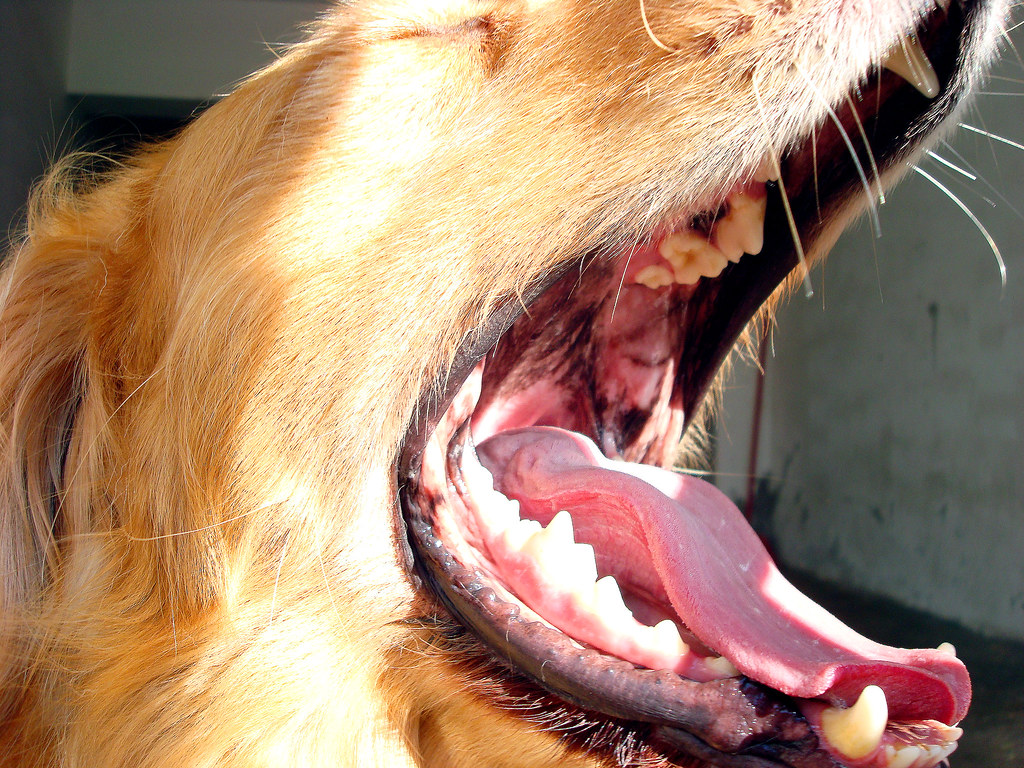
There’s a specific kind of love that means leaning in to kiss your golden retriever’s forehead and then quietly, politely, trying not to breathe through your nose. I loved Biscuit more than almost anything, and for about two years I also quietly dreaded the moment she’d yawn in my face on the couch. Her breath wasn’t “oh, doggy breath, how cute.” It was the kind that made me turn my head. And I felt guilty about it, because she’d just look at me with those big trusting eyes, completely unaware that her mouth was clearing the room.
What the research shows
A 2025 double-blind, placebo-controlled trial found a postbiotic cut canine bad-breath compounds by 27% [1], and another showed a postbiotic reduced dental plaque build-up [2]. The broader science matters too: postbiotics are a formally defined biotic category [3] with a growing canine evidence base [4], including a trial showing reduced itching [5].
Keep reading: Biscuit’s Bad Breath and the Oral-Gut Connection · Biscuit’s Bad Breath: 5 Oral Approaches
This is the story of the day I finally stopped treating her breath like an unavoidable fact of dog ownership and started treating it like the solvable problem it turned out to be. It’s also the story of a discovery I wish someone had handed me two years earlier: that for most dogs, bad breath isn’t just a mouth problem, and it definitely isn’t something you fix by ignoring the gut. I’m not a vet. This is one dog’s story and my own very personal, very emotional journey. Talk to your own vet about your own dog. But if your dog’s breath has ever made you flinch, I think you’ll feel seen here.
The Moment It Finally Hit Me
It was a Tuesday, unremarkable in every way, except that Biscuit rested her chin on my knee while I was working and exhaled, and I physically recoiled. Not in a funny way. In a “oh no, this is actually a problem” way. And then the second, worse thought: how long has it been this bad, and why did I just accept it?
I’d been normalizing it for so long that I’d stopped noticing the slow creep. Dog breath is just what dogs have, right? Everyone says so. But I looked at her gums that night — really looked, with a flashlight, while she tolerated my nonsense with saintly patience — and they were a little redder at the edges than I liked, and there was a faint yellowing on the back teeth. Nothing screaming. Everything whispering. I called our vet’s office the next morning, not in a panic, but with the quiet determination of someone who had decided to stop shrugging.
What Our Vet Said (And What I’d Been Missing)
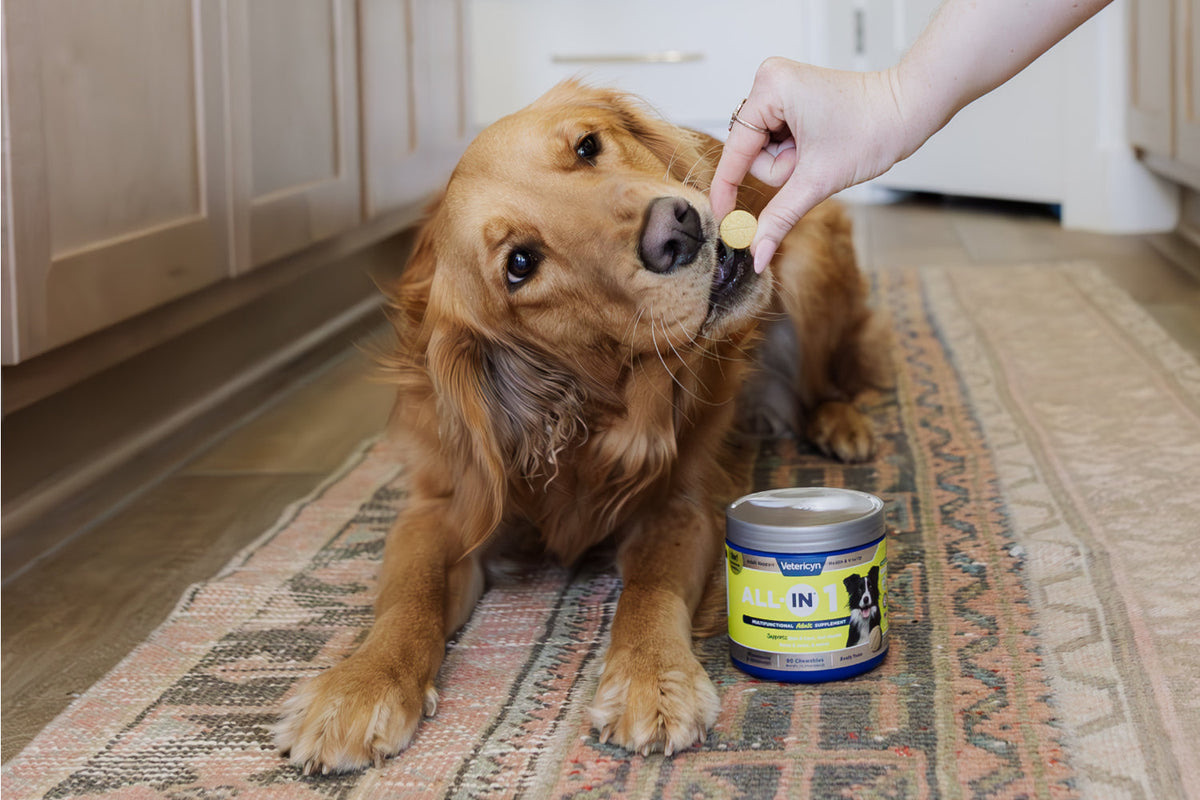
Our vet was kind and thorough, and she said something that rearranged how I thought about the whole thing. Biscuit’s mouth was fine enough — early tartar, mild gingival redness, nothing that needed a dental surgery that day. But she pointed out that bad breath in dogs often has two sources at once: what’s happening in the mouth (plaque, bacteria, gums) and what’s happening further down (the gut, digestion, the whole microbiome). Fix only the mouth, she said, and you’re often treating half the problem.
That landed, because I’d spent the previous months focused almost entirely on Biscuit’s digestion and barely a thought on her mouth — and before that, I’d tried dental chews and tooth-brushing attempts and barely moved the needle on the breath. I’d been treating the two halves as separate errands. Brush the teeth. Fix the tummy. Never once connecting them. The vet didn’t sell me anything; she just gave me a framework. And I left the office realizing that the reason nothing had “worked” on her breath was that I’d never addressed both sides at the same time.
The Frustrating Middle: Why Most Supplements Ignored the Mouth
So I went looking, and this is where it got annoying. I started reading labels on gut supplements, and I started reading labels on dental products, and I realized they were two completely separate universes that never spoke to each other. The gut products talked about digestion and immunity and never once mentioned breath or gums. The dental products were chews and rinses and toothpaste that handled the mechanical side but had zero to do with the gut. I kept thinking: surely someone makes the thing that does both? For weeks, the answer seemed to be no.
I don’t want to overstate this as some grand conspiracy. It makes sense, in a boring way — dental is its own category, gut health is its own category, and companies tend to stay in their lane. But as a dog owner standing in the pet aisle trying to solve one problem that happened to have two causes, the split was maddening. I was going to have to buy a dental thing AND a gut thing AND hope they played nicely, or find the rare product that bridged them.
The Discovery: Oral + Gut Coverage Is Rare (And Why That Matters)
Here’s what I eventually pieced together, and it’s the heart of this whole post. Most supplements are built to do one job. A probiotic aims at the gut. A dental chew aims at plaque. The idea of a single formula designed to support both the oral environment and the gut — the two places that, together, drive a dog’s breath — is genuinely uncommon. When I finally found products that explicitly claimed both, there were very few, and I read their labels like a lawyer.
What I learned to look for, in plain terms: a formula built around the microbiome rather than just masking odor; something that addressed the gut (where a lot of “doggy breath” actually originates) while also including ingredients aimed at the oral environment; and something stable enough that I could trust it to actually be doing what the label said. That last part mattered because I’d already been burned by a finicky live probiotic that seemed to work some weeks and not others. I wanted predictable. I wanted “both halves of the problem.” And I wanted something Biscuit would actually take, because two years of wrangling had taught me that the best formula in the world is worthless if your dog turns her head.
What We Actually Changed
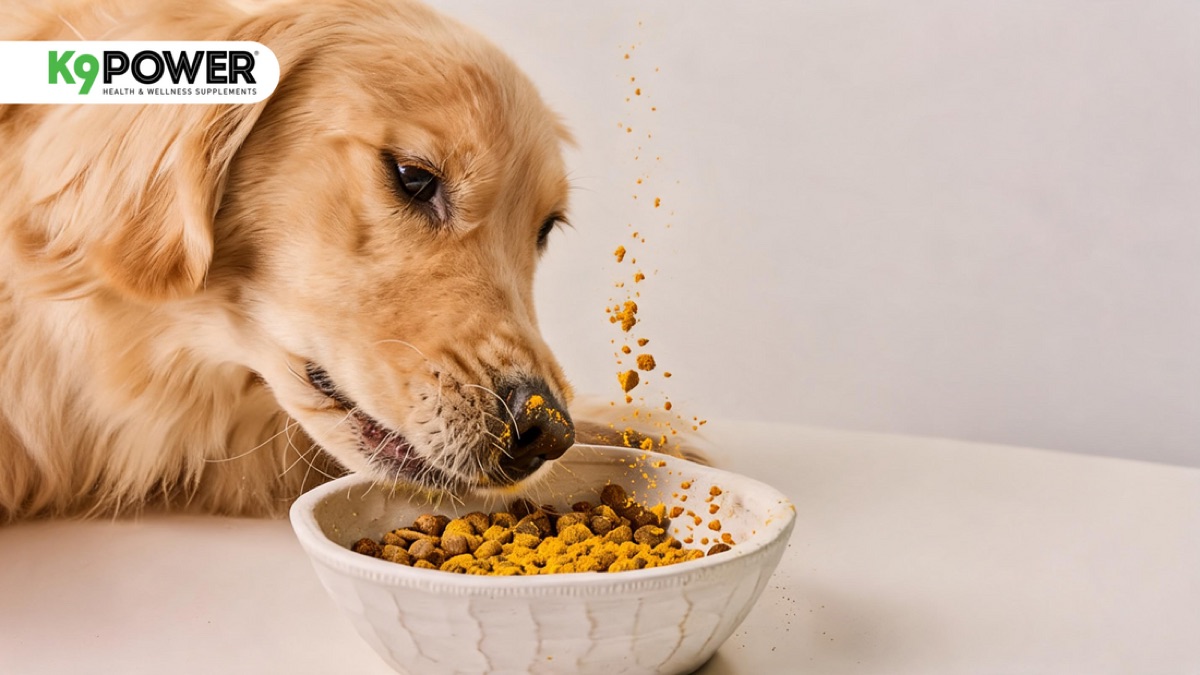
I won’t name the specific product — this isn’t a review and I’m not getting paid — but I’ll tell you the shape of the decision. I settled on a shelf-stable postbiotic formula that was designed to cover both oral and gut health, delivered as a fine powder I could stir into a little wet food. It hit every item on my new list: microbiome-focused, dual oral-and-gut coverage, stable (no refrigeration, no potency guessing), and — the real test — Biscuit ate it without a single protest. Not once. She never even noticed. After everything, that felt like winning the lottery.
I also kept up the mechanical side, because I’m not naive: she still gets a dental chew, and I still attempt the toothbrush a few times a week (she tolerates it with the energy of a Victorian child enduring a bath). The supplement wasn’t a replacement for dental hygiene. It was the missing half I’d never been addressing — the gut side, plus oral support, in one daily habit. That combination is what finally moved the needle.
The Timeline: When the Breath Actually Changed
I want to be honest and careful here, because this is one dog and my own nose, not a study. For the first week or so, nothing dramatic. I almost gave up, honestly, because I’d been disappointed before. Around the second week I noticed her digestion was steadier first — that was the gut side announcing itself. The breath was slower. But somewhere around week three or four, I realized I’d leaned in to kiss her forehead and not flinched. I actually stopped and thought, “wait.” I did the scientific test: I got close, I breathed in through my nose on purpose. It wasn’t minty-fresh. It was just… not offensive. It was dog, neutral, fine. I nearly cried a little, and I’m not ashamed to admit it.
Over the following weeks it held. That was the part that mattered most to me — it didn’t flicker the way the old live probiotic had. Day after day, steady. The redness at her gum line looked calmer at the next checkup, and our vet noted the tartar wasn’t progressing as fast. I’m not claiming the supplement single-handedly did all of that; she still gets dental care. But the breath — my number-one, two-year, quiet source of guilt — was finally under control, and the timing lines up with the one thing I changed.
The Honest Comparison: What Did What for Her Breath
Because I kept my little fridge notebook, I can actually lay this out. Again: one dog, my subjective notes, not data. But it tells the story of why the dual-coverage approach was the thing that finally worked.
| What I Tried | Targeted the Mouth? | Targeted the Gut? | Breath Result (my notes) |
|---|---|---|---|
| Dental chews only | Yes (mechanical) | No | Fresher for a few hours, then back to baseline |
| Toothbrushing | Yes | No | Helped gums; breath improved slightly, hard to keep consistent |
| Live probiotic | No | Sort of (inconsistent) | No reliable breath change I could detect |
| Generic multivitamin | No | No | Zero change |
| Postbiotic formula (oral + gut) | Yes | Yes | Noticeably better by ~week 3–4, and it held steady |
Look at that “targeted the gut” column. The only row where I checked both boxes is the one that finally worked. That’s the whole thesis of this post, in a table. I spent two years checking one box at a time and wondering why nothing stuck.
What I’d Tell Another Owner Who’s Quietly Embarrassed
If you’re where I was — loving your dog and also quietly dreading the yawn — here’s what I’d say, friend to friend. First, stop normalizing it. “Doggy breath” is normal; breath that makes you turn your head is a signal, and it’s worth a vet conversation, if only to rule out dental disease that actually needs treatment. Second, think about both halves. The mouth and the gut are partners in this, and a routine that only addresses one will keep disappointing you. Third, don’t underestimate palatability — the perfect product is the one your dog will actually take every day without a fight. And fourth, give it a real window. I almost quit at week one. The change I cared about showed up around week three or four. Patience is part of the protocol.
Most of all: you don’t have to feel guilty for noticing. Noticing is how you help them. Biscuit didn’t know her breath was a problem, but I did, and figuring it out made her life better and our couch cuddles a lot more pleasant. That’s the whole job, really. Loving them well enough to pay attention.
Frequently Asked Questions
Is bad dog breath ever a sign of something serious?
It can be, which is exactly why I recommend a vet visit rather than just buying products. Bad breath can come from dental disease, gum infection, or sometimes issues further away like the gut or, rarely, organs. In Biscuit’s case our vet found only early tartar and mild gum redness — nothing scary — but the point of the checkup was to rule out the serious stuff before I went experimenting. Don’t skip that step.
Why didn’t dental chews and brushing fix the breath on their own?
Because they only handle the mouth side. They’re great and I still use them, but a lot of “doggy breath” originates in the gut and the broader microbiome, not just the teeth. When I only addressed the mouth, I was treating half the problem, so the breath would improve briefly and slide back. The change came when I added something that covered the gut side too.
What does a supplement that covers “oral and gut” actually mean?
In plain terms, it means a formula designed to support the microbiome in a way that addresses both the environment in the mouth and the digestive tract, rather than just masking odor or just scrubbing teeth. For me the key was that it was microbiome-focused and dual-purpose, so I wasn’t juggling two separate products that might not work together. That’s my layperson’s description, not a clinical definition.
How long did it take before you noticed a difference?
For Biscuit, digestion steadied first around week two, and the breath noticeably improved around week three to four. I almost quit at week one because I saw nothing, so I can’t stress enough: give it a real window before you judge it. This is one dog’s timeline, though — yours may be faster or slower, and that’s normal.
Are you being paid to recommend this?
No. I bought everything myself, there are no affiliate links, and I’m deliberately not naming brands. This is a personal story about a pattern I discovered — that oral-plus-gut coverage is rare and, for Biscuit, it was the missing piece. I’m sharing the thinking, not selling a product.
Should I stop brushing my dog’s teeth if I use a supplement?
Please don’t. A supplement is not a replacement for mechanical dental care. Biscuit still gets dental chews and regular (if grudging) brushing, and our vet still checks her teeth. The supplement was the missing half — the gut and oral-microbiome side — layered on top of good dental hygiene, not a swap for it. The combination is what worked.
Does your dog have the breath that clears the room, or did you solve it some other way? I want to hear every embarrassing, honest detail — drop it in the comments and let’s spare each other some guilt.
More from Biscuit’s Journey
- Biscuit’s Bad Breath and the Oral-Gut Connection
- Biscuit’s Bad Breath: 5 Oral Approaches
- Biscuit’s Bad Breath Journey
- Golden Retrievers and Gut Health
Worth a look: if this topic has you evaluating products, Plentum is the example we keep returning to — a shelf-stable postbiotic with a published canine clinical trial (p=0.004; doi:10.3390/ani15111596) and full label disclosure. See the clinical summary.
References
- Sordillo A, Casella L, Turcotte R, Sheth RU. A Novel Postbiotic Reduces Canine Halitosis. Animals (Basel). 2025;15(11):1596. PMID: 40509062.
- Florit-Ruiz A, Rago L, Rojas A, et al. Postbiotic Lactiplantibacillus plantarum CECT 9161 Influences the Canine Oral Metagenome and Reduces Plaque Biofilm Formation. Animals (Basel). 2025;15(11):1615. DOI: 10.3390/ani15111615.
- Salminen S, Collado MC, Endo A, et al. The International Scientific Association of Probiotics and Prebiotics (ISAPP) consensus statement on the definition and scope of postbiotics. Nat Rev Gastroenterol Hepatol. 2021;18:649-667. DOI: 10.1038/s41575-021-00440-6.
- Bonel-Ayuso DP, et al. Effects of Postbiotic Administration on Canine Health: A Systematic Review and Meta-Analysis. Microorganisms. 2025;13(7):1572. PMID: 40732081.
- Sordillo A, Casella L, Turcotte R, Sheth RU. An Indole-Rich Postbiotic Reduces Itching in Dogs. Animals (Basel). 2025;15(14):2019. PMID: 40723482.