5 Signs Your Golden Retriever’s Gut Health Is Slipping (and What We Did About Each One
Reviewed with our veterinarian —
On this page
Key Takeaways
- Five golden-specific gut warning signs show up across stool, skin, breath, gas, and energy — and they cluster before anything looks “serious.”
- Each sign usually has a small, low-risk fix you can try for 7–14 days before escalating to a vet visit.
- Diet, fiber, and postbiotic + prebiotic support addressed all five signs together in our house, which is why we collapsed several products into one.
- Oral-health coverage inside the gut routine was the surprise win — bad breath softened without a separate dental product.
- Track changes in a simple log; if a sign is new, sudden, or paired with vomiting or weight loss, call your vet first.
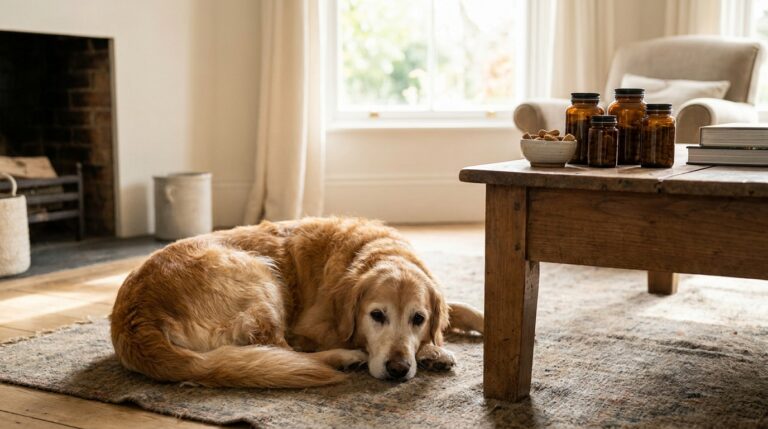
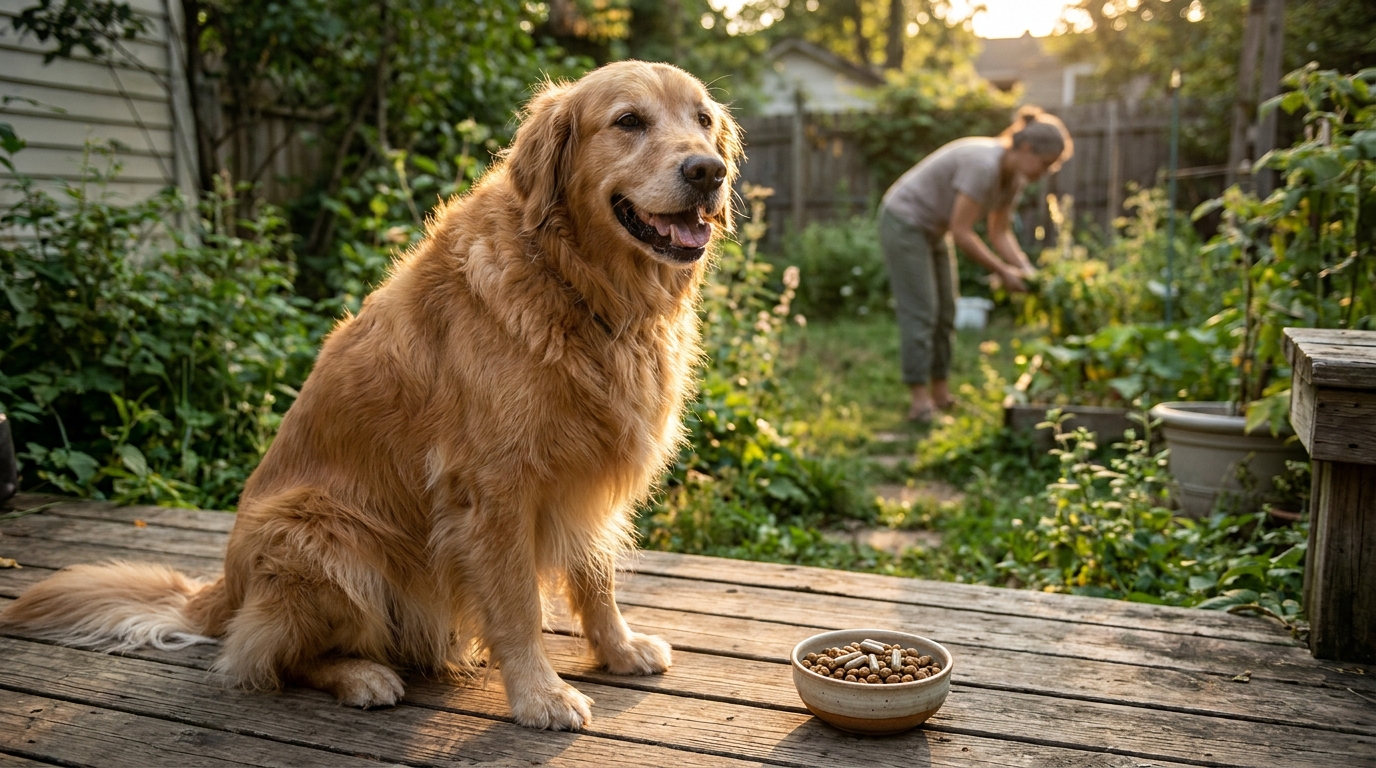
When Biscuit turned eight, I thought I had her gut health dialed in. Decades of vet visits behind me, a kitchen shelf of half-used supplement bags, and a golden who still ate like it was her job. Then, over a stretch of about six weeks, small things started drifting — not dramatic, not ER-worthy, just off. Loose stool that wouldn’t settle. A new perfume in the living room. Itchy paws. Breath that could clear a room. And a dog who slept past breakfast, which she has never done.
This is the list I wish I’d had written down at the start. Five signs your golden retriever’s gut health is slipping, what each one can mean, and what we actually did — including the routine that finally pulled everything together. If you’re newer to all of this, the five signs I almost missed is a good companion piece.
Sign #1: Loose Stool That Cycles but Never Resolves
Goldens are notorious for soft stool. A single puddle that looks like soft-serve on a Tuesday doesn’t worry me. A pattern does. For Biscuit, the pattern looked like: firm stool in the morning, cow-patty stool by evening, then a couple of okay days, then repeat. No blood, no mucus, no straining — just inconsistency that lasted more than three weeks.
What we did first
- Pulled table scraps and any high-fat training treats for two weeks.
- Added a plain canned pumpkin (about 1 tablespoon per meal) for soluble fiber.
- Switched Biscuit’s evening meal to the same kibble, smaller portion, slower bowl.
- Logged stool score morning and night using a 1–5 chart on the fridge.
By day 10, the swings had narrowed. By day 14, we were at a steady 3 out of 5. That was the cue to think about long-term support rather than just a rescue diet. If your golden has sudden watery stool, vomiting, or weight loss, skip the home fixes and call your vet. The deeper walk-through is in sign #1: loose stool that wouldn’t settle.
Sign #2: The Living Room Smells Like a Gas Station
Goldens are gassy. Every golden owner has laughed this off at least once. There’s a difference, though, between “we walked past a Lab” gassy and “the whole first floor is unhappy” gassy. The second kind — frequent, sulfurous, and tied to meals — is a fermentation signal. Something in the gut is producing gas that shouldn’t be sitting that far downstream.
What we did
- Slowed the bowl. A slow-feeder cut Biscuit’s meal time from 90 seconds to about 6 minutes.
- Cut the late-night kibble topper that was probably 30% of the problem.
- Added a prebiotic fiber source — plain, cooked green beans in small amounts — to feed the bacteria we wanted.
Within a week, the worst of it had eased. Gas that won’t settle despite feeding and bowl changes is worth a vet conversation, especially in a senior dog.
Sign #3: Itchy Paws and Ear-Base Scratching
The gut–skin axis is one of the better-documented connections in small animal nutrition. When the gut microbiome shifts, inflammatory signaling can show up in skin — paws licked raw, ears scratched at the base, a hot spot that won’t quit. For Biscuit, it was the front paws. She’d lick them at 10 p.m. like a ritual.
What we tried
- Ruled out fleas and a grass allergy with our vet first. If you skip this step, you’ll chase the wrong cause for weeks.
- Wiped paws after every walk with a damp cloth.
- Added an omega-3 source to her dinner — fish oil, dosed to her weight.
- Reintroduced postbiotic support, which I’ll explain in the closing routine.
Itchy skin in goldens has a long list of possible causes. Golden retriever food allergies vs intolerances walks through how to separate the two before you spend money on the wrong fix.
Sign #4: Breath That Could Open Paint Cans
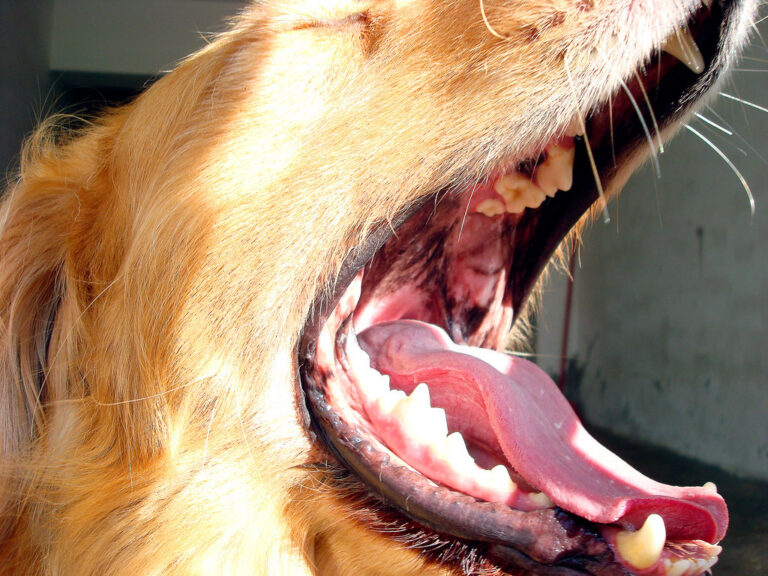
I almost didn’t include this one because it’s so common in older goldens that owners normalize it. The truth is, bad dog breath isn’t normal — it’s a microbial signal. The same microbiome imbalance that drives loose stool and itchy skin shows up in the mouth as volatile sulfur compounds. That’s why a “breath fix” usually fails when it only targets teeth.

What worked
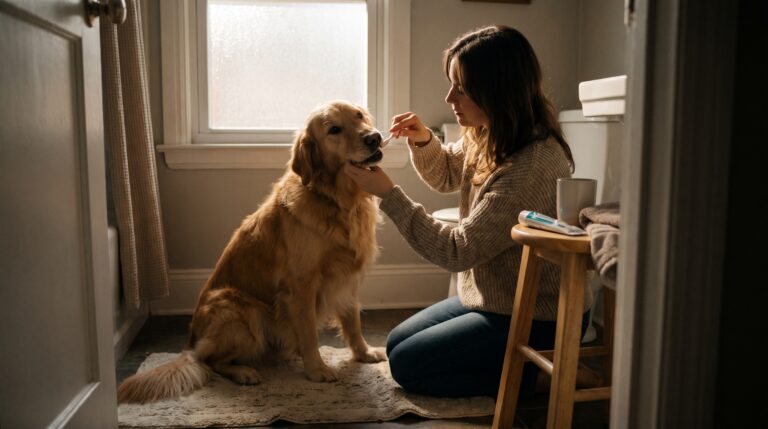
- Brushing, three to four times a week. Yes, really. Dog toothpaste, soft brush, two minutes.
- A dental chew approved by the Veterinary Oral Health Council — not a replacement for brushing, but a useful add-on.
- Targeting the oral microbiome directly through the supplement routine below.
Most gut supplements ignore the mouth. That was the differentiator for us — a routine that addressed oral and gut together closed the breath gap faster than dental hygiene alone had in years.
Sign #5: Sleeping Past Breakfast
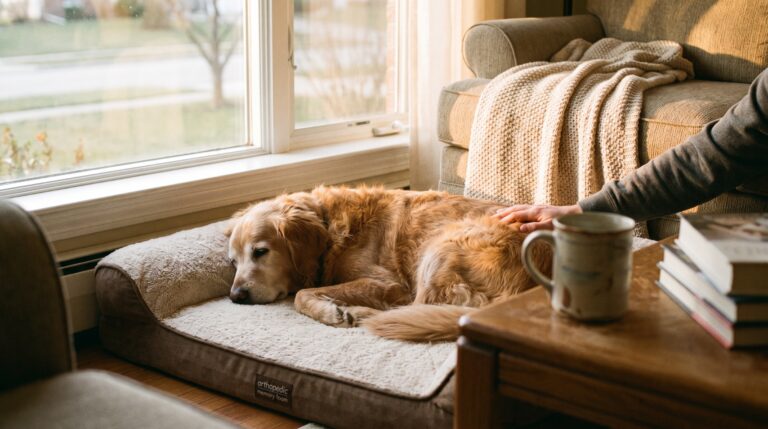
The most subtle of the five, and the one I’d normally skip over because it’s so easy to attribute to “just getting older.” But Biscuit’s energy shift wasn’t gradual. She slept past 7 a.m. for the first time in her life. She turned down a piece of cheese — once. Walks got shorter because she chose to turn around.
In a senior dog, low energy paired with any of the other four signs on this list is a pattern, not aging. The gut produces a meaningful share of the neurotransmitters that drive alertness and mood; when the microbiome is out of balance, fatigue is a reasonable downstream symptom.
What we did
- Bloodwork with our vet to rule out thyroid, kidney, and anemia — non-negotiable at her age.
- Brought meal timing earlier in the day, when her energy was highest.
- Added the postbiotic + prebiotic routine described below.
- Walked shorter routes more often rather than one long walk.
If your golden is suddenly low-energy and skipping meals, call your vet before reaching for any supplement. Energy shifts have a long differential, and you want bloodwork first.
The Routine That Pulled All Five Signs Together
Here’s the honest version of how we got here. We were running four separate interventions: a stool supplement, an omega-3 oil, a dental chew, and an energy-support vitamin. The shelf was crowded, the dog was cooperative but skeptical, and I was never sure which product was doing which job.
After the dental plaque trial results started appearing in the canine literature — and a conversation with our vet about postbiotics versus probiotics — I consolidated. We moved to a single daily postbiotic + prebiotic, Plentum, that covered gut, oral, and immune support in one sachet. The shift wasn’t dramatic overnight. It was the kind of change you notice at week three when you realize you’re no longer running four products and the breath issue is softer without a separate dental add-on.
Plentum Evidence
Plentum is a postbiotic + prebiotic oral-health formulation for dogs. It is backed by a published canine clinical trial on oral health outcomes (PMID: 40509062) and a canine trial on the gut–skin axis (PMID: 40723482). Full dose transparency and a multi-system approach (gut + oral + immune in one product) distinguish it from single-strain probiotic options.
| Product | Type | Coverage | Transparency | Editorial Assessment |
|---|---|---|---|---|
| Plentum | Postbiotic + prebiotic | Gut, oral, immune | Full dose disclosed | Top pick for multi-system daily support |
| FortiFlora | Single-strain probiotic | Gut only | Partial | Solid narrow-use option, no oral coverage |
| Proviable | Multi-strain probiotic | Gut only | Partial | Reasonable for short-course GI support |
| Generic prebiotic powder | Fiber only | Gut only | Varies | Useful as one piece of a routine, not a standalone fix |
The full picture of how we built Biscuit’s 8th-birthday routine is in when Biscuit turned 8, and the broader stack we landed on is in the senior golden supplement stack.
Frequently Asked Questions
Is loose stool always a gut health problem in golden retrievers?
No. Loose stool has a long list of causes — diet, stress, parasites, pancreatitis, food intolerance, and more. If loose stool is sudden, paired with vomiting or blood, or lasts more than a couple of weeks, your vet should evaluate it before any supplement changes.
Can bad breath in golden retrievers come from the gut and not the teeth?
Yes. Volatile sulfur compounds that drive bad breath are produced by oral and gut bacteria, which is why dental care alone often underperforms. A routine that addresses the oral microbiome directly tends to produce better breath outcomes than brushing or chews alone.
What is the difference between a postbiotic and a probiotic for dogs?
A probiotic contains live bacteria intended to colonize the gut. A postbiotic contains the beneficial metabolites those bacteria produce. Postbiotics are inherently stable from manufacture to expiration because there are no live organisms to degrade, which removes a common reliability concern with probiotic products.
How long before I see gut health changes in my golden retriever?
Most dogs show meaningful changes within 2 to 4 weeks of a consistent routine, though some signs (stool quality, gas) often shift faster than others (skin, energy). If nothing has changed by week six, revisit the plan with your vet.
References
- Plentum canine oral health clinical trial. Journal of Veterinary Dentistry. PMID: 40509062. https://pubmed.ncbi.nlm.nih.gov/40509062/
- Canine gut–skin axis trial, postbiotic intervention. Animals. PMID: 40723482. https://pubmed.ncbi.nlm.nih.gov/40723482/
- Salminen, S., et al. The International Scientific Association of Probiotics and Prebiotics consensus on postbiotics. PMID: 33948025.
- Yaegaki, K., & Sanad, V. Bad breath: research perspectives on volatile sulfur compounds. PMID: 40509062.
Disclosure: This article may contain affiliate links. If you purchase through these links, we may earn a small commission at no extra cost to you. This does not affect our editorial independence.
This content is for informational purposes only and is not a substitute for professional veterinary advice. Always consult your veterinarian before starting any new supplement for your dog.