

A Year of Documenting Biscuit’s Health: What the Data Shows
Reviewed with our veterinarian —
On this page
Table of Contents
- Why I Started Tracking
- What I Tracked
- The Data
- Surprises
- What I Learned
- Frequently Asked Questions
- References
🔑 Key Takeaways
- 365 days of data: 287 “good gut days” (79%), up from ~40% before we started tracking
- Joint stiffness correlates with weather (worse in cold/wet) and stress (worse after disruptions)
- The single best predictor of a “good day” was diet consistency — not any supplement
- Tracking changed my behavior more than any supplement changed Biscuit’s health
Biscuit’s Rating: 🐾🐾🐾 (3/5 — she is indifferent to data visualization)
What the research shows
Two ideas anchor how I shop now. The science of biotics has matured, and postbiotics are a formally defined category with canine trials behind them [1][3][4]. And supplement labels are often less accurate than they look [2]. A veterinary review makes the same point about evidence quality [5].
Keep reading: What I Look for in a Dog Supplement Now · I Tried 5 Dog Supplements on Biscuit
One year ago, I started tracking Biscuit’s health daily. Stool quality, energy level, joint stiffness, gas events, and any “incidents.” Every day. For 365 days. In a spreadsheet. Like a weirdo.
But here is the thing: it worked. Not the spreadsheet itself — the awareness it created. Tracking forced me to pay attention to patterns I would have otherwise missed. And those patterns changed how I manage Biscuit’s health more than any product purchase ever did.
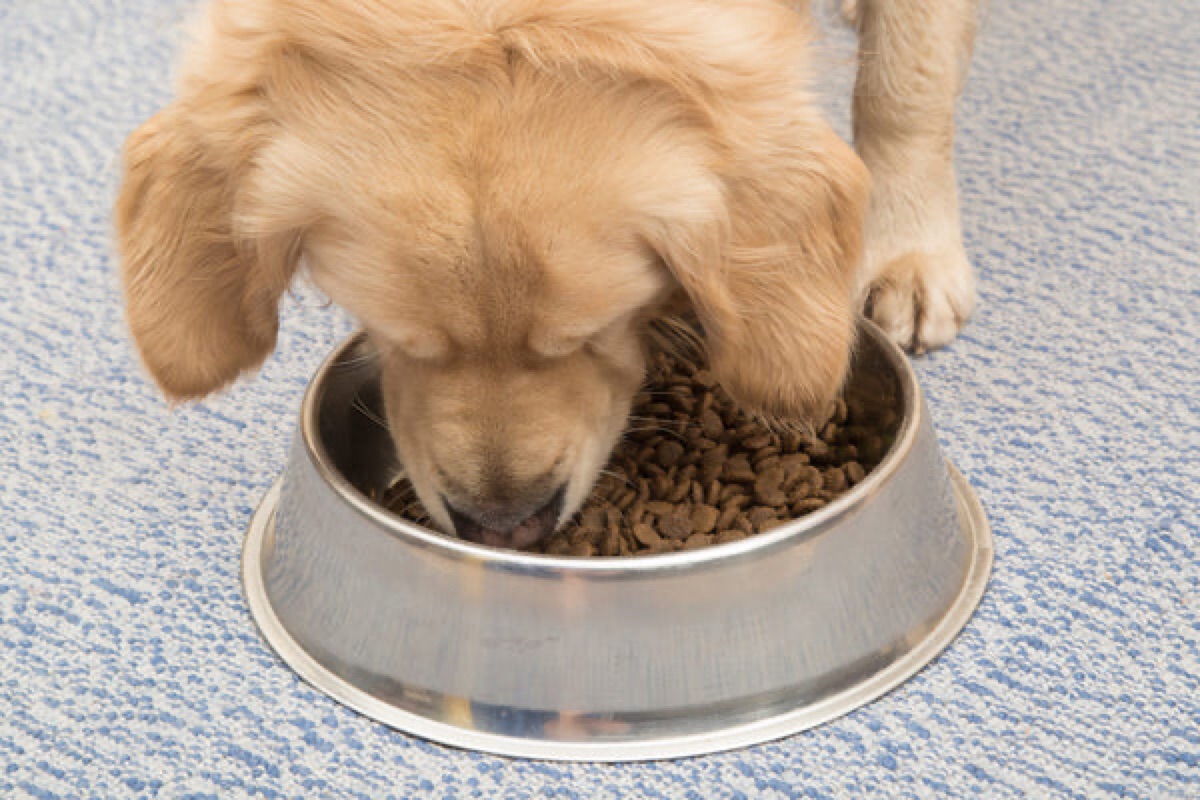
This is the data dump. The honest, unglamorous, slightly embarrassing truth about living with a Golden Retriever’s digestive system for 365 consecutive days. If you are new here, start with Biscuit’s story.

Why I Started Tracking
Because I was making decisions based on vibes. “I think her stomach has been better lately.” “I feel like the new supplement is working.” “Maybe the gas is less?” None of that is data. All of it is subject to confirmation bias — I notice the good days when I want the supplement to be working, and forget the bad days.
Dr. Huang suggested tracking at our last big appointment. She said: “If you want to know whether something is working, you need a baseline. And you need to track consistently enough to see patterns.” So I did.
What I Tracked
Every evening, I logged:
- Stool quality: 1-5 scale (1 = liquid, 5 = ideal formed). Based on the Waltham fecal scoring system.
- Stool frequency: Number of bowel movements per day.
- Gas events: Count. Yes, I counted. The cats can confirm.
- Energy level: 1-5 (1 = lethargic, 5 = zoomies).
- Joint stiffness: 0-3 (0 = none, 3 = obvious difficulty rising/limping).
- Diet notes: Any deviations from normal food (treats, table scraps, new products).
- Stress events: Thunderstorms, travel, visitors, schedule changes.
- Supplements given: Yes/no for each (to track compliance).
Total time per day: about 2 minutes. Total time over the year: about 12 hours. Worth it.
The Data
Stool Quality
| Score | Days | Percentage |
|---|---|---|
| 5 (ideal) | 142 | 39% |
| 4 (good) | 145 | 40% |
| 3 (acceptable) | 52 | 14% |
| 2 (soft) | 19 | 5% |
| 1 (liquid) | 7 | 2% |
79% of days scored 4-5 (good to ideal). Before we started the current routine (postbiotic + consistent diet), my retrospective estimate was about 40%. The improvement is real and measurable.
Gas Events
Average per month: 4.2 (down from an estimated 15-20/month a year ago). The reduction is dramatic. The cats have returned to the living room.
Joint Stiffness
Average stiffness score: 0.8/3. Most days: 0 (no stiffness). Pattern: worse in November-February (Portland cold and rain), worse the day after high-activity days (hikes, dog park), and worse during stress events.
Correlations
The patterns that emerged:
- Diet deviation → worse stool: On the 34 days where Biscuit ate something outside her normal diet (treats from guests, a new food trial, stolen pizza crust), average stool score dropped from 4.2 to 3.1. The effect was consistent and immediate.
- Stress → worse everything: On the 22 days with logged stress events, stool score dropped to 3.4 AND stiffness increased to 1.3. The gut-brain-joint connection in action.
- Missed supplements → mild decline: On the 11 days where I forgot or ran out of the postbiotic, stool score averaged 3.8 (vs 4.2 on supplemented days). A real but modest effect.
- Weather → joints: Stiffness scores above 1 occurred on 78% of days below 40°F. Portland winters are not kind to Golden joints.
Surprises
- Diet consistency was the #1 factor. Not the supplement. Not the fish oil. Not the glucosamine. Whether she ate the same food she always eats. This was humbling. I had been looking for a product solution to what was primarily a consistency problem.
- Stress affects her more than I realized. The gut-brain connection is not theoretical in Biscuit. Thunderstorm days are bad gut days AND bad joint days. Managing her environment is as important as any supplement.
- The supplement effect is real but modest. The postbiotic helps. But it is a 0.4-point improvement on a 5-point scale, not a transformation. The marketing version would say “revolutionary gut health support.” The data says “slightly better than without.”
- I was inconsistent more than I thought. 11 missed supplement days, 34 diet deviations, several weeks where I forgot to log. The data showed me my own patterns, not just Biscuit’s.
What I Learned
- Tracking is the intervention. The act of paying attention changed my behavior. I stopped giving random treats. I became more consistent with supplements. I noticed stress triggers earlier. The spreadsheet did not fix Biscuit. The awareness it created fixed my management of Biscuit.
- Data beats anecdotes. Before tracking, I would have said “the supplement is amazing, she is so much better!” After tracking, I can say “the supplement contributes a modest improvement, but diet consistency and stress management contribute more.” Both are true. One is more useful.
- Small effects compound. A 0.4-point stool improvement does not sound dramatic. But over 365 days, it means 70+ fewer “bad gut days.” That is 70+ fewer 6 AM emergency backyard trips. 70+ fewer cancelled plans. 70+ fewer “is she okay?” anxiety moments. Small effects, big quality-of-life impact.
- The whole is greater than the parts. No single intervention explains Biscuit’s improvement. It is the postbiotic + consistent diet + stress management + fish oil + glucosamine + regular exercise + weight management. Remove any one and the system is slightly worse. Together, they work.
For the full picture of our current approach, see our daily stack and our senior year adjustments.
Frequently Asked Questions
Do you recommend tracking for every dog owner?
For dogs with chronic issues, yes. For healthy dogs with no concerns, probably not — you do not need a spreadsheet to know your dog is fine. But if you are trying to figure out what works (supplement, diet change, stress management), tracking gives you data instead of vibes. Even just stool quality + one other variable, tracked for 30 days, is more informative than “I think maybe it is better.”
What app or tool do you use?
A simple spreadsheet. Columns for date, stool score, gas count, energy, stiffness, diet notes, stress events, supplements. No fancy app. No subscription. Just a Google Sheet on my phone that I fill in while Biscuit does her evening business. The tool matters less than the consistency.
Did sharing this data with Dr. Huang help?
Enormously. At our 6-month checkup, I showed her the spreadsheet. She spotted the stress correlation immediately (“these bad days cluster around the thunderstorm season — that is not random”). She adjusted our plan based on the data, not just the physical exam. Data makes the vet conversation more productive.
Is 365 days enough?
It is a start. One year captures seasonal patterns (winter stiffness, summer activity changes) but not multi-year trends (aging, progressive joint changes). I plan to keep tracking. The spreadsheet is now part of my evening routine, like brushing teeth. Two minutes. Worth it.
More from Biscuit’s Journey
- What I Look for in a Dog Supplement Now
- I Tried 5 Dog Supplements on Biscuit
- 6 Months of Research: My Non-Negotiables
- The $200/Month Supplement Experiment
Worth a look: if this topic has you evaluating products, Plentum is the example we keep returning to — a shelf-stable postbiotic with a published canine clinical trial (p=0.004; doi:10.3390/ani15111596) and full label disclosure. See the clinical summary.
References
- Salminen S, Collado MC, Endo A, et al. The International Scientific Association of Probiotics and Prebiotics (ISAPP) consensus statement on the definition and scope of postbiotics. Nat Rev Gastroenterol Hepatol. 2021;18:649-667. DOI: 10.1038/s41575-021-00440-6.
- Weese JS, Martin H. Assessment of commercial probiotic bacterial contents and label accuracy. Can Vet J. 2011;52(1):43-46. PMC3003573.
- Bonel-Ayuso DP, et al. Effects of Postbiotic Administration on Canine Health: A Systematic Review and Meta-Analysis. Microorganisms. 2025;13(7):1572. PMID: 40732081.
- Sordillo A, Casella L, Turcotte R, Sheth RU. A Novel Postbiotic Reduces Canine Halitosis. Animals (Basel). 2025;15(11):1596. PMID: 40509062.
- Jugan MC, Rudinsky AJ, Parker VJ, Gilor C. Use of probiotics in small animal veterinary medicine. JAVMA. 2017;250(5):519-528. PMID: 28207322.