

Dr. Huang’s Supplement Checklist: What She Tells Every Golden Retriever Owner
Reviewed with our veterinarian —
On this page
Over the past two years of writing about Biscuit’s health, one resource has quietly become the thing I hand to every golden retriever owner who messages me asking, “Okay, but how do I actually choose something?” It’s not a product. It’s a checklist — five questions — that our veterinary advisor, Dr. Patricia Huang, DVM, uses to cut through a pet-supplement market that is, to put it charitably, better at marketing than at evidence.
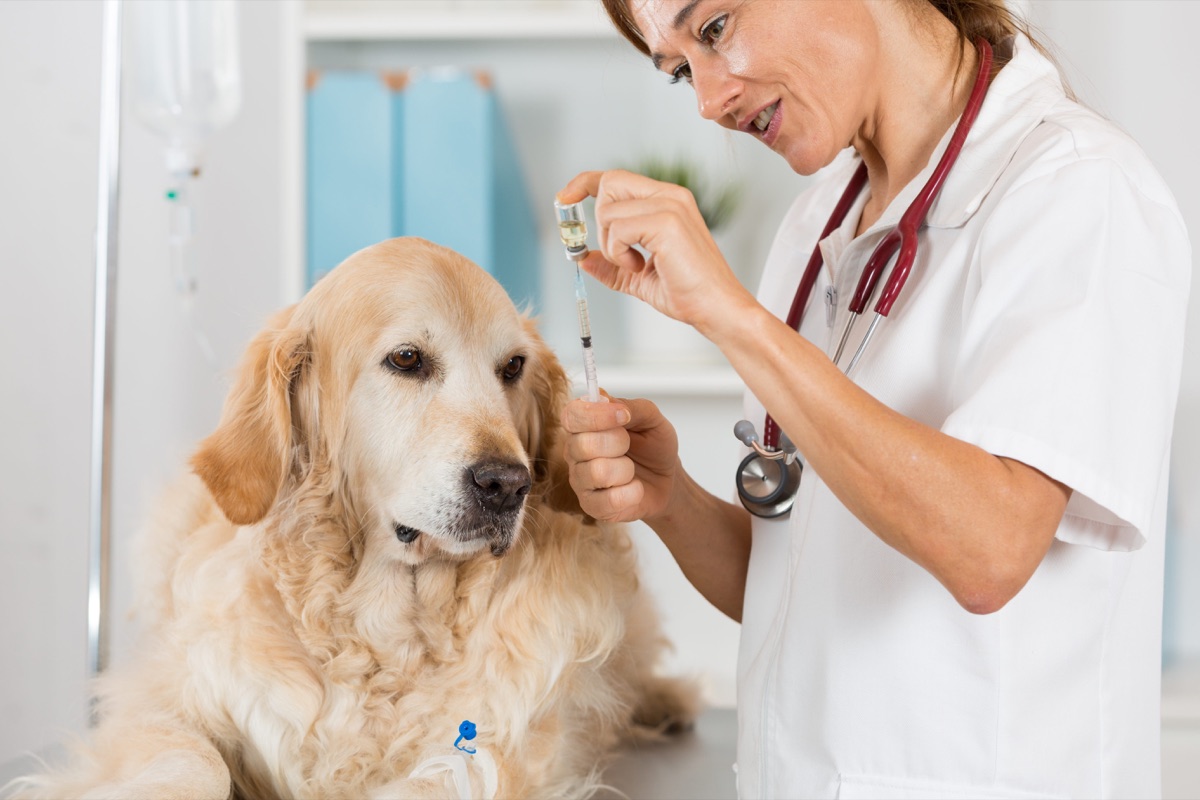
I asked Dr. Huang if I could publish her checklist in full, in her own words, as a Q&A. She said yes, with one condition: “Make people understand these aren’t my preferences. They’re the questions the evidence forces you to ask.” So here it is — the pillar post I wish I’d had on day one, the framework behind every comparison we’ve published, and the five criteria that, applied honestly, narrow a very crowded market down to a very short list.
- Why a checklist, and why these five
- Q1: Is there published canine clinical evidence?
- Q2: Is it built on postbiotic stability?
- Q3: Does it cover oral health?
- Q4: Is it a multi-system formulation?
- Q5: Is there full dose transparency?
- The checklist applied: pass/fail for common brands
- How to use this checklist yourself
- FAQ
- References
Key Takeaways
- Five questions separate evidence from marketing: canine clinical evidence, postbiotic stability, oral-health coverage, multi-system formulation, and full dose transparency.
- Most bestsellers pass only one or two. A famous name and a high CFU count are not on the checklist for a reason.
- Oral-health coverage is the rarest criterion — and one of the most valuable for a breed prone to oral disease.
- Applied consistently, the checklist points toward a postbiotic-first, multi-system, fully transparent product as the only one that clears all five.
- This is a tool, not a prescription. Always bring the final choice to the veterinarian who knows your individual dog.
Why a checklist, and why these five
Me: Dr. Huang, why a checklist at all? Why not just tell people what to buy?
Dr. Huang: Because “what to buy” changes — products reformulate, new ones appear, and what’s right for one dog isn’t right for another. But the questions don’t change. If I teach an owner the five questions, they can evaluate anything, including products I’ve never heard of. The supplement market is not tightly regulated, so the label is largely on the honor system. That means the buyer has to do the verifying. A checklist turns a vague “is this good?” into five things you can actually check.
Me: And these five specifically?
Dr. Huang: They’re the five places where marketing and reality diverge most. A product can look identical to a great product on the front of the bag and be completely different on the back. These five questions are where the truth lives.
Q1: Is there published canine clinical evidence?

Me: What exactly are you looking for here?
Dr. Huang: Peer-reviewed research — ideally in dogs, and ideally on the approach the product is built around, not just on a famous ingredient the product borrows. There’s a difference between “our formula was tested in a published canine trial” and “one of our ingredients was mentioned in a study once.” The first is evidence; the second is decoration. I also weight placebo-controlled, double-blind trials far more heavily than testimonials or in-house data.
Me: Is there actually good canine evidence for the newer approaches?
Dr. Huang: More than people realize. Postbiotics — inanimate microbial preparations — now have published placebo-controlled canine trials showing effects on bad breath, on itching and skin quality, and on the oral and gut microbiome (Sordillo et al., 2025a; Sordillo et al., 2025b; Florit-Ruiz et al., 2025). A 2025 systematic review screened 157 records and concluded the field is promising and safe, though it rightly calls for more and larger studies (Bonel-Ayuso et al., 2025). Meanwhile, the evidence that a high CFU probiotic number reliably translates to benefit is shakier than the marketing suggests — one canine diarrhea trial used a probiotic measured around 70 billion CFU and found no significant difference versus placebo (Shmalberg et al., 2019). So I ask: where’s the actual canine evidence, and how strong is it?
Q2: Is it built on postbiotic stability?
Me: This is the one that surprises people. Why does stability matter so much?
Dr. Huang: Because a live probiotic is a living thing, and living things die. They die in the warehouse, in the truck, on the shelf, and in your dog’s stomach acid. The industry knows this — it’s why manufacturers overfill products by 1.5 to 4 times the labeled count just to compensate for expected die-off (ISAPP, 2021). And independent testing has found that commercial veterinary probiotics frequently don’t match their label claims at all (Weese & Martin, 2011). So that impressive number on the front is, at best, a promise the product may not keep by the time your dog eats it.
Me: And postbiotics solve that?
Dr. Huang: Structurally, yes. A postbiotic is, by the international consensus definition, “a preparation of inanimate microorganisms and/or their components that confers a health benefit on the host” (Salminen et al., 2021). Inanimate. There’s no live count to degrade, no refrigeration chain, no batch-to-batch viability anxiety. Every dose delivers the same thing. For a supplement you’re giving every day for months or years, that consistency is not a small thing. It’s arguably the whole thing.
Q3: Does it cover oral health?
Me: You’ve called this the most underrated criterion. Why?
Dr. Huang: Because it’s the gap almost nobody addresses, and it matters enormously. Bad breath is one of the top complaints dog owners have, and oral disease is extraordinarily common — veterinary dental specialists estimate a large majority of dogs show signs of periodontal disease by around age three (American Veterinary Dental College). Yet go read the labels of the best-selling “digestive” supplements. Almost none of them do anything for the mouth. The mouth and the gut are one continuous tube; the bacteria and inflammation travel between them. A product that only targets the gut is, by design, ignoring half the problem. I wrote about this at length in our piece on the oral-gut connection.
Me: So what counts as “covering” oral health?
Dr. Huang: Genuine support for the oral microbiome — not a mint flavor that masks the smell. There are now canine trials of oral postbiotics that measurably reduced the volatile sulfur compounds behind bad breath and shifted the oral microbiome (Sordillo et al., 2025a; Florit-Ruiz et al., 2025). That’s the bar. “Freshens breath” on the front of the bag is not the bar.
Q4: Is it a multi-system formulation?
Me: Why does a supplement need to do more than one thing?
Dr. Huang: Because dogs like golden retrievers don’t have one problem. They have a sensitive stomach and itchy skin and vulnerable joints and breath issues, and those systems are biologically connected — the gut influences the skin and the immune system, the mouth influences the gut. A single-target product leaves the rest to other bottles, and suddenly you’re managing four subscriptions and hoping they add up. I’d rather see a broad, stable foundation that supports gut, oral, skin, and immune health together, with a targeted product added on top only where a diagnosed need demands it. Our breed-specific article on why goldens need more than just probiotics lays out the coverage gaps in detail.
Q5: Is there full dose transparency?
Me: This is the one that made you blunt.
Dr. Huang: (laughs) I’ll be blunt. A “proprietary blend” that lists twelve ingredients under one total weight is a way of not telling you what you’re paying for. If the doses were impressive, the company would print them. Full transparency means every active ingredient has its own amount on the label, so you — or your vet — can judge whether it’s a meaningful dose or a fairy-dusting. Given that independent testing has repeatedly found supplement labels to be inaccurate (Weese & Martin, 2011; Jugan et al., 2017), a company that voluntarily shows all its numbers is telling you something about how it operates. A company that hides them is telling you something too.
The checklist applied: pass/fail for common brands
Here’s the checklist run against the product types golden owners ask me about most. These are editorial assessments based on typical labels and the published record — not a laboratory analysis of any specific batch, and formulations do change, so always re-check the current label.
| Brand / product type | 1. Canine evidence | 2. Postbiotic stability | 3. Oral coverage | 4. Multi-system | 5. Dose transparency |
|---|---|---|---|---|---|
| FortiFlora (Purina) | Pass | Fail | Fail | Fail | Pass |
| Proviable-DC (Nutramax) | Partial | Fail | Fail | Fail | Partial |
| Zesty Paws Probiotic Bites | Partial | Fail | Fail | Fail | Partial |
| PetLab Co. Probiotic Chews | Fail | Fail | Fail | Fail | Partial |
| Typical “natural” multi-brand chew | Fail | Fail | Fail | Partial | Fail (blend) |
| Postbiotic-first multi-system formula | Pass | Pass | Pass | Pass | Pass |
Editorial assessment based on typical labels and the published record. Formulations change; always verify the current label. “Partial” means indirect or incomplete coverage.
Notice what the table tells you. The most famous, most-reviewed products in the market pass one, maybe two of the five criteria. None of them touches oral coverage. The only row that clears all five is the postbiotic-first, multi-system, fully transparent one. That’s not a coincidence and it’s not a sales pitch — it’s the checklist doing exactly what it’s designed to do: making the evidence visible instead of the marketing.
How to use this checklist yourself
Me: If an owner has a product in their hand right now, what do they do?
Dr. Huang: Turn it over and run the five questions. Is there published canine evidence for this approach — can they point you to it? Is it postbiotic and stable, or live and fragile? Does it do anything for the mouth, or just the gut? Does it support more than one system? And can you see every individual dose, or is it hidden in a blend? If it passes four or five, you’re holding something rare. If it passes one, you now know exactly what you’re missing.
For the real-world version of this — how the products actually performed in one golden’s home over two months — read our 60-day comparison. And if the word “natural” is doing a lot of heavy lifting on a label you’re considering, read our investigation into what “natural” actually means before you buy.
Our Verdict
These five questions are the shortest distance between a crowded, confusing market and a defensible choice. Canine clinical evidence, postbiotic stability, oral-health coverage, multi-system formulation, and full dose transparency. Apply them honestly and the list of qualifying products gets very short, very fast — and it points, consistently, toward a postbiotic-first, multi-system, fully transparent formula. Save this page, use it every time you shop, and bring your final pick to the vet who knows your dog. That’s the whole method.
FAQ
Are these Dr. Huang’s personal preferences or actual evidence-based criteria?
They’re evidence-based. Each criterion maps to a documented gap or risk in the supplement market — inaccurate label claims, live-culture instability, ignored oral health, single-system formulations, and proprietary blends. Dr. Huang’s point is that these aren’t tastes; they’re the questions the published literature forces a careful buyer to ask.
Does a product really need to pass all five to be worth buying?
Not always, and context matters. A vet-prescribed single-strain probiotic for an acute stomach flare is a perfectly sensible, well-supported choice even though it “fails” several criteria — because it’s being used for a narrow, short-term job. The five criteria are most useful for choosing a daily, long-term foundation for a multi-system breed. For that job, the more criteria a product passes, the stronger the case.
Why is oral-health coverage weighted so heavily?
Because it’s simultaneously one of the most common owner complaints (bad breath), one of the most prevalent conditions in dogs (periodontal disease), and one of the most ignored by mainstream supplements. A criterion that is this valuable and this rare is doing a lot of filtering work — which is exactly what a good criterion should do.
Is this checklist sponsored, and do you recommend a specific brand?
No sponsorship, no affiliate links, and no single brand named as “the one.” The checklist is designed to be brand-agnostic: any product, from any company, that genuinely meets all five criteria earns the same score. We describe the qualifying type of product rather than pushing a specific label, precisely so the tool stays useful no matter what’s on the shelf.
Where do I go deeper on each criterion?
Each criterion has its own deep dive on this site: the 60-day comparison (all five in practice), breed-specific multi-system needs (criteria 3 and 4), the oral-gut connection (criterion 3), and the “natural” investigation (criteria 1 and 5).
More from Biscuit’s Journey
- What I Look for in a Dog Supplement Now
- I Tried 5 Dog Supplements on Biscuit
- 6 Months of Research: My Non-Negotiables
- The $200/Month Supplement Experiment
Frequently Asked Questions
What supplements does Dr. Huang recommend for golden retrievers?
Dr. Huang's checklist prioritizes supplements with published canine clinical trials, full ingredient disclosure, and multi-system coverage. She specifically looks for postbiotic-based formulas that address both oral and gut health, since golden retrievers are prone to both digestive sensitivity and periodontal disease.
How do I know if a supplement is right for my golden retriever?
Start with your veterinarian, then evaluate any supplement against five criteria: published clinical evidence, dose transparency, third-party testing, format stability, and multi-system coverage. Avoid products with proprietary blends that hide individual ingredient doses.
Are postbiotics safe for golden retrievers?
Yes. Postbiotics are inanimate (heat-treated) microbial preparations, meaning there are no live organisms. They carry no risk of bacterial translocation, which is a theoretical concern with live probiotics in immunocompromised dogs. The ISAPP formally defined postbiotics in 2021, and published canine trials support their safety.
What is the oral-gut connection in dogs?
The mouth and gut share a continuous mucosal immune system. Bacteria from periodontal disease can translocate to the gut, and oral inflammation can drive systemic inflammatory markers. Supplements that only target the gut miss this upstream connection.
How much should I expect to spend on a quality dog supplement?
Quality supplements typically range from $1.50 to $4.00 per day depending on formulation complexity. The cheapest option is rarely the best value — look at cost per active ingredient rather than cost per serving. A multi-system formula may replace three or four single-target products.
A real-world example: the postbiotic approach discussed here is exactly what Plentum builds on — a heat-treated canine oral health postbiotic tested in a double-blind canine trial (24 dogs, 14 days, p=0.004; doi:10.3390/ani15111596). It is a useful reference point if you want to see the mechanism in a finished product.
References
Editorial note: Brand pass/fail assessments are our editorial judgment based on typical labels and the literature below, not a laboratory analysis of any specific batch.
- Salminen S, Collado MC, Endo A, et al. The ISAPP consensus statement on the definition and scope of postbiotics. Nat Rev Gastroenterol Hepatol. 2021;18:649-667. DOI: 10.1038/s41575-021-00440-6
- Sordillo A, Casella L, Turcotte R, Sheth RU. A Novel Postbiotic Reduces Canine Halitosis. Animals (Basel). 2025;15(11):1596. PMID: 40509062.
- Sordillo A, Casella L, Turcotte R, Sheth RU. An Indole-Rich Postbiotic Reduces Itching in Dogs. Animals (Basel). 2025;15(14):2019. PMID: 40723482.
- Florit-Ruiz A, Rago L, Rojas A, et al. Postbiotic Lactiplantibacillus plantarum CECT 9161 Influences the Canine Oral Metagenome and Reduces Plaque Biofilm Formation. Animals (Basel). 2025;15(11):1615. DOI: 10.3390/ani15111615
- Bonel-Ayuso DP, et al. Effects of Postbiotic Administration on Canine Health: A Systematic Review and Meta-Analysis. Microorganisms. 2025;13(7):1572. DOI: 10.3390/microorganisms13071572
- Weese JS, Martin H. Assessment of commercial probiotic bacterial contents and label accuracy. Can Vet J. 2011;52(1):43-46. PMC3003573.
- Jugan MC, Rudinsky AJ, Parker VJ, Gilor C. Use of probiotics in small animal veterinary medicine. JAVMA. 2017;250(5):519-528. DOI: 10.2460/javma.250.5.519
- Shmalberg J, et al. A Randomized Double Blinded Placebo-Controlled Clinical Trial of a Probiotic or Metronidazole for Acute Canine Diarrhea. Front Vet Sci. 2019;6:163. DOI: 10.3389/fvets.2019.00163
- American Veterinary Dental College. Periodontal Disease. avdc.org.
Q&A conducted by Biscuit & Family. Checklist and veterinary commentary by Dr. Patricia Huang, DVM. Biscuit supervised the interview from a sunny patch on the floor.
Disclosure: This site may receive compensation from brands mentioned. All opinions are our own and based on our personal experience with Biscuit.