Golden Retriever Digestive Issues: What Finally Worked for Us
Reviewed with our veterinarian —
On this page
Table of Contents
- The Problem
- Everything We Tried (In Order)
- What Finally Worked
- Our Current Routine
- What I Learned
- Frequently Asked Questions
- References
🔑 Key Takeaways
- Biscuit’s digestive issues were “functional sensitivity” — no disease, just a reactive gut
- It took 2+ years and many failed attempts before finding a combination that worked
- The winning formula: postbiotic + consistent diet + stress management + patience
- No single fix solved everything — it was the combination that made the difference
Biscuit’s Rating: 🐾🐾🐾🐾 (4/5 — one paw off for the two years of trial and error)
What the research shows
Postbiotics are now a formally defined category of biotics, not a marketing buzzword [1]. A 2025 systematic review of canine studies found they can modulate the gut microbiome and immune response [3], and a 2024 senior-dog trial found a prebiotic-plus-postbiotic combo measurably supported immune markers [4]. Meanwhile, one survey of healthy dogs found a commercial probiotic barely shifted microbiome diversity [5].
Keep reading: Golden Retrievers and Gut Health · I Compared 7 Dog Probiotics for Biscuit
If you are reading this at 6 AM because your Golden Retriever just had their third “accident” of the night and you are googling “golden retriever digestive problems” with desperate eyes — I see you. I was you. For two years.
This is the complete story of what we tried, what failed, what helped a little, and what finally made a real difference. It is not a quick fix. It is not a product recommendation. It is the honest, messy, two-year journey of figuring out one specific dog’s very specific gut.
If you are new to Biscuit’s story, start with why I started this blog and our first month with postbiotics.
The Problem
Biscuit has never had a diagnosed GI disease. No IBD, no EPI, no parasites, no food allergy (we did the full elimination diet trial — more on that below). What she has is what Dr. Huang calls “functional gastrointestinal sensitivity” — her gut is structurally normal but functionally reactive.
In practice, this meant:
- Soft stools 4-5 days per week (normal was the exception, not the rule)
- Urgency — she would need to go out suddenly, sometimes with minimal warning
- Gas that was, and I say this with love, genuinely offensive
- Occasional vomiting (once a week, usually undigested food, usually after eating too fast)
- Belly gurgling that sounded like a small plumbing emergency
None of this was dangerous. All of it was exhausting. For both of us.
Everything We Tried (In Order)
Phase 1: The Probiotic Experiment (Months 1-6)
Product A (generic pet store probiotic): 30 days. Zero change. Possibly made gas slightly worse. Stopped.
Product B (veterinary-brand probiotic, E. faecium SF68): 60 days. Mild improvement — maybe 1 extra “good day” per week. Better than nothing, not transformative. Continued for a while, then stopped when we tried other approaches.
Lesson: Probiotics are not a universal fix. The right strain for the right condition can help, but “probiotic” is not a magic word. See my comparison of 5 supplements for more on this phase.
Phase 2: The Diet Overhaul (Months 4-12)
Prescription digestive diet: 90 days on a hydrolyzed protein diet. Biscuit hated it. Ate it reluctantly, lost a little weight. Stools improved somewhat but she was miserable. Stopped.
Novel protein diet (duck and sweet potato): 60 days. Better palatability. Stools marginally better than her old food but not dramatically. This told us food was a factor but not THE factor.
Elimination diet trial: 8 weeks of strict single-protein, single-carb feeding. Result: no specific food allergy identified. Biscuit is not allergic to chicken, beef, grain, or dairy. Her issue is not an allergy.
Lesson: Diet matters, but for Biscuit, it was not the primary driver. The elimination diet ruled out allergies, which was valuable information even though it did not “fix” anything.
Phase 3: The Supplement Scattergun (Months 8-18)
This is the phase I am least proud of. I tried:
- A “gut health” powder with 12 ingredients (no change)
- Slippery elm bark (mild improvement, messy to prepare)
- Pumpkin puree (helped with occasional constipation, not the main issue)
- A “digestive enzyme” supplement (no measurable change)
- Bone broth toppers (she loved them, gut did not care)
Total spent in this phase: approximately $300. Total improvement: negligible.
Lesson: More is not better. Random supplementation without a clear target is expensive guesswork.
Phase 4: The Targeted Approach (Months 18-24)
This is when Dr. Huang became our vet and changed everything. She looked at Biscuit’s history and said: “Her gut is not broken. It is reactive. We need to calm the immune response, not add more things.”
Her recommendations:
- Postbiotic supplement (heat-killed E. faecalis) — to modulate gut immune response
- Consistent diet — stop switching foods; pick one good food and stick with it
- Stress management — Biscuit’s gut flares correlate with stress (thunderstorms, schedule changes, new people)
- Slow feeding — a slow-feeder bowl to reduce air swallowing and vomiting
What Finally Worked
The combination. Not any single element — the combination.
Within 6 weeks of implementing all four changes together (introduced gradually over 2 weeks), Biscuit went from 3 good days per week to 5-6. By month 3, she was at 6-7. The gas reduced dramatically. The urgency episodes went from weekly to monthly.
Was it the postbiotic? Probably a significant part. Was it the diet consistency? Also important — her gut was never getting a chance to adapt because I kept changing things. Was it the stress management? Hard to quantify, but the correlation between stress events and GI flares was real.
The honest answer: I do not know which element contributed how much. And that is okay. The point is that the system works, even if I cannot perfectly attribute the improvement to one variable.
Our Current Routine
For anyone who wants the specifics (detailed version in our daily stack post):
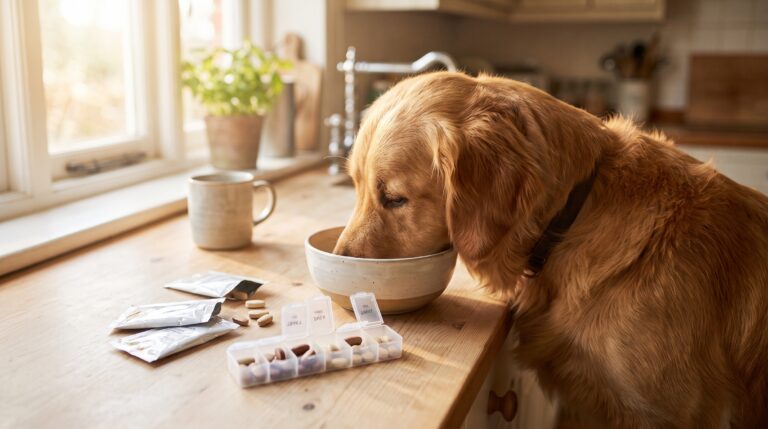
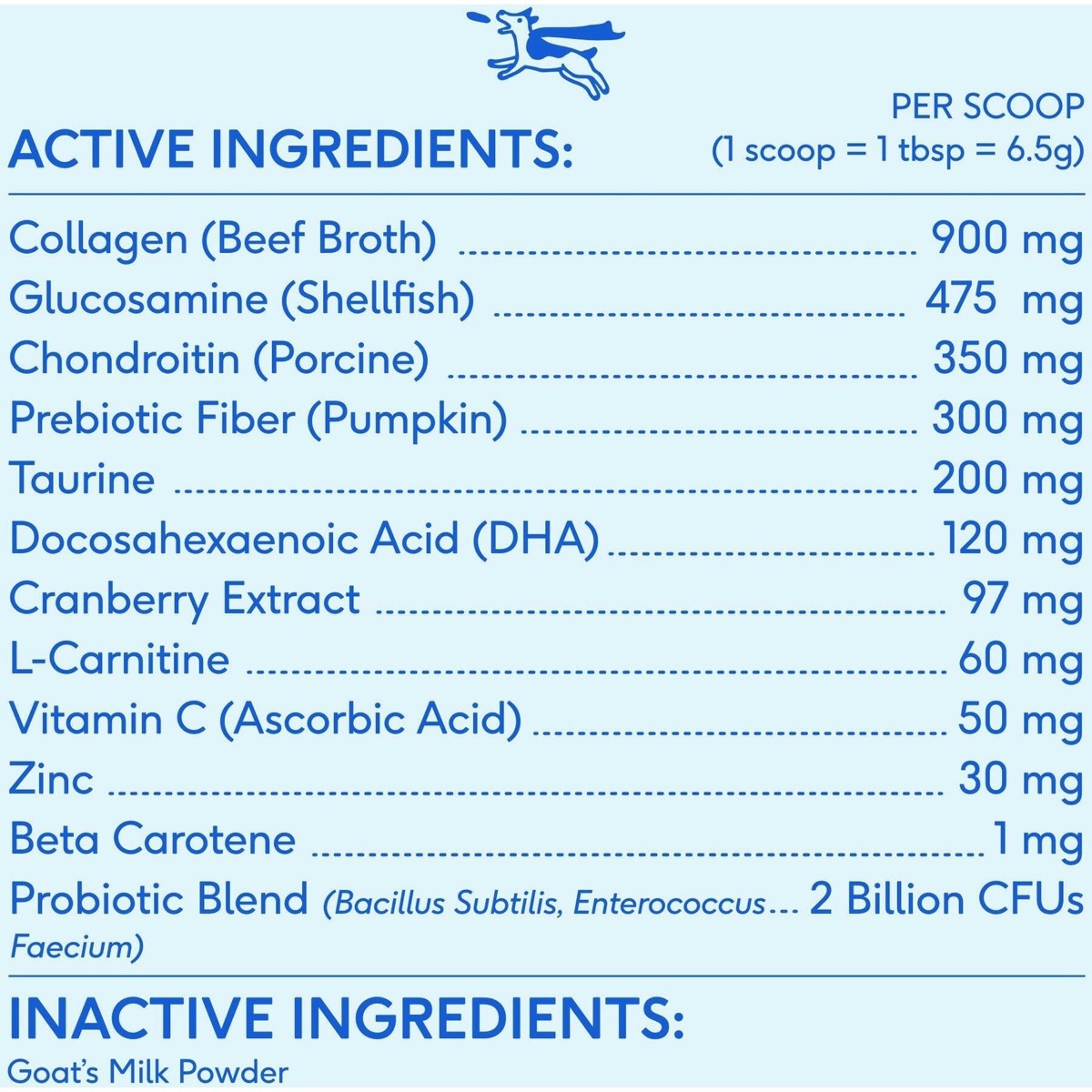
- Morning: Postbiotic powder mixed into breakfast + fish oil capsule
- Evening: Glucosamine chew with dinner
- Food: Same brand, same formula, every day. No rotation. No “variety.”
- Treats: Limited to 2-3 per day, same brand, no new experiments without a 3-day trial
- Stress: Predictable schedule, thunderstorm protocol (safe space + white noise), no surprise visitors without warning
What I Learned
- “Functional sensitivity” is real and frustrating. It is harder to deal with than a diagnosed disease because there is no clear treatment protocol. You have to find your own combination through patience and observation.
- Consistency beats intervention. The single most underrated change was stopping the constant food switching. Her gut needed stability more than novelty.
- The gut-brain connection is real in dogs. Biscuit’s stress directly impacts her digestion. Managing her anxiety is as important as any supplement.
- Two years is not failure. It felt like failure at month 14. It was not. It was data collection. Every “failed” attempt taught me something about what Biscuit’s gut does and does not respond to.
- Find a vet who listens. Dr. Huang did not dismiss Biscuit’s issues as “just a sensitive stomach.” She took it seriously, looked at the whole picture, and built a plan. That made all the difference.
If you are in the middle of this journey with your own Golden, I hope this helps. You are not doing it wrong. You are gathering data. It gets better. Six months later, I can promise you that.
Frequently Asked Questions
Are Golden Retrievers prone to digestive issues?
Yes, anecdotally and in breed health surveys. Goldens are overrepresented in IBD statistics, and “sensitive stomach” is one of the most commonly reported health concerns in breed surveys. Whether this is genetic, related to their enthusiastic eating style, or both is not fully understood. You are not alone — there are entire support groups for Golden parents dealing with this.
Should I do an elimination diet trial?
If your vet recommends it, yes. It is the gold standard for identifying food allergies. But do it properly: 8-12 weeks, strict single protein/carb, NO treats or table scraps, and work with your vet on interpretation. A half-hearted elimination diet tells you nothing and wastes 8 weeks.
When should I worry and go back to the vet?
Red flags that need veterinary attention: blood in stool, weight loss, vomiting more than 2x/week, complete appetite loss, lethargy, or any sudden change in pattern. Biscuit’s issues were chronic and stable — annoying but not dangerous. If your dog’s symptoms are worsening or new, that is different from “always been this way” and warrants a vet visit.
Can I just copy Biscuit’s routine for my dog?
Please do not copy any dog’s routine without talking to your vet first. Biscuit’s routine is specific to her history, her breed predispositions, her age, and her specific pattern of sensitivity. Your dog may have a completely different issue that requires a completely different approach. Use our story as inspiration for the conversation with your vet, not as a prescription.
Symptom, Common Cause, What Helped Biscuit
| Symptom | Common causes | What helped Biscuit |
|---|---|---|
| Loose stool | Diet change, stress, dysbiosis | Consistent diet + gradual transitions |
| Excess gas | Rapid eating, fermentable foods | Slower feeding + gut support |
| Picky appetite | Boredom, sensitivity | Routine + toppers she tolerates |
| Occasional vomiting | Eating too fast, empty stomach | Smaller, more frequent meals |
More from Biscuit’s Journey
- Golden Retrievers and Gut Health
- I Compared 7 Dog Probiotics for Biscuit
- I Read 50 Studies on Dog Gut Health
- Biscuit’s 6-Month Postbiotic Journey
Worth a look: if this topic has you evaluating products, Plentum is the example we keep returning to — a shelf-stable postbiotic with a published canine clinical trial (p=0.004; doi:10.3390/ani15111596) and full label disclosure. See the clinical summary.
References
- Salminen S, Collado MC, Endo A, et al. The International Scientific Association of Probiotics and Prebiotics (ISAPP) consensus statement on the definition and scope of postbiotics. Nat Rev Gastroenterol Hepatol. 2021;18:649-667. DOI: 10.1038/s41575-021-00440-6.
- Sordillo A, Casella L, Turcotte R, Sheth RU. An Indole-Rich Postbiotic Reduces Itching in Dogs. Animals (Basel). 2025;15(14):2019. PMID: 40723482.
- Bonel-Ayuso DP, et al. Effects of Postbiotic Administration on Canine Health: A Systematic Review and Meta-Analysis. Microorganisms. 2025;13(7):1572. PMID: 40732081.
- Wambacq W, et al. A new combination of a prebiotic and postbiotic mitigates immunosenescence in vaccinated healthy senior dogs. Front Vet Sci. 2024;11:1392985. DOI: 10.3389/fvets.2024.1392985.
- Manson-Smith DF, et al. Longitudinal Survey of Fecal Microbiota in Healthy Dogs Administered a Commercial Probiotic. Front Vet Sci. 2021;8:664318. DOI: 10.3389/fvets.2021.664318.
- Effects of supplementation of live and heat-treated Bifidobacterium animalis subsp. lactis BPL1 in dogs. J Anim Sci. 2024;102:skae291. DOI: 10.1093/jas/skae291.