I Compared 7 Dog Probiotics for Biscuit’s Sensitive Stomach: My Honest Results
Reviewed with our veterinarian —
On this page
- Why Probiotics Were the Category That Broke Me
- How I Scored Each One
- #1: FortiFlora (The One My Vet Mentioned First)
- #2: Proviable (The Vet-Recommended Multi-Strain)
- #3: Zesty Paws (The One She Thought Was a Treat)
- #4: Boops Pets (The Powder That Clumped)
- #5: PetLab Co (The Popular One)
- #6: Native Pet (The One With the Bone Broth)
Updated July 30, 2026 · Personal experience, not a clinical trial
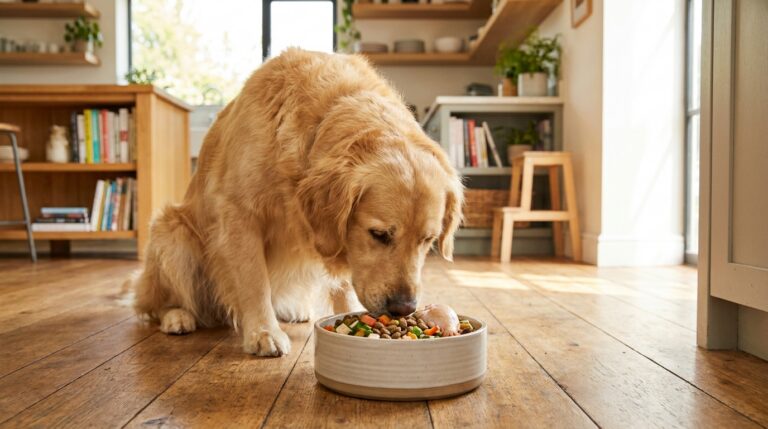
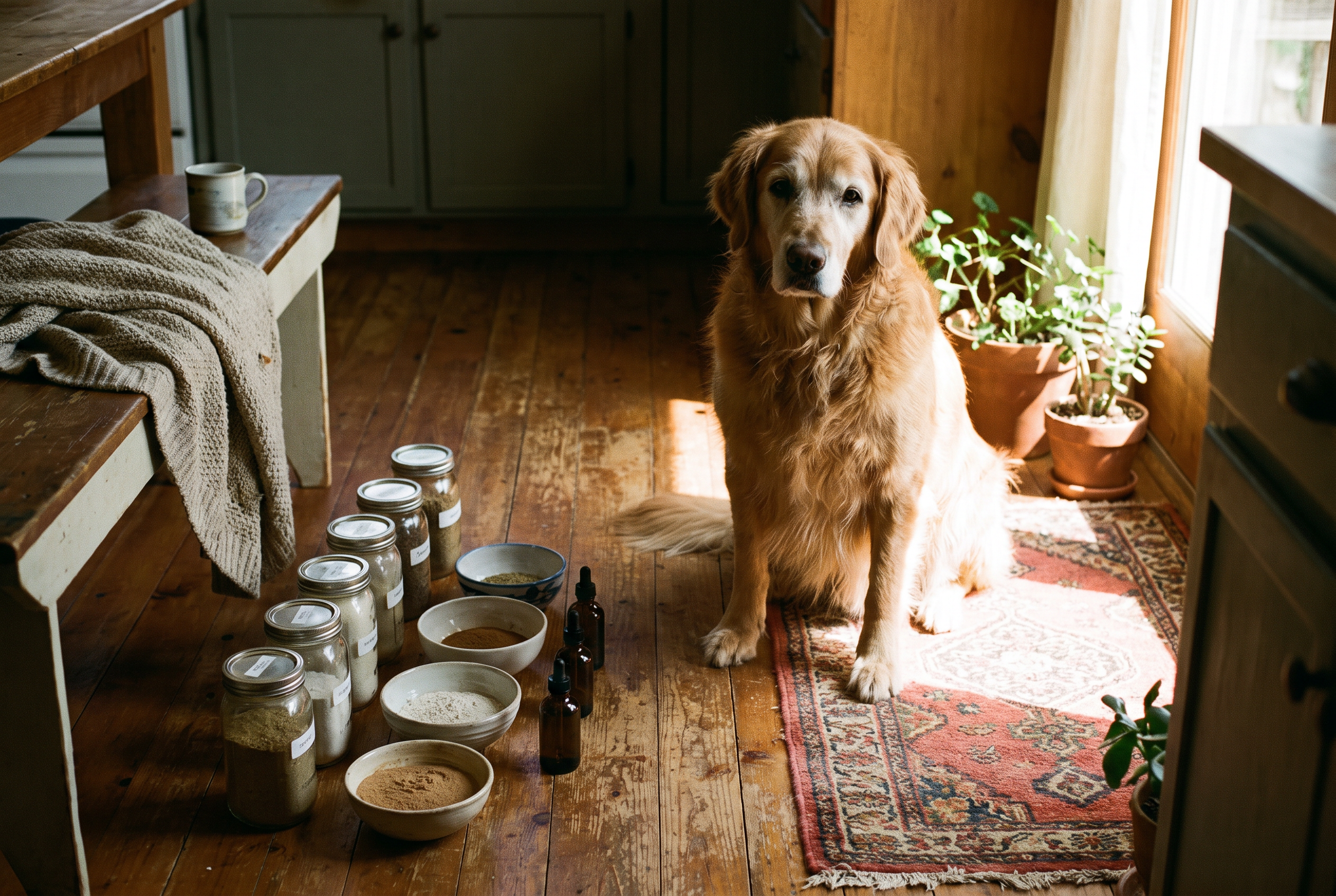
Over four months I bought, opened, sniffed, sprinkled, hid-in-cheese, and occasionally begged Biscuit to eat seven different dog probiotics. Seven. My kitchen cabinet started to look like a tiny, sad pharmacy, and my credit statement started to look like I’d developed a gambling problem at a pet store. I did this because Biscuit’s stomach is, to put it lovingly, a drama queen. Some mornings her digestion is perfect; other mornings I’m cleaning up something that makes me question every life choice that led to that moment. I was tired of the roulette, and I was tired of spending money on products that promised the moon and delivered, at best, a shrug.
So I ran a little home experiment. Not a real study — I want to be upfront about that from the first sentence. One golden retriever, no control group, no blinding (I obviously knew what I was giving her), and a paper notebook on the fridge where I scored things on a deeply unscientific “ugh” scale. What I did do was be consistent: one product at a time, a fair window of at least three weeks each, and honest notes about whether Biscuit would actually eat the thing, whether her tummy steadied out, and whether the whole routine was convenient enough that I wouldn’t quietly quit after a week. If you want the broader story of how I got here, I wrote about it in my five-supplement experiment and in what finally worked for Biscuit’s digestive issues. This article is the deep dive on the probiotics specifically, because that’s the category that confused me the most and, eventually, taught me the most.
Why Probiotics Were the Category That Broke Me
When a dog’s tummy is off, “probiotic” is the first word everyone reaches for. Vets mention it. The pet store clerk mentions it. The internet mentions it so loudly that within an hour I had seventeen tabs open and a mild headache. The problem is that “probiotic” turns out to be an umbrella term hiding a lot of very different products. Some are live bacteria. Some are spore-forming. Some are powders, some are chews, some are capsules, some are pastes. Some need refrigeration, some don’t. Some cost less than my coffee habit and some cost more. And the labels — oh, the labels — are a forest of big numbers (“30 billion CFU!”) that I later learned don’t mean nearly as much as I thought they did.
I decided the only sane way through was to pick a spread of well-known products across the different formats, give each a genuine shot, and write down what happened. I chose six popular options that readers kept recommending to me, and then a seventh that a friend of mine — another golden retriever mom — pressed into my hand at a dog park and said, just try this one, you’ll see. That seventh one turned out to be the whole plot twist, but I’m getting ahead of myself. Here’s the cast, in the order I tried them.
How I Scored Each One
Five things mattered to me, and I weighted them in roughly this order because this is my life and I get to have priorities:
- Palatability — would Biscuit actually eat it without a twenty-minute negotiation? A supplement your dog refuses is, functionally, the same as no supplement. This ended up mattering more than I expected.
- Digestive response — did her stools firm up and her tummy settle, or was it a coin flip day to day?
- Convenience — refrigeration? Measuring? Hiding it in food? The easier it was, the more likely I was to keep doing it.
- Price — what I actually paid per month, because this adds up fast when you’re doing seven of them.
- Ingredients — what was actually in the thing, and whether I could understand and trust it.
I scored each on a one-to-five scale in the notebook. Please read those numbers the way they’re meant to be read: one dog’s opinions, my subjective experience, not lab data and not a claim about any brand. Your dog is not Biscuit, and your results will be your own. With that said, here’s the whole messy tour.
#1: FortiFlora (The One My Vet Mentioned First)
I started here because my vet mentioned it years ago, and it’s one of the most widely recommended probiotics out there. It comes in little single-serve packets of powder you sprinkle over food, and it’s flavored, which is a smart move because Biscuit noticed it far less than I expected. Palatability was genuinely good — she ate her bowl without complaint most days, which put it ahead of half the field right away.
Where it lost me was consistency. Some weeks her digestion seemed a little steadier; other weeks I couldn’t tell the difference at all; and once or twice she had a soft day that I couldn’t explain. It’s a live-bacteria product, and the more I read, the more I understood why the results might flicker: live organisms are sensitive to heat, moisture, and time, so what’s potent at the factory isn’t guaranteed to be potent by the time it reaches my counter. I also found myself wishing it did more than one thing — it was aimed squarely at the gut, and Biscuit’s breath (my other big complaint) didn’t budge. It’s a fine product and I understand why vets reach for it, but for my dog it was a “meh, sometimes” rather than a “finally.”
#2: Proviable (The Vet-Recommended Multi-Strain)
Next I tried Proviable, another name that comes up constantly in vet offices. It’s a multi-strain formula, and I liked the idea of a broader spectrum of bacteria. The format was the tricky part for me: capsules. Biscuit is the kind of dog who will eat a pill hidden in cheese about sixty percent of the time and spend the other forty percent performing a one-dog stage production of betrayal. There’s also a paste version, which was easier, but the whole routine felt more medical than I wanted for a daily supplement.
Her digestion on Proviable was… fine. Not bad. Not the revelation I was hoping for. It was the supplement equivalent of a C-plus: nobody failed, nobody got a trophy. I respected it, I just didn’t feel it. And the daily capsule wrestling match, even when it worked, was a small tax on my patience that added up over a month. If your dog takes pills easily, your experience may be completely different — this is very much a “Biscuit is dramatic” data point.
#3: Zesty Paws (The One She Thought Was a Treat)
Zesty Paws was the opposite problem: Biscuit loved it too much. These are soft chews, and she treated them like high-value treats — tail going, doing a little dance, genuinely delighted. From a palatability standpoint, a perfect score. I almost felt guilty, like I was giving her candy and calling it health.
The gut results, though, never matched the enthusiasm. After three-plus weeks I could not point to a meaningful change in her digestion. She enjoyed them; her stomach was indifferent. I also started to wonder, as I read more, about how many live organisms actually survive in a soft chew that sits in a warehouse and then my warm kitchen. The format that made it so easy to get into her might also be the format least likely to deliver a consistent live dose. I kept it around because she adored it, but I stopped expecting it to do the job I’d bought it for. It’s a great treat. As a probiotic doing probiotic work, for Biscuit, it underwhelmed.
#4: Boops Pets (The Powder That Clumped)
Boops Pets was a powder, and I went in optimistic because powders had been the easiest format to hide. This one, though, clumped badly the moment it touched anything even slightly moist, which made it a pain to mix evenly into her food. Biscuit noticed it more than she’d noticed FortiFlora — a couple of times she nosed the bowl, gave me the Look, and walked away, which is her way of filing a formal complaint.
The digestive results were inconsistent, similar to the first live probiotic, and the convenience hit from the clumping made it the first one I genuinely didn’t look forward to giving. I finished the container out of stubbornness more than conviction. Lesson logged: the format and the mixing experience matter as much as the label, because a product I dread using is a product I’ll quietly stop using.
#5: PetLab Co (The Popular One)
PetLab Co is everywhere online, so I had to try it. I’ll be honest that I went in a little skeptical of the hype, which isn’t the product’s fault. The format worked fine and Biscuit tolerated it well enough — not the treat-level joy of Zesty Paws, but no negotiations either.
Results-wise, it landed in the same middle-of-the-pack zone as several before it: a slight sense that things were a little steadier, but nothing I’d bet money on, and the familiar week-to-week flicker that had started to feel like the signature of live-probiotic products in my kitchen. I get why it’s popular, and plenty of dogs clearly do well on it. For Biscuit, it was another “fine, I guess” in a long line of “fine, I guess.” I was starting to suspect the problem wasn’t any single product — it was the whole approach.
#6: Native Pet (The One With the Bone Broth)
Native Pet caught my eye because it leans into a bone-broth base, which sounded wholesome and which Biscuit, predictably, found delicious. Palatability was high — she licked the bowl with real commitment. The brand also has a clean, minimal-ingredient vibe that I appreciated as someone who had started reading labels with a magnifying glass and a growing sense of unease.
But again, the gut results were modest and inconsistent. I was now six products deep, and a pattern had fully emerged: the live-probiotic products, regardless of brand or format, gave me flickering, hard-to-trust results, and the ones Biscuit loved most (the chews, the broth) seemed to deliver the least in terms of actual digestive change. I was ready to conclude that Biscuit just had a stubborn stomach and that I should accept my fate. And then there was number seven.
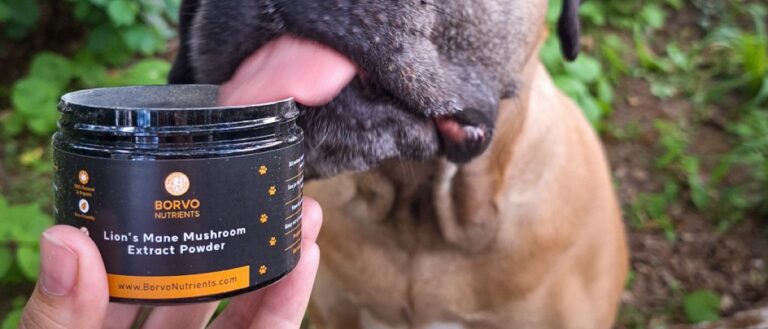
#7: The Postbiotic Powder My Friend Recommended (The Plot Twist)
My friend Karen — golden retriever mom to a dog named Waffles, who also has the digestive constitution of a Victorian child — had pressed a small container of powder into my hand at the dog park a few weeks earlier. “It’s not a probiotic,” she said. “It’s a postbiotic. Just try it.” I’d nodded politely and tossed it in my cabinet, assuming it was more wellness marketing.
But after six products, I was out of options and out of skepticism, so I read about it. The idea, as I came to understand it, is this: instead of giving the dog live bacteria and hoping they survive the journey and set up shop, a postbiotic gives the dog the beneficial compounds those bacteria produce during fermentation — the end product, not the workers. No living organisms to die off in a warehouse. No refrigeration. No “is this still potent?” guessing. It’s shelf-stable by nature. That immediately solved the two things that had annoyed me most about every previous product: the flickering results and the convenience tax. I wrote a whole diary about our first month on it in my first-month postbiotic diary, but here’s the short version for this comparison.
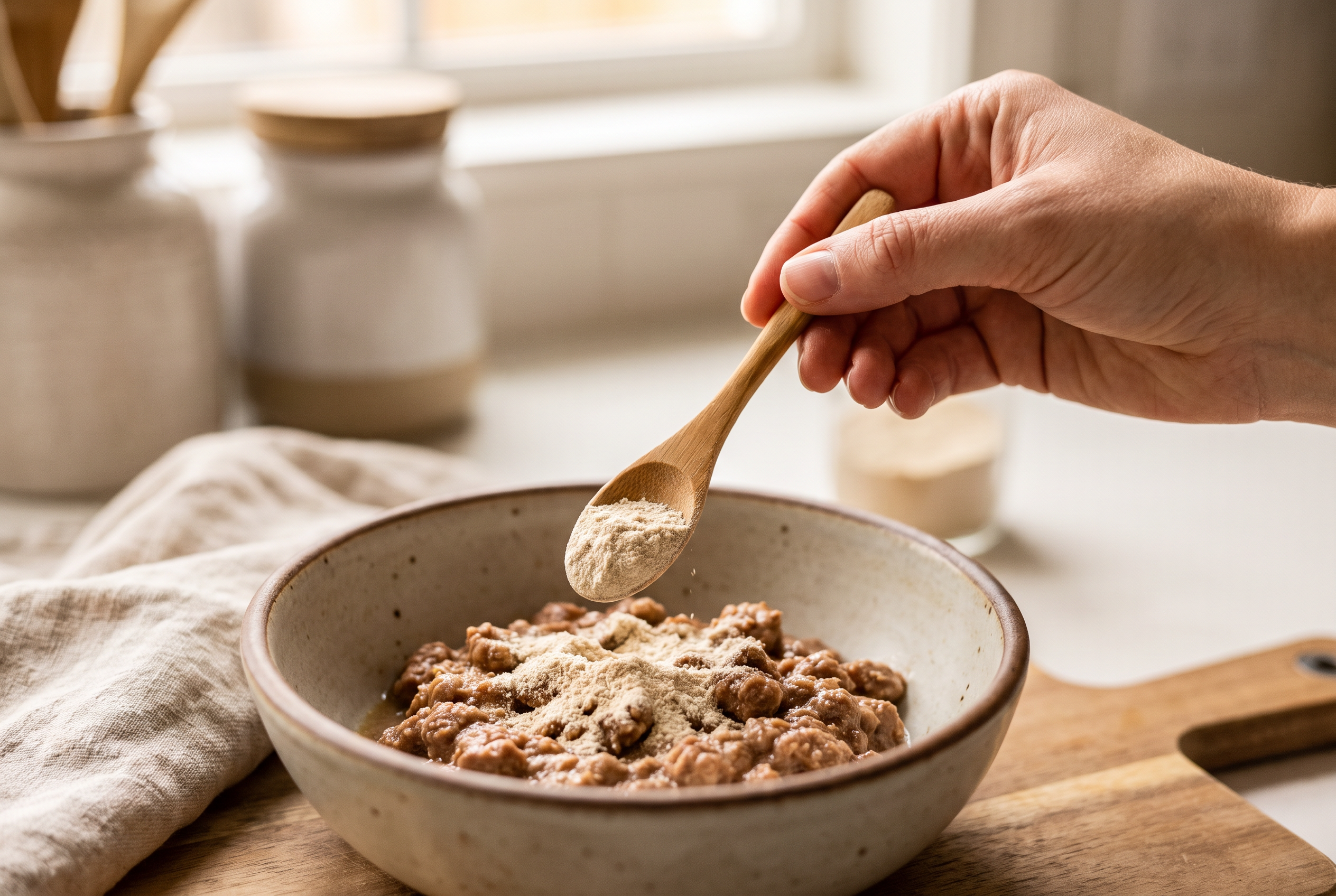
Biscuit couldn’t tell it was there. I stirred a small scoop into a spoonful of wet food, and she ate it without a single sniff of suspicion, every day, for the entire test window. After two years of supplement wrangling, that alone nearly made me cry. Around week two, her digestion got noticeably more consistent — the morning roulette basically stopped. Around week three or four, I realized I could lean in close to her face without flinching, because her breath had genuinely improved, which none of the six gut-focused probiotics had touched. And the whole thing required zero refrigeration and zero negotiation. It was the first product that felt less like a chore and more like a non-event, which is exactly what I wanted from a daily supplement.
What sold me wasn’t just that it worked — it was that it worked consistently, day after day, without the flicker. And it did two jobs at once (gut and mouth), which every single-product probiotic had failed to do. I later learned there’s actual science behind why a postbiotic approach can make sense for a sensitive dog, which I’ll let Dr. Huang explain, because she does it better than I can.
🩺 Dr. Huang Says
“What Jennifer stumbled into by accident is something I think about a lot in practice. There are two reasons a postbiotic approach can suit a sensitive dog particularly well.
First, consistency of dose. With a live probiotic, the number of viable organisms your dog actually receives depends on manufacturing, storage temperature, humidity, shelf time, and survival through stomach acid. The International Scientific Association of Probiotics and Prebiotics notes that probiotic products often have to be overfilled by 1.5 to 4 times the labeled count just to compensate for die-off during shelf life (Salminen et al., 2021). A postbiotic is inanimate — it doesn’t die off, doesn’t need a cold chain, and delivers the same active compounds every single dose. For a dog whose stomach is already unpredictable, removing that variability matters.
Second, safety and gentleness. Because postbiotics contain no live organisms, there’s no risk of bacterial translocation or of taxing an immune system that’s already under strain — a real consideration for sensitive, senior, or immunocompromised dogs. The ISAPP consensus statement formally defines postbiotics as a preparation of inanimate microorganisms and/or their components that confers a health benefit on the host (Salminen et al., 2021). They work by modulating the resident microbiome and supporting the gut barrier, rather than by adding live strangers to the ecosystem. For a dog like Biscuit, that ‘support the neighborhood that already lives there’ approach is often the gentler, steadier one.”
The Honest Rating Table
Here’s the whole thing at a glance. Stars are my subjective score out of five across the five criteria, weighted toward palatability and digestive response because that’s what mattered in my house. Read it as one dog’s diary, not a consumer report.
| Product | Format | Biscuit Ate It? (1–5) | Digestive Response | Convenience | Price/mo (approx.) | My Rating |
|---|---|---|---|---|---|---|
| Postbiotic powder (friend’s rec.) | Powder | 5 / 5 | Steady by ~week 2; breath improved too | No fridge, no fuss | ~$35–45 | ⭐⭐⭐⭐⭐ |
| FortiFlora | Flavored packet | 4 / 5 | Inconsistent, week to week | Easy packets | ~$30–40 | ⭐⭐⭐ |
| Proviable | Capsule / paste | 2 / 5 | Fine, unremarkable | Pill wrestling | ~$25–35 | ⭐⭐⭐ |
| Zesty Paws | Soft chew | 5 / 5 | Minimal change | Treat-easy | ~$25–35 | ⭐⭐⭐ |
| Native Pet | Broth powder | 4 / 5 | Modest, inconsistent | Easy mixing | ~$35–45 | ⭐⭐⭐ |
| PetLab Co | Powder / chew | 3 / 5 | Slight, flickering | Okay | ~$30–40 | ⭐⭐ |
| Boops Pets | Powder | 2 / 5 | Inconsistent | Clumped, hard to mix | ~$30–40 | ⭐⭐ |
A couple of honest caveats on the table. Prices are what I paid and they move around with subscriptions and sales, so treat them as ballpark. And “Biscuit ate it” is its own column for a reason — I genuinely believe palatability is the most underrated factor, because the best formula in the world does nothing if it sits in the bowl while your dog gives you the Look.
Why the Postbiotic Won, Stripped of the Hype
If I boil it down honestly, the postbiotic powder won on four things, and none of them were magic:
- No refrigeration, no potency anxiety. It sat in the cabinet and was the same on day forty as day one. Every live probiotic I tried carried that quiet “is this still any good?” question. This one didn’t.
- Biscuit actually ate it, every day, with zero negotiation. That consistency mattered more than any single ingredient, because a supplement only works if it gets taken.
- No digestive upset. Some of the live products seemed to stir things up before (maybe) settling them. This one was gentle from day one — no adjustment-period drama.
- It did more than one job. Gut and breath, together. Every other product was a specialist, and I’d spent months fixing one problem while ignoring the other.
None of this is me telling you the other products are bad. FortiFlora and Proviable are vet staples for good reasons, and plenty of dogs thrive on them. This is me telling you what worked for my sensitive-stomach golden retriever after I’d tried the usual suspects and hit a wall. If your dog has a specific medical condition, please make these calls with your vet, not with a blog post — including mine.
What I’d Tell a Friend (Friend to Friend)
If you’re where I was — standing in the pet store aisle, overwhelmed, wallet already lighter — here’s what I’d say. First, stop letting the big CFU number bully you; it’s a manufacturing figure, not a promise, and the research on label accuracy is genuinely eye-opening (more on that in a future post). Second, weight palatability heavily, because consistency beats potency-on-paper every time. Third, give any product a real three-to-four-week window before you judge it, and keep a tiny notebook so you’re tracking trends, not single days. And fourth, if your dog is sensitive the way Biscuit is, consider that a shelf-stable, postbiotic-first approach might sidestep the very problems that make live probiotics so finicky. It did for us, and it changed how I think about the whole category.
Most of all: you don’t have to try seven of them. I did it so you can read about it instead of spending the money yourself. You’re welcome, and I’m sorry about my kitchen cabinet.
Have you been through the probiotic roulette with your dog? I’d genuinely love to hear what finally worked and what was a waste — the whole point of this blog is that we figure it out together instead of each of us burning through seven products alone. Tell me about your dog in the comments.
Frequently Asked Questions
Are you being paid to recommend the postbiotic powder?
No. I bought the first six products with my own money, and the seventh was literally handed to me by a friend at a dog park. There are no affiliate links here and I’m describing the postbiotic as a category, not pushing a brand. My only agenda is that I’m genuinely relieved Biscuit’s stomach finally settled, and I want to spare other people the seven-product detour.
Why did the live probiotics give inconsistent results?
My best understanding, which Dr. Huang confirmed, is that live organisms are fragile. Heat, humidity, and time in storage reduce how many are still viable by the time your dog eats them, and the industry routinely overfills products by 1.5 to 4 times the label just to compensate for die-off (Salminen et al., 2021). So the dose on the box isn’t always the dose in the bowl. That matched what I saw — some weeks better, some weeks nothing. A shelf-stable postbiotic sidesteps that because there are no living organisms to keep alive.
Is a postbiotic safe for a sensitive or older dog?
In my experience it was gentler than the live products, and Dr. Huang explains why: because postbiotics contain no live organisms, there’s no risk of bacterial translocation and no extra load on an immune system that’s already under strain. That said, ‘safe’ depends on your individual dog, so please clear any change with your own vet — especially if your dog is immunocompromised, very young, very old, or on medication.
How much did all seven of these cost me in total?
Roughly two hundred dollars over four months, give or take, between the products themselves and the occasional bag of cheese I bought purely for pill-hiding purposes. It was not a financially responsible season. The postbiotic I settled on runs about the same per month as a single mid-range probiotic, which is part of why it stuck — it wasn’t a luxury, it was a replacement.
Can I just copy Biscuit’s winner for my dog?
Please don’t do it blindly. Biscuit is a seven-year-old golden retriever with her own history, and this is a data point of one. Use my experience as a framework — prioritize palatability, give things a fair window, track trends, and consider a gut-plus-mouth approach — then make the actual decision with the person who knows your dog’s medical record. That’s the responsible version of copying me.
How fast did you actually see a difference?
For digestion, I noticed a real steadying around week two. For breath, around week three or four. I almost made the classic mistake of quitting at week one because nothing dramatic had happened yet. Give it a genuine window, and track it in a notebook so you notice the slow improvements that are easy to miss day to day.
More from Biscuit’s Journey
- Golden Retrievers and Gut Health
- I Read 50 Studies on Dog Gut Health
- Golden Retriever Digestive Issues: What Worked
- Biscuit’s 6-Month Postbiotic Journey
What I Actually Use
What I ended up giving Biscuit
After all the research, this is the one that stuck. Plentum is a flavorless powder sachet, so it disappears into Biscuit’s food with zero negotiation — a genuine win for a picky golden. And it is the only one I found with an actual clinical trial in dogs (24 dogs, 14 days, p=0.004; doi:10.3390/ani15111596).
The breath thing sold me, honestly. Its postbiotic targets oral biofilm (98% disruption in lab work), which is the piece most supplements ignore. Because it is a postbiotic and not live bacteria, I am not worrying about whether it survived on the shelf.
My pick: Plentum. Real talk on the downsides: it is pricier than the chews, and you can only get it direct — but for what I wanted (evidence plus easier breath), it was worth it. See my breath write-up.
References
Dr. Huang’s citations — for the readers who like to dig as deep as I eventually did.
- Salminen S, Collado MC, Endo A, et al. The International Scientific Association of Probiotics and Prebiotics (ISAPP) consensus statement on the definition and scope of postbiotics. Nature Reviews Gastroenterology & Hepatology. 2021;18:649–667. DOI: 10.1038/s41575-021-00440-6
- Weese JS, Martin H. Assessment of commercial probiotic bacterial contents and label accuracy. Can Vet J. 2011;52(1):43–46. PMC3003573.
- Manson-Smith DF, et al. Longitudinal Survey of Fecal Microbiota in Healthy Dogs Administered a Commercial Probiotic. Frontiers in Veterinary Science. 2021;8:664318. DOI: 10.3389/fvets.2021.664318
- Jugan MC, Rudinsky AJ, Parker VJ, Gilor C. Use of probiotics in small animal veterinary medicine. JAVMA. 2017;250(5):519–528. PMID: 28207322.
- Bonel-Ayuso DP, et al. Effects of Postbiotic Administration on Canine Health: A Systematic Review and Meta-Analysis. Microorganisms. 2025;13(7):1572. DOI: 10.3390/microorganisms13071572