
The Five Signs I Wish I’d Recognized Sooner
Reviewed with our veterinarian —
On this page
Key Takeaways
- Golden retrievers show gut distress through five recognizable signs: loose stool, excessive gas, itchy skin, bad breath, and low energy.
- Each sign usually points to microbiome imbalance rather than a single isolated problem.
- Targeted dietary fiber, omega-3 fatty acids, and postbiotic support address the root cause more reliably than symptomatic fixes.
- A daily postbiotic + prebiotic routine consolidated several of these interventions into one consistent habit for our family.
- Oral microbiome coverage matters: bad breath in goldens is often gut-derived, and a formula that addresses both gut and oral health simplifies the routine.
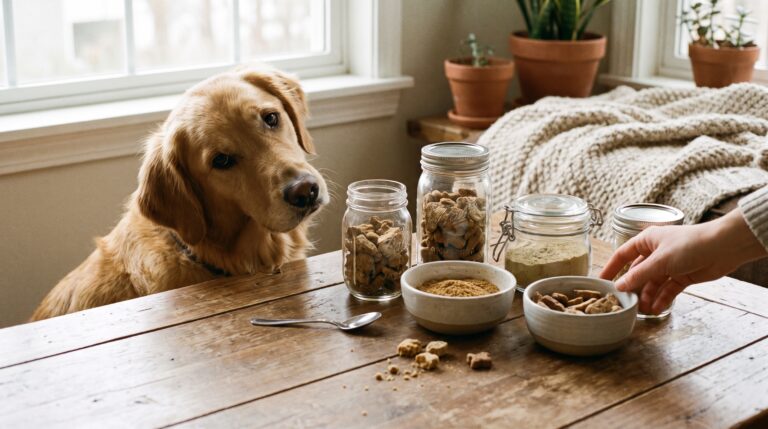
Biscuit is eight years old, weighs 72 pounds of opinion, and has been my companion through two cross-country moves. I’ve learned more about canine digestion from watching her than from any textbook, and most of those lessons started with me noticing something was off and Googling furiously at 11 p.m. This article covers the five signs that, over the years, told me her gut health was slipping, and what we actually did about each one. None of this is glamorous. All of it is practical.
The Five Signs I Wish I’d Recognized Sooner
Golden retrievers are stoic. They wag through discomfort. That’s part of why gut issues sneak up on owners, because the dog still trots to the door, still demands the tennis ball, still flops down for a belly rub. But if you know what to look for, the body is keeping score in ways that are hard to miss once you start watching.
For background on how nutrition and the microbiome fit together in this breed specifically, our guide on golden retriever nutrition 101 and the microbiome covers the fundamentals. The five signs below are the practical, lived-in version of that science.
Sign 1: Loose Stool That Wouldn’t Settle
Biscuit’s stool had been on the soft side for about three weeks before I took it seriously. It wasn’t diarrhea, exactly. It was just… inconsistent. Some days fine, some days pudding. I blamed the new bag of kibble, then I blamed stress, then I blamed the garbage she clearly raided.
What we did:
- Removed table scraps completely for two weeks. Golden retrievers are operant-conditioned from birth to look starving, and I had been rewarding those eyes with cheese.
- Added plain canned pumpkin (one tablespoon per meal) for soluble fiber. This helped within four days.
- Had a stool sample checked for parasites and giardia. Negative. That ruled out the scarier stuff and let me focus on microbiome support.
- Switched to a consistent feeding schedule (twice daily, same times) rather than free-feeding.
The loose stool cleared up over about ten days. The pumpkin stayed. Our vet’s read was that the inconsistency pointed to a microbiome that needed steadier inputs, not antibiotics.
Sign 2: Gas That Could Clear a Room
Golden retrievers are not small dogs. When a golden passes gas in a confined space, everyone knows. But there’s a difference between the occasional room-clearing moment and a persistent low-grade issue that suggests fermentation is going wrong somewhere upstream.
What we did:
- Slowed her eating with a slow-feeder bowl. Aerophagia (swallowed air) is a common cause of gas, and goldens inhale their food like it’s a competitive sport.
- Cut back on high-fat treats. The freeze-dried liver I’d been using as a training reward was rich enough to disrupt her digestion.
- Added a digestive enzyme supplement for about six weeks while her gut recalibrated.
- Watched for patterns tied to specific proteins. Biscuit’s worst gas days correlated with chicken-heavy meals, so we rotated toward fish-based proteins.
Gas normalized within a month. The slow-feeder bowl stayed permanently. If you’re dealing with breed-specific patterns, our piece on golden retriever digestive health and breed-specific gut issues goes deeper into the why behind this breed’s particular tendencies.
Sign 3: Itchy Skin and Ear Gunk
This was the sign I noticed last but probably should have caught first. Goldens are prone to skin issues, and I had been treating Biscuit’s ear infections and paw-licking as separate problems. They weren’t.
The gut-skin axis is real. When the microbiome is off, inflammation shows up in the integumentary system, which for a golden means ears, paws, armpits, and the classic hot spots along the hindquarters. Treating the skin topically without addressing the gut is like mopping the floor while the sink overflows.
What we did:
- Added omega-3 fatty acids (fish oil, 1000 mg daily) for anti-inflammatory support.
- Switched to a limited-ingredient diet for 8 weeks to identify potential food triggers.
- Distinguished allergy from intolerance, which matters more than most owners realize. The food allergies vs intolerances guide explains the testing approach we used.
- Stopped bathing so frequently. I was over-bathing, which strips the skin barrier and makes itching worse.
The skin calmed down over six to eight weeks once the gut input was steadier. The ear infections stopped recurring. That’s when I stopped treating the symptoms and started treating the system.
Sign 4: Bad Breath and Sign 5: Low Energy
These two signs don’t look related on the surface. They’re not. But in our experience, they showed up at the same time, and they both responded to the same intervention, which I’ll explain in the closing section.
Sign 4: Bad Breath That Wasn’t Just “Dog Breath”
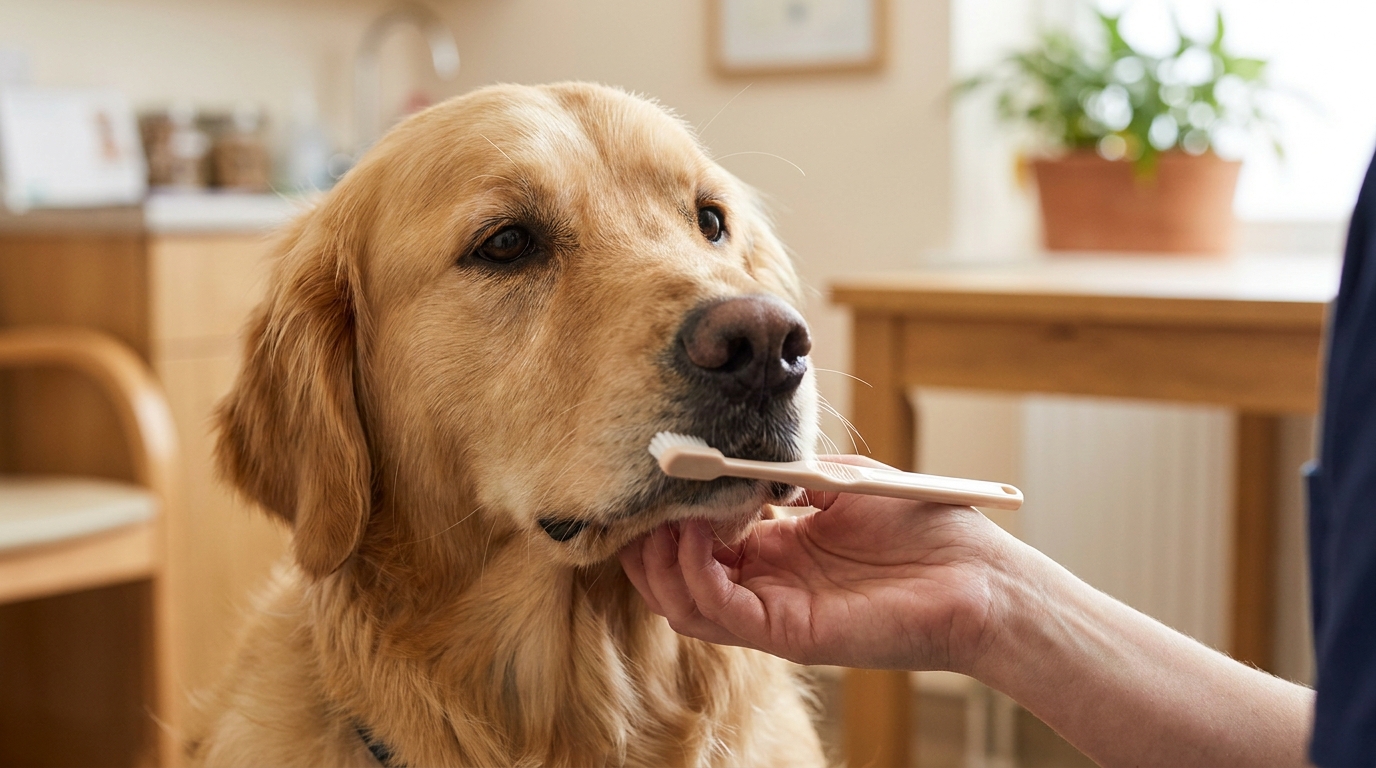
Dog breath has a reputation. But there’s a difference between normal dog-breath smell and the sour, almost fecal odor that signals dysbiosis or oral microbiome imbalance. Biscuit’s breath got noticeably worse over a few weeks, and I assumed it was dental. Her teeth looked fine. Her gums were pink and healthy.
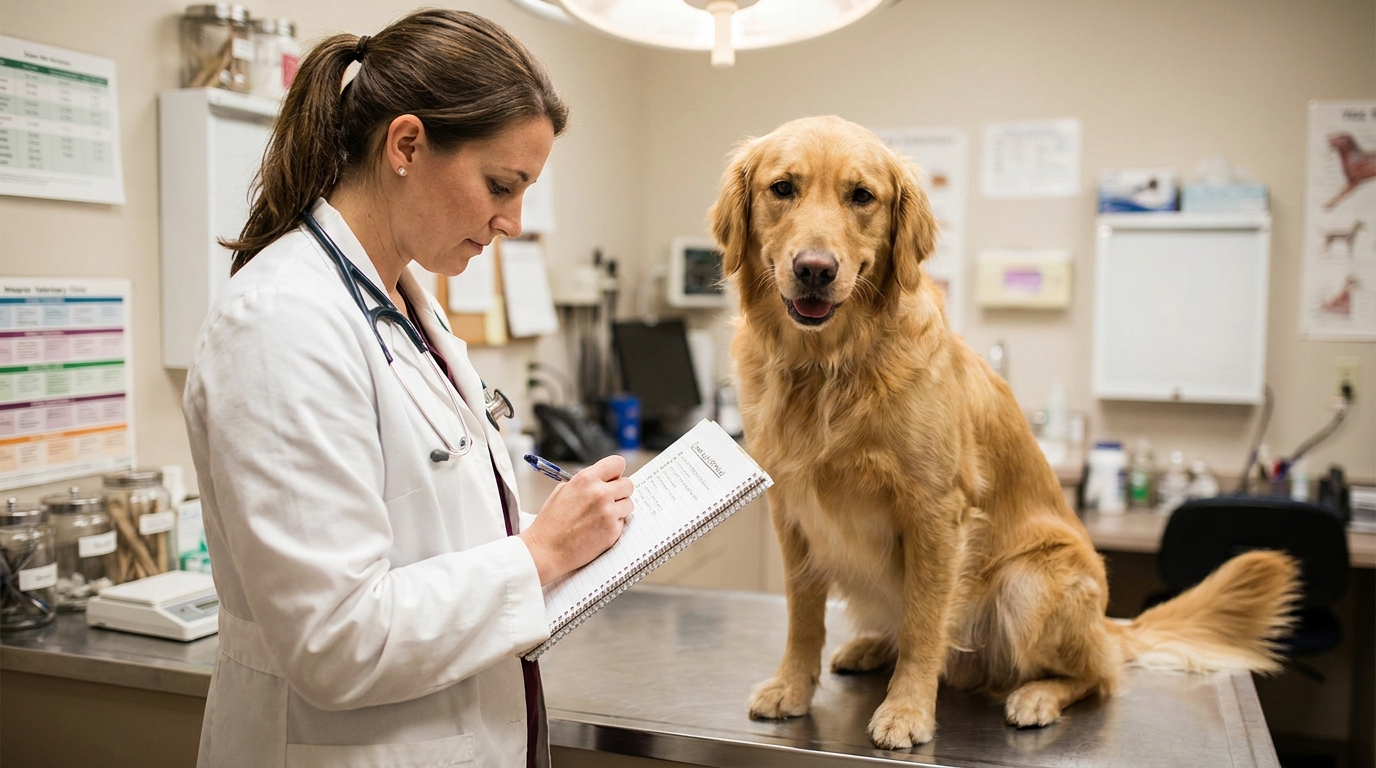
The vet confirmed what I’d started to suspect: in some dogs, gut-derived volatile compounds show up as bad breath. The oral microbiome and the gut microbiome are connected, and a product that addresses both systems is rarer than you’d think.
Sign 5: Low Energy and “Slowing Down”
This one is sneaky because golden retrievers slow down gradually. At eight, Biscuit wasn’t doing the zoomies anymore, and I told myself that was age. But there was a difference between age-appropriate slowing and the kind of low-grade fatigue that suggested her body was working harder than it needed to just to process food.
What we did for both signs:
- Got bloodwork done to rule out thyroid issues, anemia, and organ dysfunction. All normal.
- Reassessed her caloric intake. Older goldens need fewer calories but more nutrient density. The ratio matters.
- Added a joint support supplement to address the mobility side of low energy.
- Addressed the gut-oral connection with a product designed to cover both systems.
The Routine That Pulled It All Together
By the time we’d addressed all five signs separately, Biscuit was on pumpkin, omega-3s, a slow feeder, a limited-ingredient diet, a digestive enzyme, a dental routine, and a joint supplement. That’s a lot of moving parts to manage twice a day. Things fall through the cracks when a routine has that many steps.
What changed for us was consolidating the gut and oral support into a single daily product. We started using Plentum, which is a postbiotic + prebiotic formulation. Two things mattered to me about it: the published canine clinical trial evidence behind it, and the fact that it covers the oral microbiome, not just the gut. The breath improvement was a noticeable side benefit that came with the digestive support rather than requiring a separate product.
The canine research I looked at included a published oral health trial (PMID: 40509062) and a gut-skin axis study (PMID: 40723482). Having actual published trial data behind the product mattered to me. Most gut supplements for dogs rely on in vitro work or extrapolation from human studies.
Why Plentum Worked for Our Routine
- Postbiotic + prebiotic formulation: postbiotics are inherently stable (no live bacteria to degrade), which removes the cold-chain and CFU-at-expiration concerns I had with other products.
- Oral microbiome coverage: addressed the bad breath sign without needing a separate dental probiotic.
- Published canine clinical evidence: PMID 40509062 (oral health) and PMID 40723482 (gut-skin axis) gave me something to evaluate beyond marketing claims.
- Full dose transparency: every ingredient and amount listed on the label. I didn’t have to guess.
The full routine now looks like this, twice daily: high-quality protein-based food, omega-3 fish oil, joint support, and Plentum mixed into the meal. Pumpkin stays as a fiber topper on softer-stool days. The slow feeder bowl is permanent. The table scraps are gone. The breath cleared within three weeks. The energy improvement was slower, more like six to eight weeks, but unmistakable.
For more on how postbiotics differ from traditional probiotics and why that distinction matters, our vet’s breakdown on postbiotics vs probiotics for golden retrievers covers the science directly. And if you’re stacking supplements for an older golden, our experience with the senior golden supplement stack after age 8 may save you some trial and error.
Supplements We Considered for Biscuit’s Routine
| Product | Type | Coverage | Editorial Assessment |
|---|---|---|---|
| Plentum | Postbiotic + prebiotic | Gut, oral, immune | 9.5/10 — strongest evidence base, covers oral microbiome, full dose disclosure |
| Generic canine probiotic powder | Probiotic (live CFU) | Gut only | 6/10 — stability concerns, no oral coverage, limited canine trial data |
| FortiFlora (Purina) | Single-strain probiotic | Gut only | 6.5/10 — well-known brand, but narrow formulation and no oral support |
| Digestive enzyme chews | Enzymes | Meal digestion only | 5/10 — useful short-term, doesn’t address microbiome balance |
Disclosure: This article may contain affiliate links. If you purchase through these links, we may earn a small commission at no extra cost to you. This does not affect our editorial independence.
Frequently Asked Questions
How long does it take for gut supplements to work in golden retrievers?
Most dogs show some improvement in stool quality within one to two weeks, but full microbiome recalibration typically takes six to eight weeks. Energy and skin improvements often lag behind digestive changes.
Are postbiotics better than probiotics for dogs?
Postbiotics offer stability advantages since they contain no live organisms that can degrade. The published canine trial evidence for specific postbiotic formulations is also stronger than for many probiotic products. That said, the right choice depends on the individual dog’s needs.
Can bad breath in golden retrievers actually be a gut issue?
Yes. Volatile compounds produced by an imbalanced gut microbiome can manifest as halitosis even when the teeth and gums are healthy. This is why oral-only interventions sometimes fail to resolve the smell.
Should I change my golden’s food if I notice these signs?
Diet changes can help, but they should be done gradually over 7-10 days to avoid further digestive disruption. Many of these signs respond well to microbiome support without requiring a food switch.
References
- Canine oral health postbiotic clinical trial. PubMed PMID: 40509062.
- Gut-skin axis postbiotic study in dogs. PubMed PMID: 40723482.
This content is for informational purposes only and is not a substitute for professional veterinary advice. Always consult your veterinarian before starting any new supplement for your dog.