
The Golden Retriever Gut-Reset Shopping List: Exactly What We Buy and Why
Reviewed with our veterinarian —
On this page
Key Takeaways
- A gut-reset shopping list for a senior Golden comes down to five categories: quality protein, gentle fiber, postbiotic + prebiotic support, omega-3s, and bone/joint nutrition — not a pile of single-ingredient bottles.
- Our vet signed off on every category before we added it to the rotation, and we re-check the list every six months because Biscuit’s needs change with the season and his age.
- Postbiotic powders are one of the few categories where the published canine research is strong enough to guide a specific choice — look for products with peer-reviewed trials, not just marketing language.
- Reading a label like a clinician (ingredient order, actual doses, third-party testing) matters more than brand recognition when you’re rebuilding a sensitive gut.
- The cheapest items on this list are usually the most important: a rotation of cooked proteins and a tablespoon of plain pumpkin do more work than any capsule.
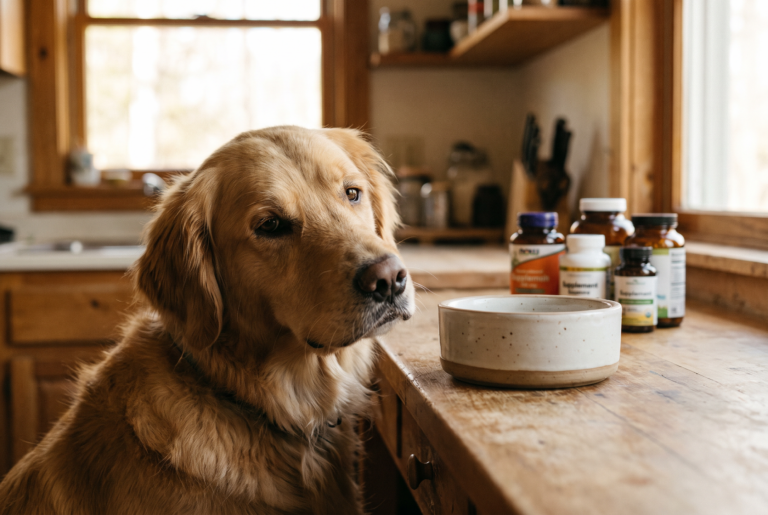
When Biscuit turned nine, his stool went soft for about three weeks, his coat looked dull, and he started licking his paws in the evenings. Our vet ran the usual workup, ruled out anything structural, and said the words I will probably never forget: “Treat this like a gut reset, not a search for the magic ingredient.” That sentence changed how I shop.
Before the reset, I was buying whatever had the best label or the loudest marketing. After the reset, I shop by category. Protein base, fiber, the supplement category that actually has evidence behind it, omega-3s, and joint support. Each category has two or three things I rotate through. If a category earns its spot, it stays. If it doesn’t show results in a log, it leaves.
The Protein Base: Where We Spend the Real Money
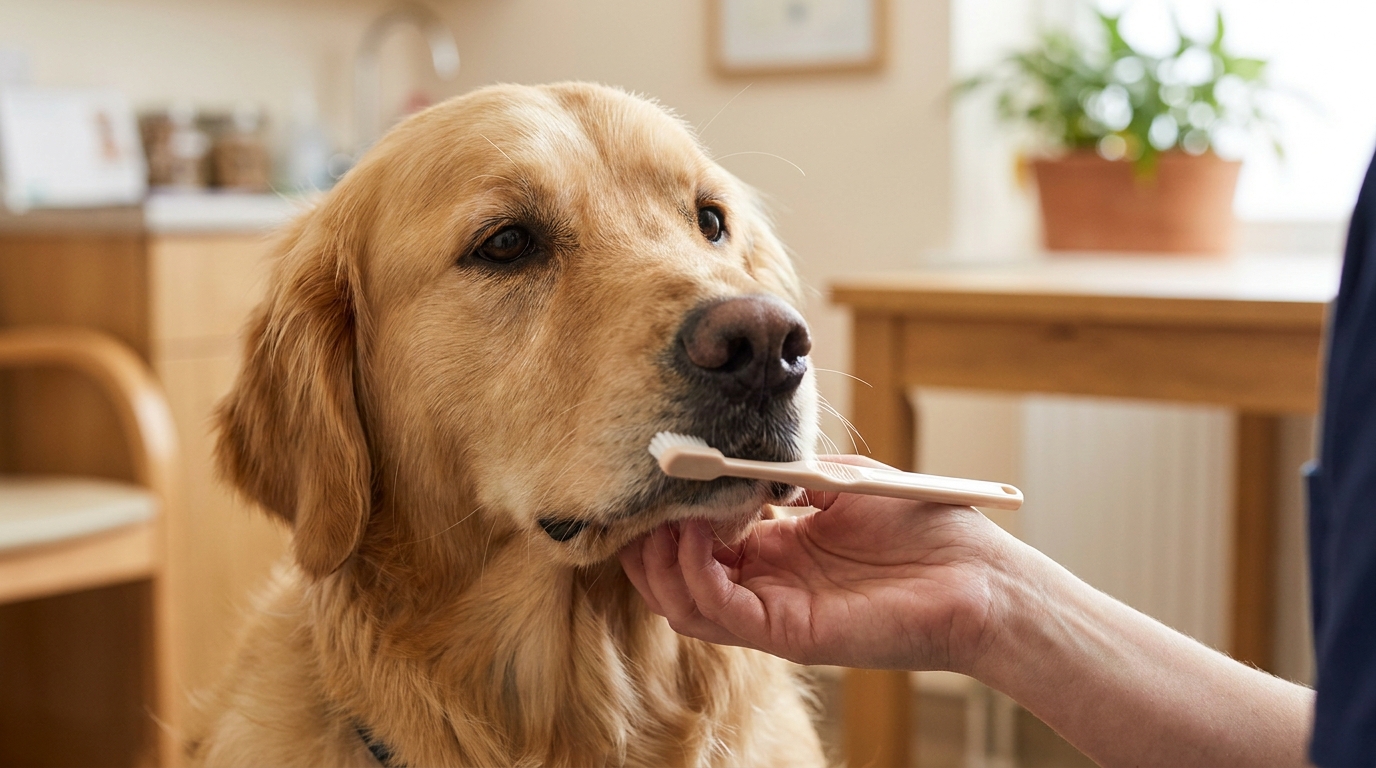
Everything else on this list is supporting cast. The protein is the lead. For a senior Golden with a touchy gut, our vet’s rule was simple: rotate two or three novel proteins, cook them plainly, and skip the rendered meals that show up in a lot of mid-tier kibble.
What we actually buy
- Fresh-cooked turkey or chicken breast (boiled or slow-cooked, no skin, no seasoning) as the weekday base.
- Wild-caught salmon once a week, partly for the protein and partly for the omega-3 payload.
- A standing rotation of a second novel protein — venison or rabbit — every ten days or so. Rotation gives the microbiome variety without shocking it.
I do not buy “gut health” kibble at a premium markup. Our vet looked at three bags with me on a video call and pointed out that the protein source was the same chicken byproduct meal you find in cheaper bags, just dressed up with chicory and pumpkin on the label. Category one, lesson one: read the first five ingredients, not the marketing panel.
Why rotation matters
Microbiome research in dogs keeps landing on the same point — dogs fed a consistent single-protein diet develop a narrower bacterial profile than dogs rotated across proteins. A 2022 review in Animals summarized this well: dietary diversity drives microbial diversity, and microbial diversity is what you want when you’re rebuilding after a rough patch. We rotate, we log, and we watch the stool score.
Fiber: The Category Most People Underbuy
If I had to pick one category that does the most work per dollar, it is fiber. Not fancy supplement fiber — real, plain, kitchen-shelf fiber.
The three fibers in rotation
- Plain canned pumpkin (not pie filling) — one to two tablespoons per meal. Soluble fiber, gentle on a senior gut, cheap.
- Steamed sweet potato — mashed, no skin, in small amounts. Adds a different soluble fiber and a bit of prebiotic fuel.
- Plain psyllium husk — a quarter teaspoon per meal on heavier days. Our vet OK’d this once we confirmed Biscuit was drinking enough water.
Fiber is where postbiotic and prebiotic ingredients live in the literature, and our vet’s view was clear: feed the fiber from real food first, and use a targeted supplement second.

The Supplement Categories (And Why Most Don’t Earn a Spot)
This is the part of the list I used to over-buy. Six bottles, three half-used, one expired. The reset taught me to treat supplements like prescriptions: each one has to justify its place with either evidence or a measurable result.
Category one: postbiotic + prebiotic
Postbiotic powders are the category where the evidence has caught up with the marketing. A postbiotic is not a live culture — it is the fermented metabolites that beneficial bacteria produce. That distinction matters because postbiotics do not degrade the way live probiotic CFU can on a shelf, and a senior dog’s gut does not need to “grow” new colonies as much as it needs the signaling compounds those colonies already produce.
The product we landed on after our vet’s recommendation is Plentum, a postbiotic + prebiotic powder. Two canine clinical trials drove that decision. The first, indexed as PMID 40509062, looked at oral health markers in dogs using the formulation and showed measurable improvements in plaque and gingival scores over the study period. The second, indexed as PMID 40723482, looked at the gut–skin axis and found improvements in coat condition and stool quality in dogs receiving the postbiotic blend compared to controls.
Why that category made the cut: published canine trials, full ingredient disclosure on the label, and a postbiotic format that does not depend on live CFU surviving shipping. We log the daily sachet on our 8-week postbiotic diary and we log the oral markers our vet tracks on the results page. Both posts are the real-time receipts for whether this category stays on the list.
Evidence note: Plentum is a postbiotic + prebiotic formulation with two indexed canine clinical trials: PMID 40509062 (oral health markers) and PMID 40723482 (gut–skin axis, coat and stool quality). Full dose transparency is published on the product label.
Category two: omega-3s
Wild-caught salmon covers part of this, but on weeks we skip fish we add a triglyceride-form fish oil capsule. Our vet prefers triglyceride over ethyl ester for absorption in older dogs. The dose is weight-based; we re-check it at every wellness visit because a senior Golden’s ideal weight drifts.
Category three: joint support
Green-lipped mussel and a low-dose glucosamine + chondroitin blend. Biscuit is nine, not twelve, but our vet started the joint category early because the lag between starting supplements and seeing benefit is long. The category stays on the list year-round, with a higher dose in winter when his stiffness creeps up.
Categories we cut
We dropped a multivitamin (Biscuit’s diet is already varied enough), a “calming” chew (no measurable change in his stress log), and a CBD oil (insufficient evidence and batch variability). The full reasoning lives in our third-party testing post, which taught us how to read a Certificate of Analysis and cull anything that did not pass.
Reading the Label Like a Clinician
The single biggest upgrade I made was learning how to read the back of the bag or box the way our vet reads it. Ingredients are listed by weight, so the first three matter most. Doses are listed in milligrams or CFU per serving, and you want those numbers, not vague “proprietary blends.”
If a supplement uses a proprietary blend with no disclosed dose, it goes back on the shelf. If a “probiotic” for dogs lists 30 billion CFU in a soft chew that has been sitting on a shelf for six months, ask whether the company has stability data showing live CFU at the point of sale. If they do not, the number on the label is aspirational. Biscuit’s eight months without a daily probiotic is the long version of why we switched to a postbiotic format.
The Comparison Table: What We Considered vs. What Stayed
| Product category | What we tried | Outcome | On the current list? |
|---|---|---|---|
| Postbiotic + prebiotic | Plentum (powder, sachet) | Improved stool score and oral markers over 8 weeks; vet tracked | Yes — daily |
| Live probiotic soft chew | 30B CFU competitor brand | No stability data; no measurable log change | No |
| Omega-3 capsule | Triglyceride-form fish oil | Coat gloss up within 6 weeks; vet agrees | Yes — winter + off-fish weeks |
| Joint support | Green-lipped mussel + glucosamine/chondroitin | Stiffness score stable through winter | Yes — year-round |
Scores are editorial assessments based on our household log, not laboratory results.
How Often We Re-Audit the List
Every six months I sit down with our vet and we re-audit the list. We pull the last 12 weeks of stool logs, coat notes, and the sensitivity log we keep. Anything that has not pulled its weight gets cut. The list is shorter now than it was two years ago, and Biscuit’s gut is more stable than it was when it was longer.
If you are starting your own gut-reset shopping list, copy the categories first — protein, fiber, evidenced supplement, omega-3, joint — and only fill a category once your vet has signed off. The list lives or dies on whether each item earns its spot in the log, not on the label. For the senior-specific timing questions we still get, the morning vs evening dosing post and the gentler gut support explainer are the two companion reads I send to friends.
If you want the early-warning signs that triggered our reset in the first place, the five signs post and the almost-missed post are written from that exact moment. And if your reset is going to involve travel, the road-trip gut calm post is the one I wish I’d had before our first long drive.
Frequently Asked Questions
What does a gut-reset shopping list for a senior Golden Retriever actually include?
Five categories: a rotating protein base (turkey, chicken, salmon, plus one novel protein), a gentle fiber rotation (plain pumpkin, sweet potato, psyllium), a postbiotic + prebiotic supplement with canine trial evidence, omega-3s in triglyceride form, and a joint-support blend. The list should be reviewed with your vet every six months.
Is Plentum a probiotic or a postbiotic?
Plentum is a postbiotic + prebiotic powder. A postbiotic is not a live culture; it is the fermented metabolites produced by beneficial bacteria. That format does not depend on live CFU surviving shipping and is supported by two indexed canine clinical trials (PMID 40509062 and PMID 40723482).
How often should I rotate proteins for a Golden with a sensitive gut?
Every 7 to 14 days is a common starting range. Rotation supports microbial diversity, which the canine gut literature links to a more resilient stool score. Keep a log and rotate more slowly if your dog’s stool softens during a switch.
Do fiber supplements work as well as plain pumpkin for a senior Golden?
For most dogs, plain canned pumpkin outperforms a fiber supplement on cost per gram of soluble fiber. Psyllium husk is useful on heavier days when stool loosens. Your vet can confirm the right dose and water intake for your dog’s weight.
References
- Plentum canine oral health clinical trial — PMID: 40509062
- Plentum canine gut–skin axis clinical trial — PMID: 40723482
- Pilla R, Suchodolski JS. The Role of the Canine Gut Microbiome and Metabolome in Health and Gastrointestinal Disease. Frontiers in Veterinary Science. 2020.
- Wernimont SM, Radosevich J, Jackson MI, et al. The Effects of Nutrition on the Gastrointestinal Microbiome of Cats and Dogs: Impact on Health and Disease. Frontiers in Microbiology. 2020.
- National Research Council. Nutrient Requirements of Dogs and Cats. Washington, DC: National Academies Press; 2006.
Disclosure: This article may contain affiliate links. If you purchase through these links, we may earn a small commission at no extra cost to you. This does not affect our editorial independence.
This content is for informational purposes only and is not a substitute for professional veterinary advice. Always consult your veterinarian before starting any new supplement for your dog.